By Betsy Blondin
Siempre con las madres
Always with the mothers
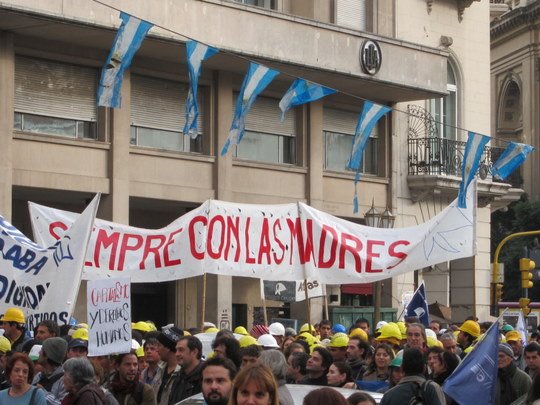
Siempre con las madres ©2011
Every Thursday afternoon for more than 30 years, mothers and grandmothers of "the disappeared" (los desaparecidos) and their supporters had gathered and marched around the Plaza de Mayo in front of the Casa Rosada in Buenos Aires.
During the Dirty War of the military dictatorship in Argentina (1976 to 1983), it is estimated that between 9,000 and 30,000 people disappeared. They were predominantly trade unionists, students, journalists, Peronists, and people opposed to military rule. Imprisonment, torture, detention centers — some called them concentration camps. It is also estimated that around 500 of those who disappeared were the babies of women imprisoned during those years.
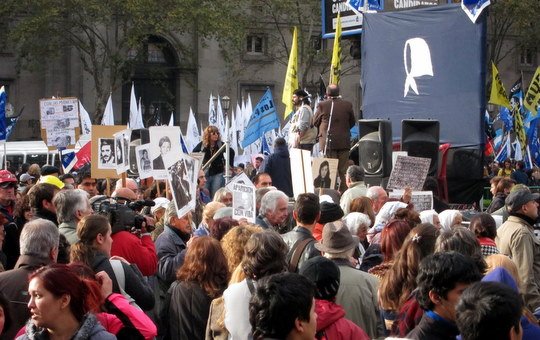
Mothers of the Plaza de Mayo ©2011
U2 has a song about the Mothers of the Plaza de Mayo, and when U2 performed in Buenos Aires in March 2011, "Mothers of the Disappeared" was performed. Sting, Rubén Blades, and Joan Baez have also immortalized in music the plight of the mothers of the disappeared.
The mothers and grandmothers wanted to know what happened to the disappeared and the babies. Rep. Maurice Hinchey (D-NY) proposed legislation in 2011 and in each of the three previous years that would have required the U.S. to release records and documents that could help the mothers find out what happened to their children. In the last vote, in May 2011, the amendment was defeated by just 20 votes.
It seemed way past time for the United States to release that information. The military dictatorship had ended in 1983. If these were our babies and Argentina had information that could help us determine what happened to them, what would we want? Wouldn't we want Argentina to release it, even if it revealed some dirty little secrets about Argentina? The world already knew that the U.S. had dirty little secrets of its own.
"Groups like the Madres are needed to serve as a reminder, not only to Argentina but also to the world, of the atrocities that can be committed by governments in the name of patriotism." — Jeff Barry, author of 4 Perfect Days in Buenos Aires
Siempre con las madres.