We spent February in Key West, Florida, a place full of history and interesting people. Then we left the country for arty San Miguel de Allende, Mexico. In May we traveled to Baltimore to see our daughter Stacy receive her master's degree from Johns Hopkins. June in Boston gave us a month with both our daughters. Then on July 2 we jumped the Atlantic to Scotland for two wonderful weeks. In mid-July we boarded a ferry to cross the North Sea to Amsterdam. On August 17 we flew to Slovenia to meet up with our son. After this whirlwind seven months, Betsy and I are renting a house on the beach in Ecuador. Some days, in those first hazy moments after waking, we have to ask ourselves: Where are we today?
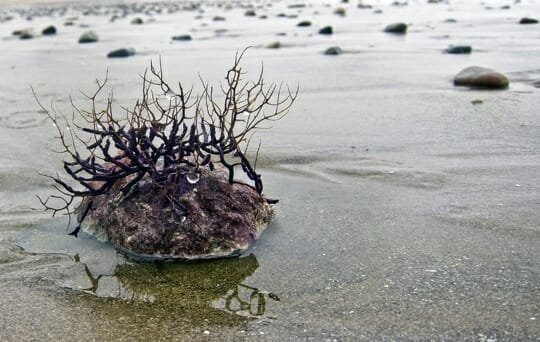
Rock Plant from Our Ecuadorian Beach
Our month in Key West was enough — we wouldn't change a thing, but it was time to go. It felt like we had stepped into a reality show with a cast of characters we won't forget. Joyce is one of a kind: a lifetime of ballet behind her in New York City, she moved to Key West and eventually fulfilled her dream of producing "The Nutcracker" with a Key West twist. An award-winning documentary, Underwater, the Making of the Key West Nutcracker, was made chronicling her herculean efforts. We rented a room in one of her beautiful homes in the historic district, enjoyed the warm weather, explored the island, spent time on the beach, and got to know Joyce, Carlos, and the rest of the Key West cast.
We lucked out in San Miguel de Allende, Mexico. Out of the vivid noise of Key West we settled into the tranquility of San Miguel and a pleasant routine. It now seems like San Miguel will provide the litmus test for places we could consider living outside the U.S. The city has near-perfect weather and a dynamic cultural scene. We enjoyed yoga and Spanish lessons, attended several plays, heard live music, and explored the art community and shops. We constantly met new people with interesting stories. San Miguel may not be for everyone — it may not be for us — but it is easy to see why some 10,000 expats call it home.
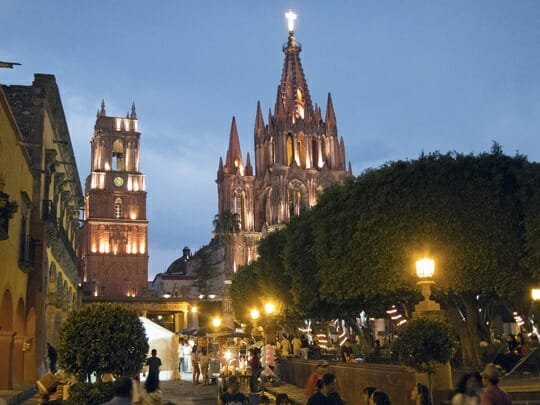
El Jardin and La Parroquia at Night
The pace quickened again as we traveled to Baltimore for Stacy's graduation from Johns Hopkins. Two weeks later we helped her move out of her apartment and were on the road to Boston.
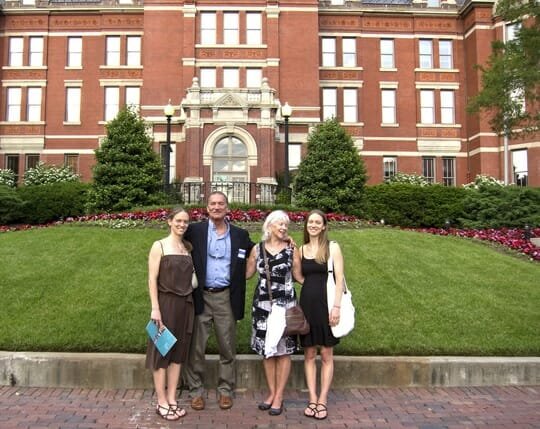
Finding a sublet in Boston was a challenge, but we found one — a two-bedroom apartment at garden level (read: basement). It worked out fine. Stacy stayed with us while she searched for a place to live as she worked toward her PhD. We had planned a month in Boston with her and our daughter Kelly, who was about to begin her second year of her master's program. The month went too quickly.
Along the way, we had found an apartment in Amsterdam we could sublet starting in late July.
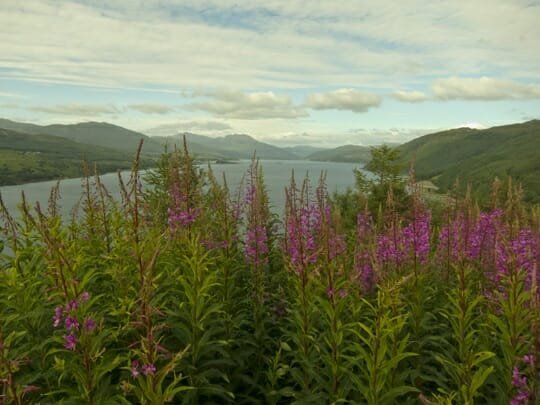
One of Many Beautiful Views on the Isle of Skye in Scotland
With a two-week gap between Boston and Amsterdam, we planned a trip to Scotland (and here, here and here). The first week we rented an apartment in Edinburgh and toured the city, then rented a car for a road trip through the country. We traveled some 1,000 miles, never staying two nights in the same place, and saw much of the Highlands. At the end we returned the car in Newcastle and caught an overnight cruise boat to Amsterdam.
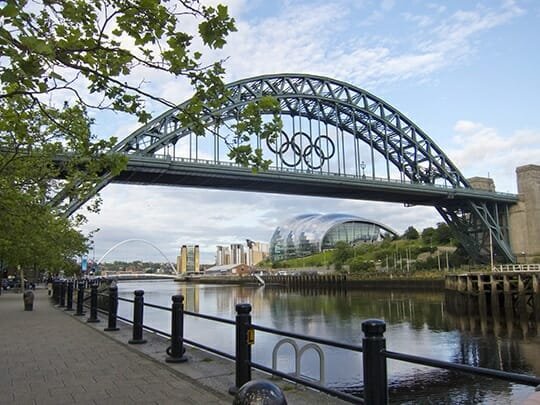
River View Newcastle, England
The Amsterdam apartment worked out well — spacious and functional, with a nice park a block away. Just south of the city centre, it sat in a family neighborhood with local bars and restaurants. During the first weekend our son Donald and his girlfriend Neva visited from Berlin and we toured the city relentlessly. After they left our pace slackened and we cherry-picked what we wanted to explore. We even spent a couple of rare sunny days at the nearby beach.
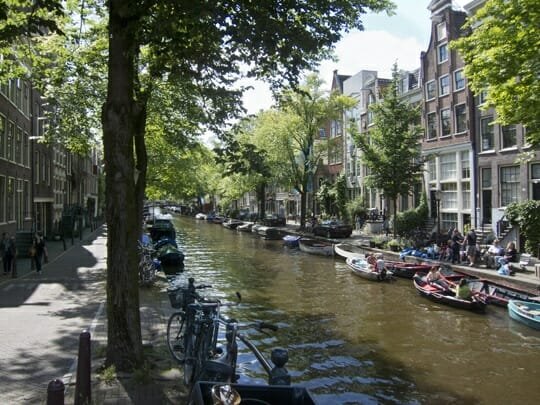
The Canals, Boats, Bikes and Architecture of Amsterdam
For me, Amsterdam is a model — a world-class city that embraces diversity and personal freedom. Rather than controlling personal behavior, it allows for individual expression of lifestyle choices. Given the strict moral and legal codes in wide swaths of the U.S. and the belief that enforcement gives us order, Amsterdam shows us another path. Compare any number of social indices against our most conservative cities — teenage pregnancy, high school graduation rates, alcoholism, drug addiction, crime — and the path is obvious. It was reaffirming to see the progressive model at work.
Then it was time for a long-planned rendezvous in Slovenia — a week with our son and his girlfriend Neva, who is from Kranj. We had talked about this trip since Berlin in 2010.
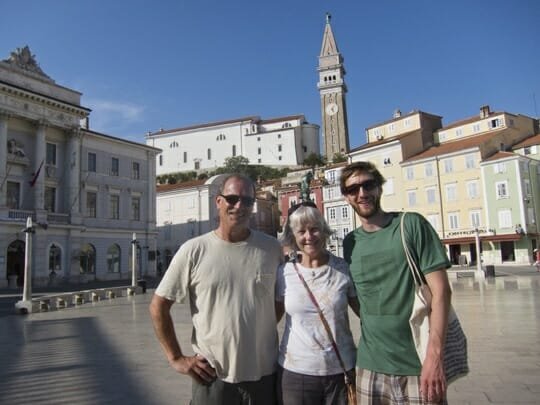
Plaza in Piran, Slovenia
It was a special week with extraordinary hosts, the Nahtigal family. We spent a day in historic Ljubljana, met family, and took an amazing three-day road trip. The centerpiece was Donald's 30th birthday, which we celebrated with him in the coastal city of Piran. We feasted on a seafood dinner, then stayed with a friend in the nearby port town of Koper, high in the hills overlooking the city. We were on the patio with the city lights as a backdrop until three in the morning. The next day we traveled through Triglav National Park, spent the night in a small village, and hiked along the coral-green Soča River.
All too soon we said our emotional parental goodbyes to Donald, not sure when we would meet again. From Ljubljana we caught a shuttle to Venice, then a flight to Barcelona with an eight-hour layover that allowed for minimal sleep in a nearby hotel. After a bastard flight from Barcelona to Rome to Miami to save a few hundred dollars, we landed in the States in time to find out our connecting flight to Guayaquil, Ecuador, had been canceled because of Hurricane Isaac.
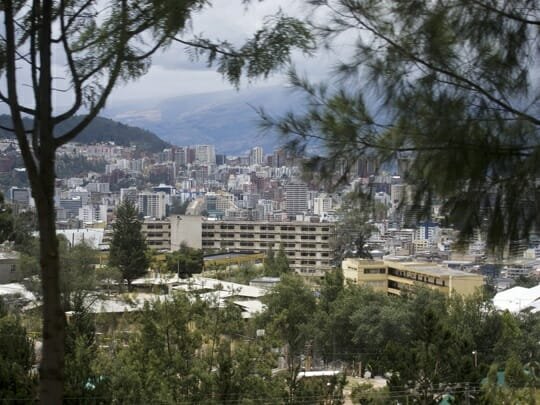
View of Quito from Hill Top
Dazed, tired, and frustrated from two days of travel, we found a hotel, worked out a new flight schedule for the next day into Quito rather than Guayaquil — with the welcome twist of a two-day layover to see the city. Then a short flight to Guayaquil, an overnight hostel, and a bus to Montañita along the Ecuadorian coast to begin our planned extended stay on the ocean.
Two weeks later, having moved through several coastal villages — Bahía, Manta — we settled on a month on the beach in a fishing village north of Manta. The village has a few kiosk-type stores, a small pharmacy, a dozen or so restaurants. Dirt roads, wooden shacks or cement-block homes, some with windows and some without, dot the coast. Poverty and wealth, more or less, live side by side.
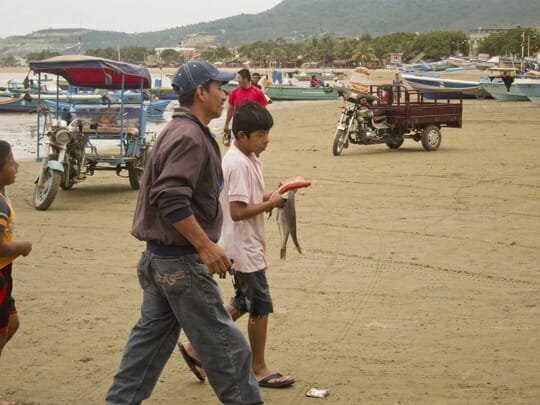
Along the Coast of Ecuador We Visited Several Fishing Villages
In seven months we have touched down in at least eight countries, lived in five apartments or houses, and passed through some 20 hotels or hostels, moving more or less gracefully from Key West to Ecuador.
Mindfulness has several closely linked definitions, but for us it involves a daily focus on the newness around us. There are few habits to rely on. It involves simple things — finding the correct light switch, locating the cupboard with the glasses, hunting for the silverware drawer — and more complicated ones, like orienting ourselves to new places and people. In our latest house in Ecuador, we struggle not to stumble over the two-inch step to the bathroom and to master the winding stone-tiled steps to the second floor. These challenges are constant and involve focusing on the moment. Hopefully we will reap the benefits mindfulness research claims.
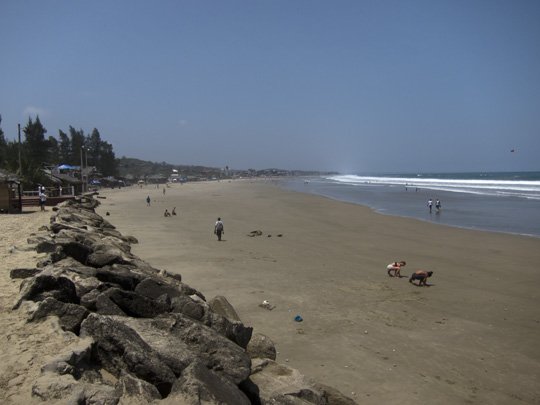
For the past week we have had the stabilizing constant of the beautiful blue Pacific out our front door and from our balcony.
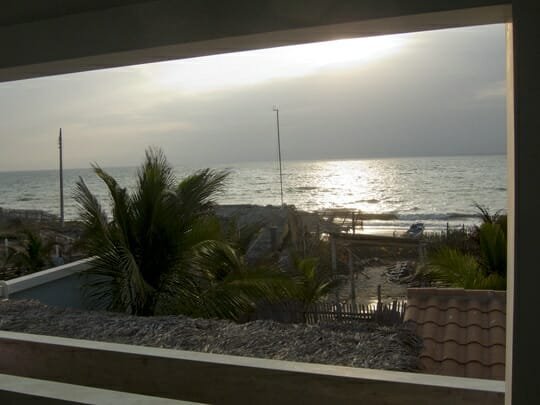
View from 2nd Floor Deck
The breeze is fantastic. The waves lap the shore relentlessly. That much is timeless.