At the end of the road
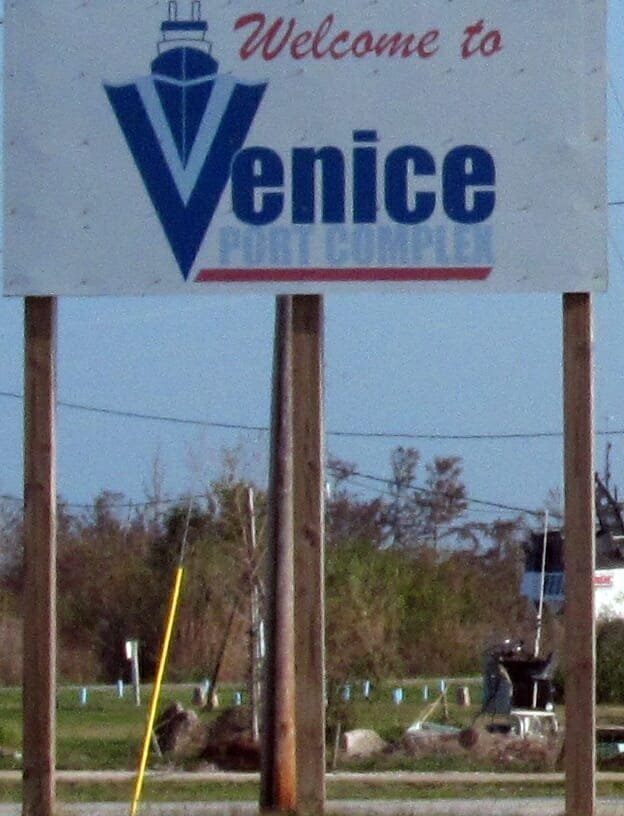
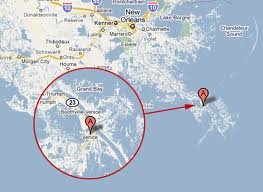
Far from the French Quarter, where the road south ends, we found Venice, Louisiana, and one of those unexpected experiences with great food and conversation.
Traveling south along LA-23, the scenery was less than we expected. The narrow strip of land had water on both sides, but levees built to hold back storm surge completely blocked the view. There was farming along the way — citrus, some cattle — along with visible devastation from Katrina, which had left this area buried under several feet of water.
We were rewarded as we approached the end of the highway and the kind of views we had imagined when we set out.
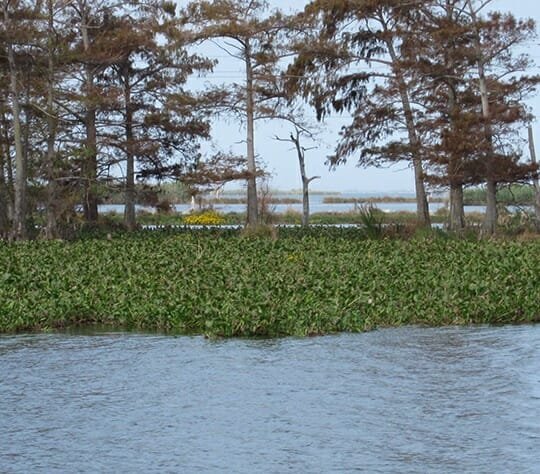
These scenes were right out of our imagination
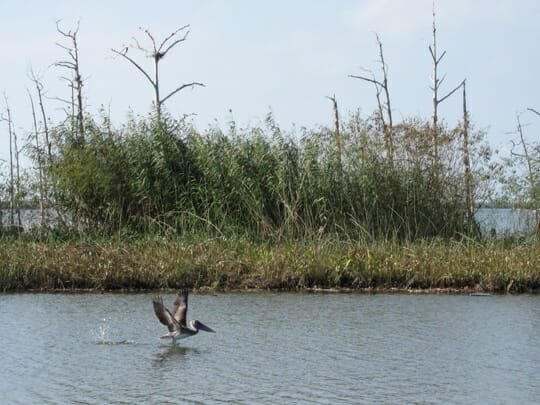
In flight
The area seemed fairly deserted and we weren't sure where to go, and then along came a mail truck. We chatted a moment with the driver and asked where to get something to eat. He directed us to the CrawGators Bar & Grill down the road a piece at the Venice Marina.
Note to self: the mailman is a good source for excellent restaurants.
Nothing promising could be seen in any direction, but we were in for a treat. The restaurant was perched about 20 feet above ground, with outdoor seating and great views of the marina — a perfect setting on a warm, sunny day.
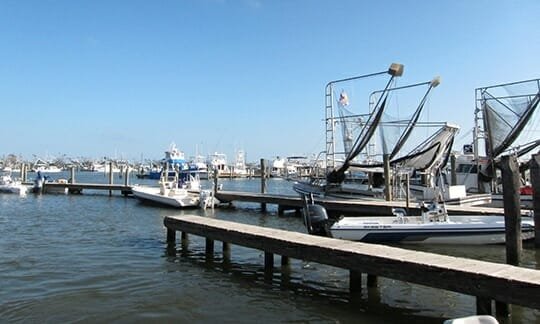
Inside, a handful of people were watching the LSU–Ole Miss game. Outside, there were well over a hundred cars and trucks with empty boat trailers. The fish were biting.
We took a table on the deck and had barely settled in when the couple two tables down offered a friendly hello, where-are-you-from greeting. Eager for some local conversation, we started what became a long one — kids, food, fishing, football, politics.
It turned out the woman, Deanna, was the mother of the restaurant owners. The man, Bob, had gone to school with her in Bunkie, Louisiana, about 100 miles northwest. According to them, Bunkie is the true home of Cajun food — New Orleans stole the food and the story both. One of them put it with quiet derision: in New Orleans, they put tomatoes in everything.
In this part of the country, the love of food — flavorful food — cannot be underestimated. Bob described a business trip to Amish country where he had looked forward to the much-touted cooking. His first bites were a disappointment; he wondered if he could finish the plate. For a man raised on Cajun food and liberal spice, the idea of salt and pepper as the main seasonings left him baffled by the food's reputation. Deanna asked rhetorically how anyone could cook without red pepper.
We asked for suggestions from the menu. Bob immediately recommended the seafood-stuffed baked potato, and the onion rings, and — I waved my hand to stop him there. Who could pass on a house specialty like a seafood-stuffed potato?
Over lunch the conversation ranged from Katrina — this area had been under 35 feet of water — to the fishing, which is outstanding here, one of the world's top destinations for yellowfin tuna, and on to unions, FEMA, oil spills, environmentalists, and healthcare. This is deep-red country, and their views on most of those subjects were 180 degrees from mine. It took some effort to smile and absorb the perspective of people who had lived here all their lives.
To be honest, it helped that Deanna kept plying us with food while she and Bob held forth. First came the chicken and sausage gumbo — her personal recipe. Then, seeing the look on our faces, she brought out the bread pudding, another personal recipe. I almost told her I was a liberal just to make her stop. I couldn't eat another bite.
Deanna repeated it more than once, with a wink: "First we feed you, then we talk to you."
Mark Blondin, ExpatExpressions