As we enter the Holy Week 2011, we take a look back at Semana Santa in Granada, Spain, 2010.We are told there will be celebrations here in Buenos Aires and a larger one in Luján, which is a two-hour bus ride from here. But in Spain, cities like Seville and Granada have few rivals for the Holy Week celebration. Happy Semana Santa 2011 !
We wrote an account to families and friends last year…
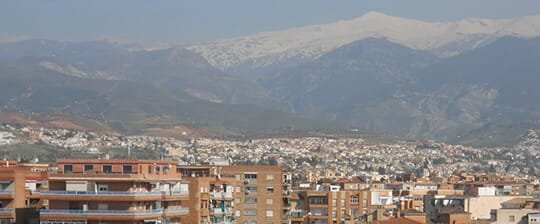
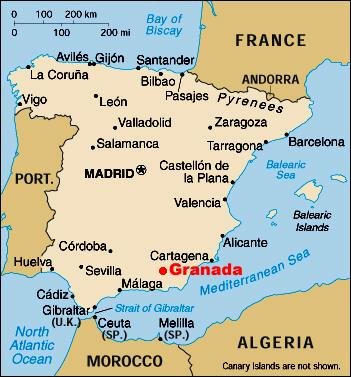
Granada sits at the base of the Sierra Nevada Mountains in Southern Spain. Semana Santa began during our second week of a month-long stay in Granada, Spain.
There is just no way to capture the scene around this festival. Nightly we have seen people in the tens of thousands crowding the street in a sea of humanity as religious processions pass. Most of the stores have been shut since Wednesday. The festival continues well into the morning hours. While the temperatures have been cool at night, crowds stay huge well past midnight.
Background
Holy Week (Latin: Hebdomas Sancta or Hebdomas Maior, “Greater Week” in Christianity) is the last week of Lent and the week before Easter.
The week begins with Palm Sunday (Passion Sunday), we all know that one. Not so familiar, Holy Monday (or Fig Monday), Holy Tuesday and Holy Wednesday (sometimes called Spy Wednesday). This quickly gets complicated for many of us. Toward the end of the week things heat up, there is Maundy (Holy) Thursday and of course Good Friday. On Holy Saturday the celebration of Easter begins after sundown. Easter Vigil is the longest and most solemn of the Catholic Church’s Masses, lasting up to three or four hours.
Setting:
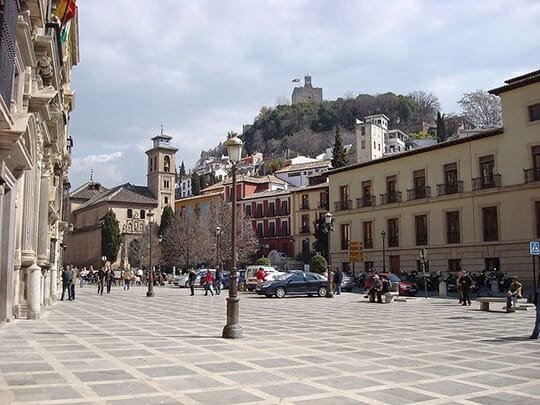
Our base for this Holy Week celebration is an apartment we rented next to Plaza Nueva in the Albayzin neighborhood at the base of the Alhambra, a Moorish citadel and palace in Granada.
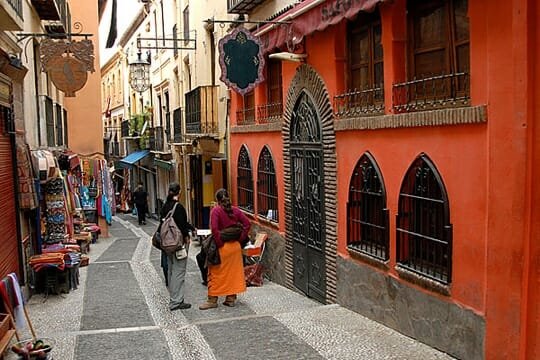
To further define our choice location, the Albayzín (also written as Albaicín) area of Granada is the Moorish quarter of the city that retains the narrow, winding streets of its Medieval Moorish past. It was declared a world heritage site in 1984, along with the more famous Alhambra.
With such fundamental human history being re-enacted this week, the omnipresence of the Alhambra with its own religious heritage provides a somewhat trenchant perspective on the entire celebration.
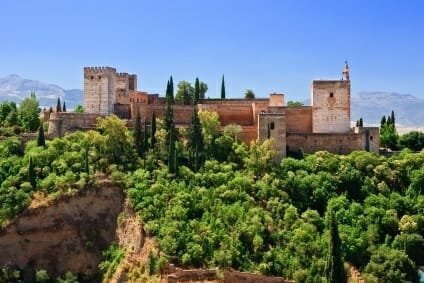
The Alhambra, literally “the red one,” is a palace and fortress complex completed early in the 14th century by the then Moorish rulers. The history of the time period is a rich testament to Moorish culture in Spain and the skills of the craftsmen and builders of this era. Moorish poets described it as “a pearl set in emeralds” in allusion to the color of its buildings and the woods around them. Read more if you get a chance. I believe it is the number one toursist attraction in Spain.
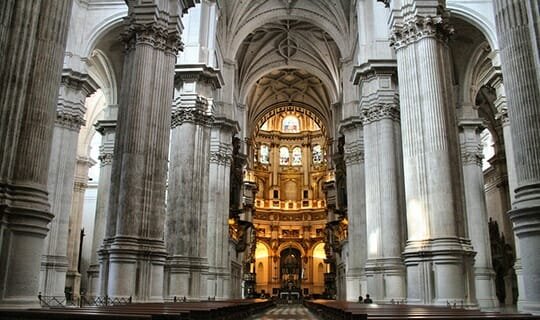
After the Christians conquered Granada in 1492 (another interesting story), the cathedral of Granada was begun in the early 16th century atop the site of the city’s main mosque (not nice) and completed over a hundred years later. There is just no way to capture the scope and grandeur of cathedrals of this period. Here you get a glimpse.
So now you have the setting for Semana Santa in Granada, Spain, where Muslim and Christian cultures have intertwined for centuries. Let the 2010 Semana Santa begin…
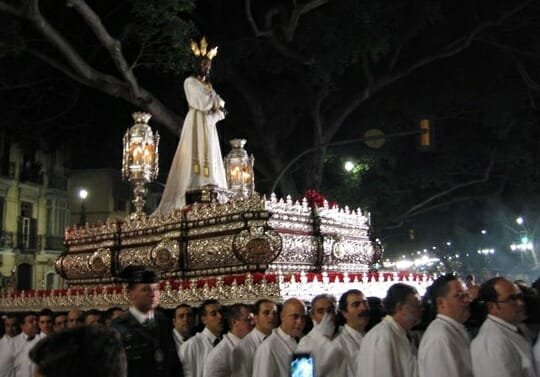
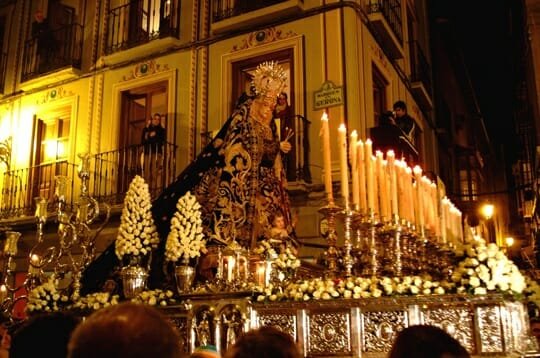
Granada has 32 brotherhoods belonging to the city’s many churches and therefore, 32 breathtaking processions. The figures representing the scenes on the pasos are life-sized. In essence, the processions represent the Easter Passion, the story between the Last Supper and the Resurrection.
The entire scene is alive with color and sound. Emotions are stirred by the slow rythmic beating of the drums and mournful sound of trumpets. The only way to get a sense of the drama is to watch some of this YouTube video.
The pasos are carried on the shoulders of men called costaleros, 20-40 per paso. What makes this amazing is that they are under the float and out of sight when the paso is in motion. And you have to remember that the streets, especially in the Albayzín neighborhood are barely wide enough for a single small car to traverse. This is athletic artistry at work and is wildly appreciated.
Since they cannot see where they are going, they follow the instructions of the capataz who walks in front of the paso, beating the ground with a stick to communicate. The basic maneuvers are simple, achieved with a shuffling movement of the feet. The difficulties come when the float must, for example, turn a particularly tight corner in a narrow street. This tedious maneuver is often applauded by spectators. Another crowd-pleaser is the swaying of the paso.
A typical float, which can weigh up to 6 tons is carried by up to 40 men. Footnote: According to this article, in 2011 women are now included.
Remember, this goes on for several nights and into the early morning hours. The crowds are enormous. Even to a non-believer, this historic event repeated year after year for centuries has no real parallel.
I hope this gives you a sense of Semana Santa. If you go either to Seville or Granada for Semana Santa, plan well ahead.
P.S.
Here are a couple of YouTube videos of our neighborhood in Granada:
The Buenos Aires Zoo is said to be the oldest zoo in Latin America. It has a mostly recognizable and diverse cast of characters…
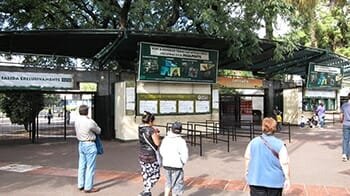
Located next to Plaza Italia, the zoo is visited by approximately 3 million people a year, which makes it one of the busiest in the world.
We enjoyed this zoo on a sunny weekday afternoon and felt like we had the place to ourselves. As with any zoo, there is a contradiction of sadness for the captive animals and the awe inspired by being face-to-face with the variety of life of earth.
Not to brag, but we have visited a few world-class zoos, especially during our travels around the United States in 1996-97. While living in Carlsbad we purchased yearly passes to the San Diego Zoo and Wild Animal Kingdom. We have accumulated mucho zoo time in case you notice a hint of arrogance in this post.
Every zoo has a specific character.
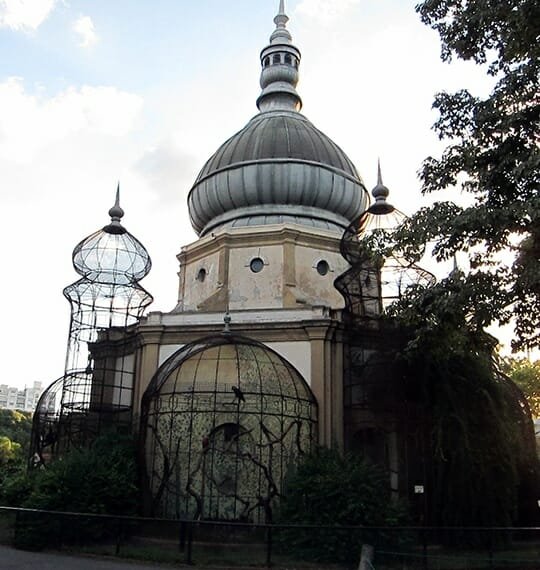
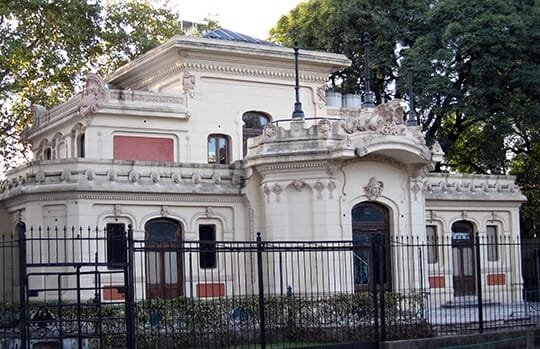
The Buenos Aires Zoo has a long history as well. The doors opened on October 30, 1888. The first zoo director, Eduardo Ladislao Holmberg, a doctor and naturalist, guided the zoo for the first 15 years. His premise was that the buildings housing the animals would correspond with the architecture of the origin of the species.
As the years passed, the concept of the modern zoo evolved and these smaller animal enclosures gave way to more natural habitats. Fittingly, these magnificent buildings have been designated as Historical Monuments, so replacing the outdated zoo concepts incorporated into the original buildings has met a seemingly insurmountable hurdle. What we see today is a snapshot in zoo time and a somewhat faded, although still visually stunning, architectural feat.
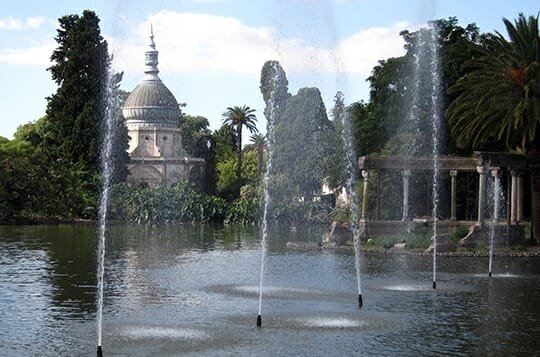
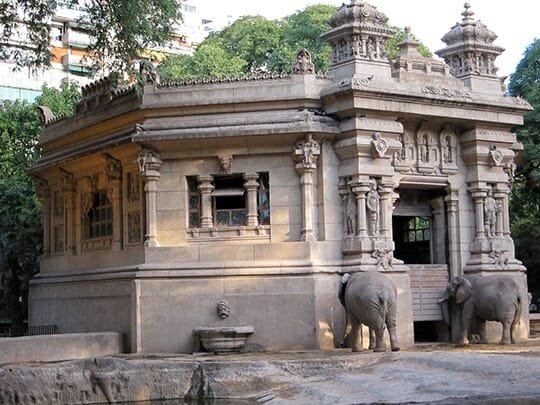
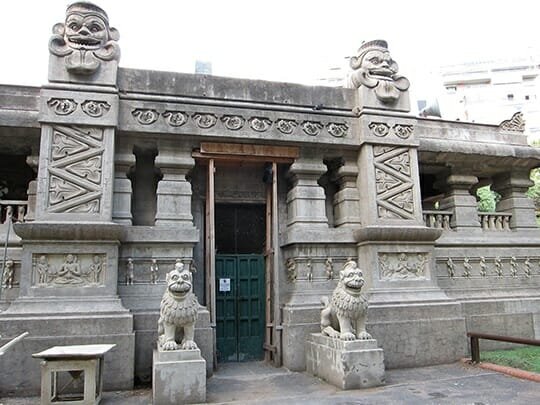
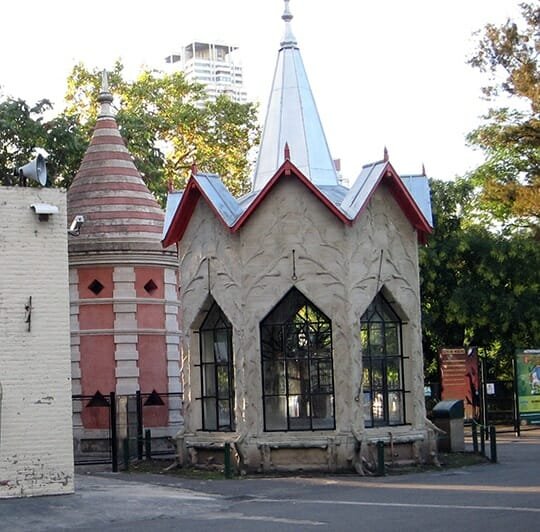
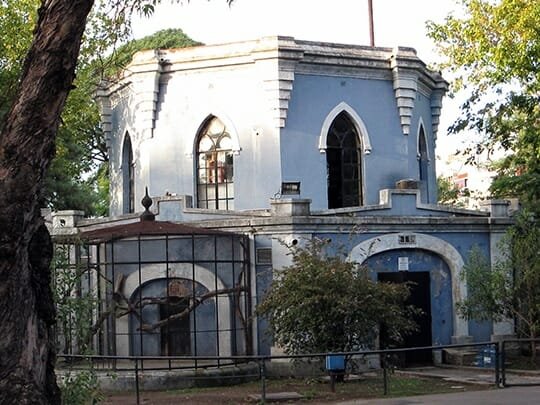
After we passed the entrance portico, which is a reproduction of the ‘Triumph Arch of Tito’ in Rome, and a couple of other distinctive buildings shown below, we realized this zoo is as much about the design as it is about the animals. The Elephant Palace is a replica of the Goddess Nimaschi Chapel in Mumbai. The Vesta Chapel is a circular building that includes 16 Corinthian columns, a copy of the original chapel located in Rome.
The Elephant palace…
One beautiful, interesting, detail-laden building after another…
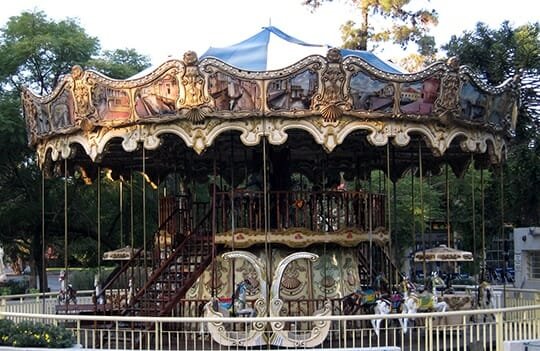
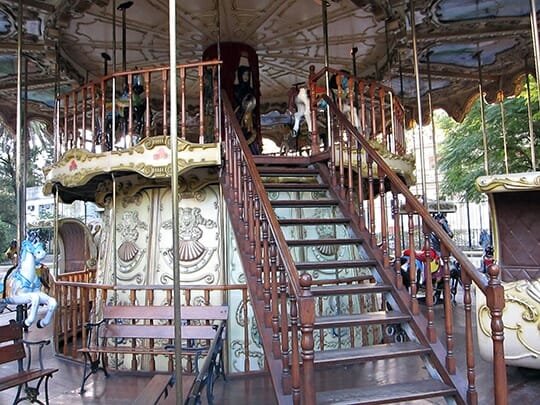
Then you come to the carousel. According to the date plate this one was built in 1898.
The woodwork and intricate designs are gorgeous.
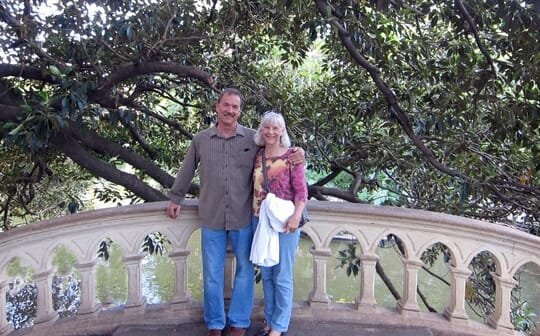
There is always an element of romance at the zoo. Couples strolling arm in arm…
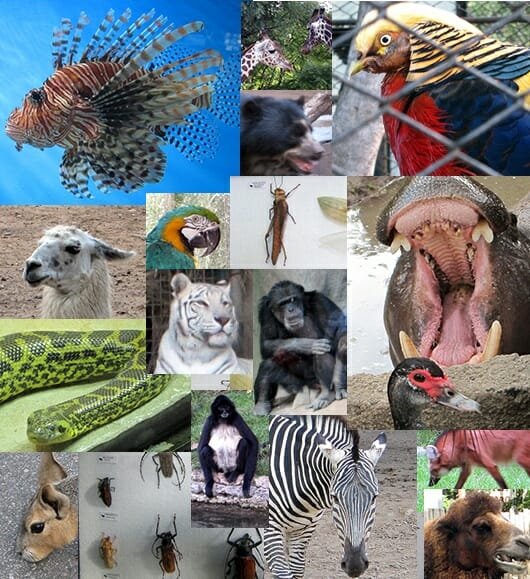
And, let’s not forget the animals, birds, reptiles and insects.
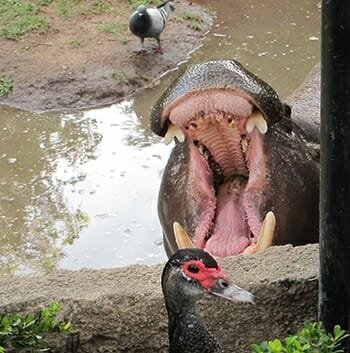
It looks like the picture to the right was done in Photoshop but it is original. The look on the duck’s face as it stands literally inches away from the hippo’s massive mouth still makes me laugh.
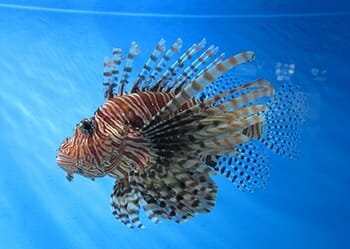
The Buenos Aires Zoo includes a nice aquarium. I included this photo of the spiny fish just because it turned out so well.
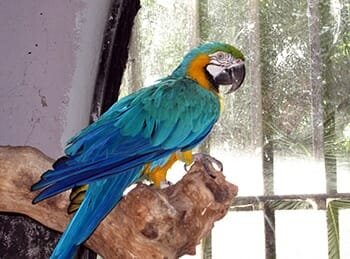
There was a great selection of South American birds.
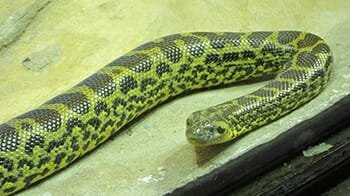
As you can imagine, with the Amazon in South America, there is a huge variety of fish, insects and reptiles. I passed up the boas and caught this guy in mid-stride.
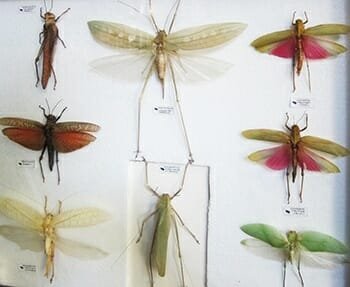
The insects displayed were other-worldly. The scorpion varieties were enough to make you want to check your shoes twice .
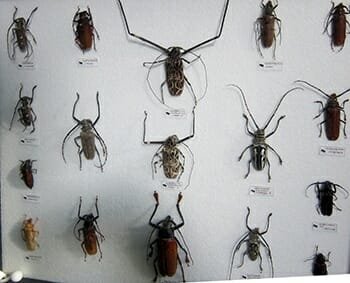
Then these beetle-like fellas give a whole new meaning to creepy-crawly.
Finishing with the glamorous, these fairy-like insects seemed right out of a Spielberg movie.
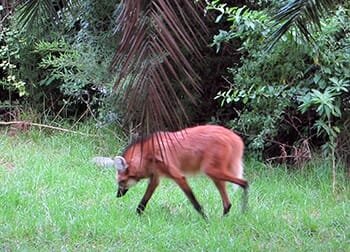
While I could show you nice photos of a rare albino tiger, a pair of cheetas, a cute monkey family, a zebra I could almost reach out and touch, the classic giraffe, a flying monkey (literally), a brilliantly colored Toucan or the majestic bear, I prefer in the space alloted to share this unuusal creature. Not the best picture by far, but the more I discovered about it the more certain I was that you would want me to share.
(Wikipedia) The Maned Wolf (Chrysocyon brachyurus) is the largest canid of South America. Although the maned wolf displays many fox-like characteristics, it is not closely related to foxes … One conclusion of this study is that the maned wolf is the only survivor of the late Pleistocene extinction of the large South American canids.
Here are just a couple of the interesting facts about the maned wolf from here :
Amongst the locals, maned wolf is believed to have supernatural powers. Its right eye is supposed to bring luck in gambling.
Another superstition has it that if children wear a necklace having a maned wolf tooth, they will not have dental problems.
Maned Wolf is an astonishing animal, native to South America, with physical features of a hyena, the head and coat color of a wolf and the large ears of an African hunting dog.
I am not done yet…
The Buenos Aires Zoo has created some remarkable advertisements that caught my eye. To see more do a search on You Tube.
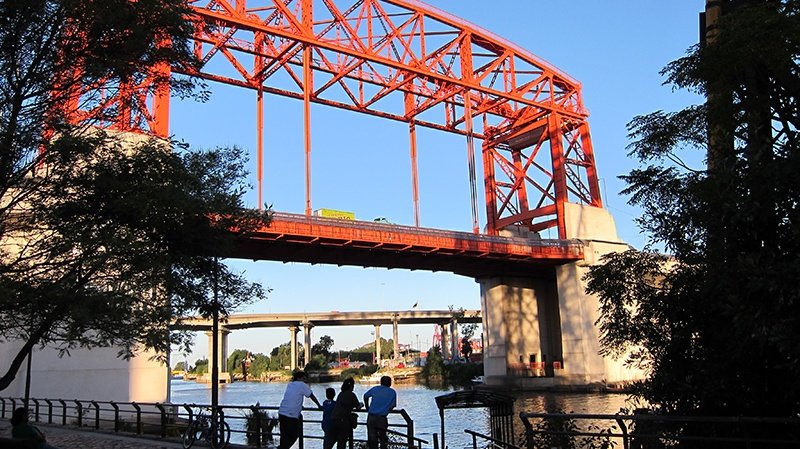
The bright red bridge against the beautiful blue sky caught my eye in the evening as we walked to the bus stop for the short ride back to our apartment. We had spent a lazy afternoon roaming the streets, poking into shops and getting to know one of the most photographed neighborhoods of Buenos Aires.
Striking Colors
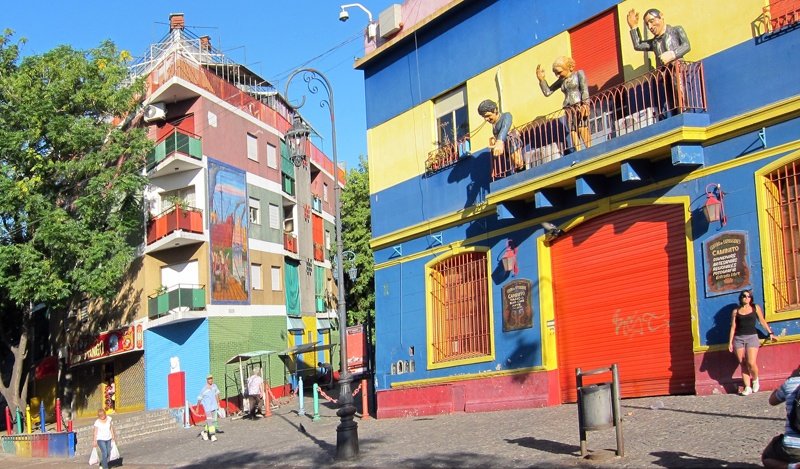
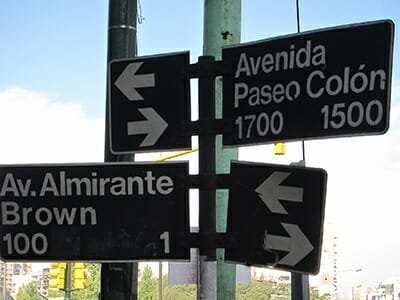
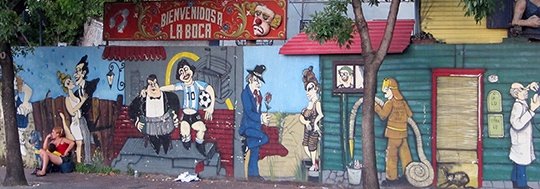
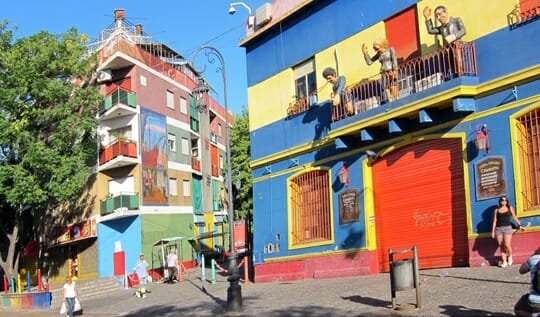
A landmark of sorts, located at the corner of Avenida Paseo Colon and Almirante Brown, this work of art provides a glimpse of what is to come as you enter La Boca.
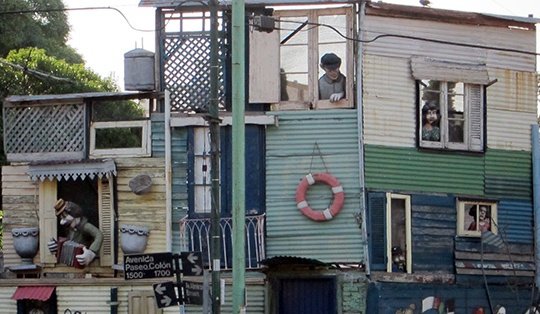
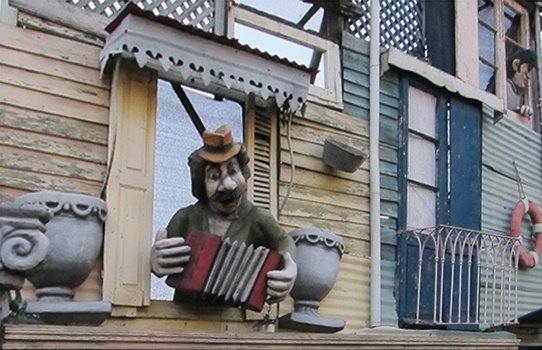
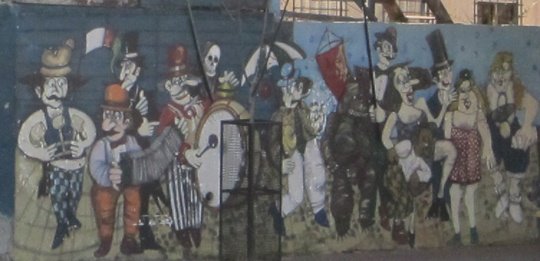
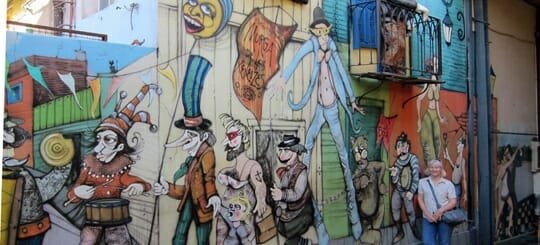
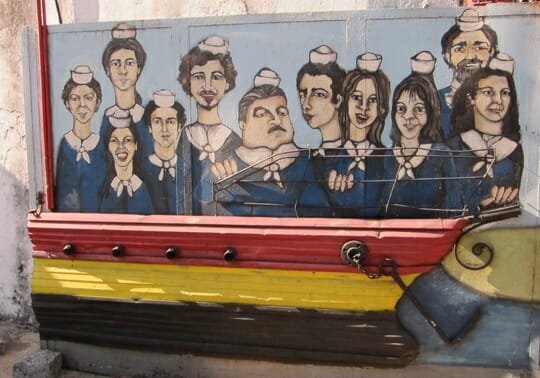
These full-sized characters protruding from the windows or standing on the wrought iron balconies create an artistic scene reminiscent of a Broadway play. Buenos Aires is a city full of street art, and here in La Boca they go for the smash hit on every corner.
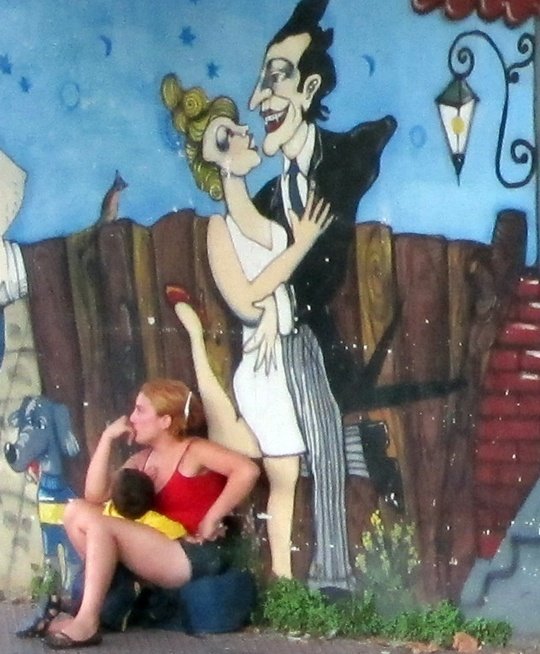
As we strolled the streets, we encountered one scene after another. Sometimes the surreal nature of the art is illustrated by the juxtaposition of the real and the art as in the piece below.
A young woman and her baby were hardly distinguishable from the art.
And can you see Betsy below?
We continued to explore…
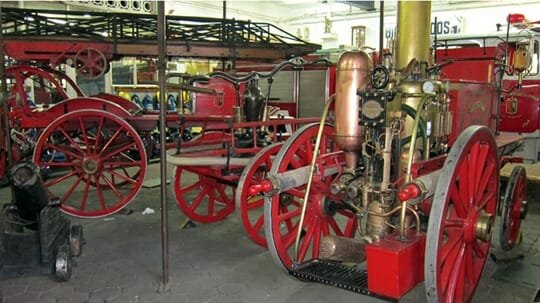
We happened by the local fire department and were invited in to snap this photo, our language skills not refined enough to ask about the cannon in the left foreground. I didn’t know how to ask if it was a water cannon… (sorry).
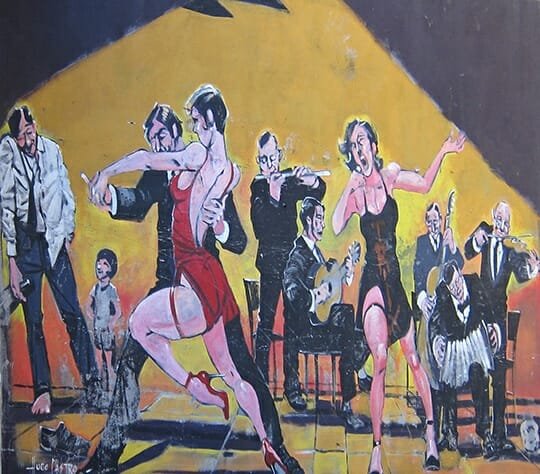
This area of the city is particularly renowned for Tango, and the passion of the dance is embraced in this mural.
Life & Passion
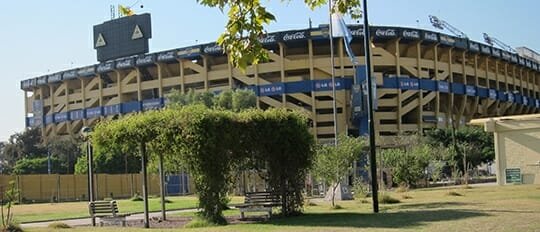
If there is one thing this barrio thrives on, it is the Club Boca Juniors soccer team, one of the most important in Argentina. The Bombonera (chocolate box), seats more than 50,000 spectators and is a landmark. The Boca Juniors is regarded as the working class club in contrast to its cross-town archrival Club Atlético River Plate.
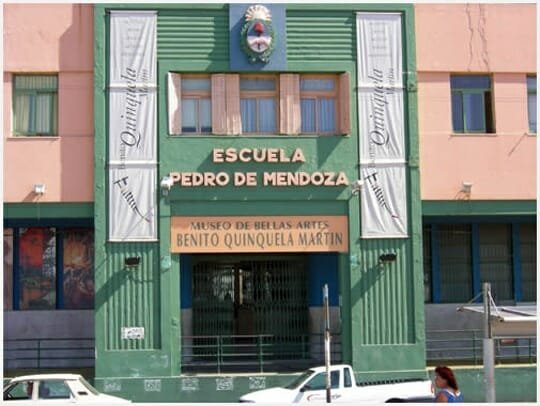
Beyond the brightly colored buildings and the fantastic murals and street art, there is a Fine Arts Museum founded by Benito Quinquela Martín. His life story is that of a man from humble beginnings who became famous and gave back to his community.
So there you have it — a taste of La Boca; you will find it all here, food, art, natural beauty, a gritty urban environment, and Tango. I leave you with this…
While walking through Boca last Thursday, I poked my head into a particularly interesting bar/restaurant and noticed a filming take place of this singer and piano player. I didn’t catch their names but oh, the music…


 As we enter the Holy Week 2011, we take a look back at Semana Santa in Granada, Spain, 2010.We are told there will be celebrations here in Buenos Aires and a larger one in Luján, which is a two-hour bus ride from here. But in Spain, cities like Seville and Granada have few rivals for the Holy Week celebration. Happy Semana Santa 2011 !