Heading southwest, the path from Dornoch through Dingwall, Gorstan, and Kyle of Lochalsh to the Isle of Skye; then Invergarry, Fort William, Glen Coe, Tyndrum, Crianlarich, Loch Lomond, and Luss to Glasgow was the third leg of our journey around Scotland.
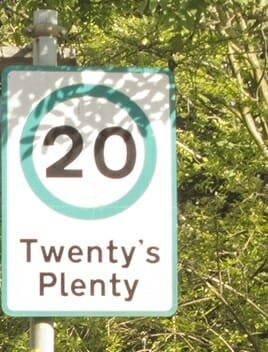
The Twenty’s Plenty speed limit sign we saw in Luss was applicable to many of the roads we took to places in north and west Scotland. And on many roads, we traveled even slower in order to absorb everything around us.
Once again, the feeling of being overwhelmed by the grand expanse accompanied and awed us.
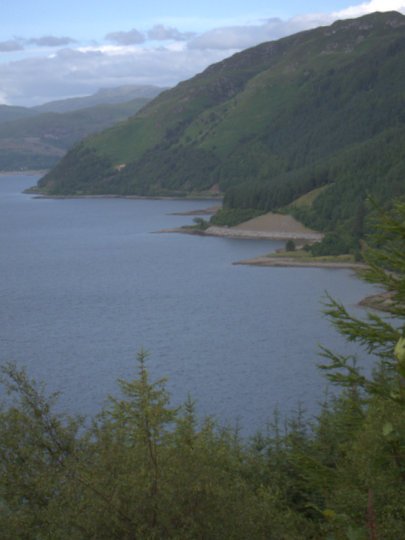
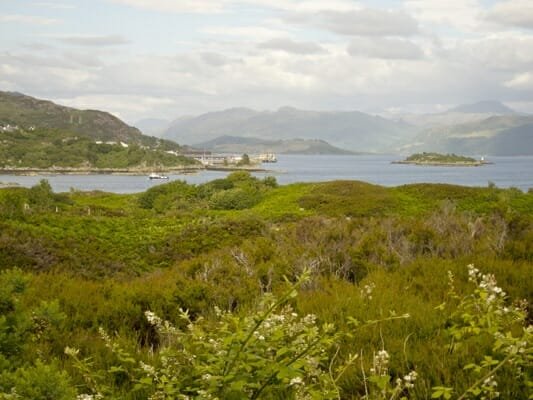
A gorgeous view from the road to Skye Bridge.
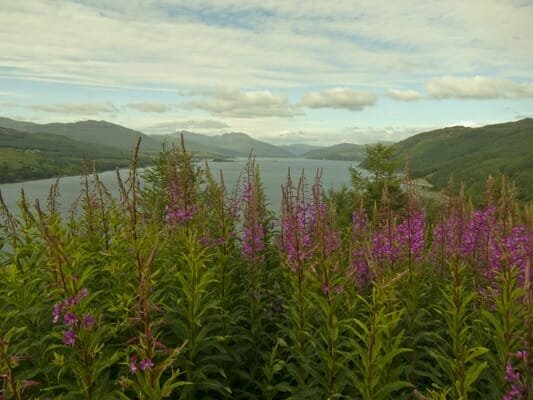
Just another vista on the road toward Skye.
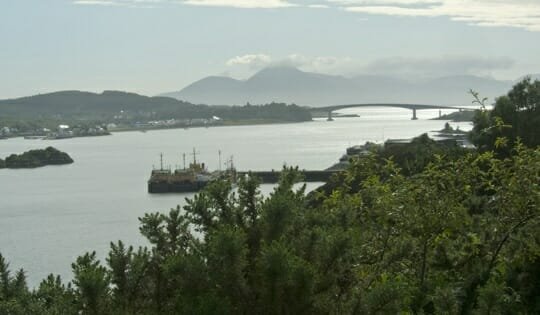
At last, our first glimpse of the Skye Bridge that would take us to the Isle of Skye. The Cuillin Hills in the background, we’re told, are rarely seen without their cloud halos.
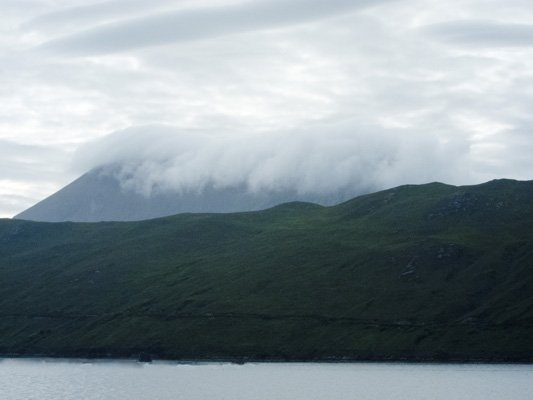
This is what greeted us just over the Skye Bridge, the clouds rolling over the Cuillins.
On the road to Portree where we spent our night on the Isle of Skye.
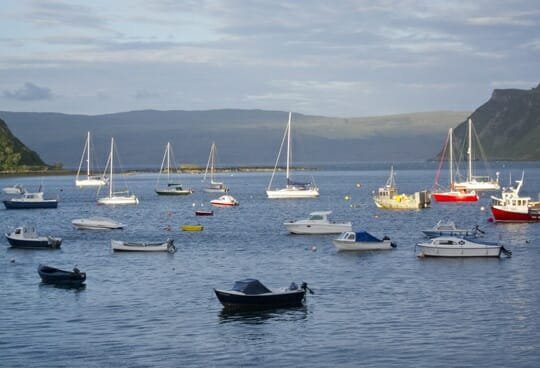
It was cold and windy in the evening when we walked to the harbor in Portree, a colorful town and the largest on the Isle of Skye.
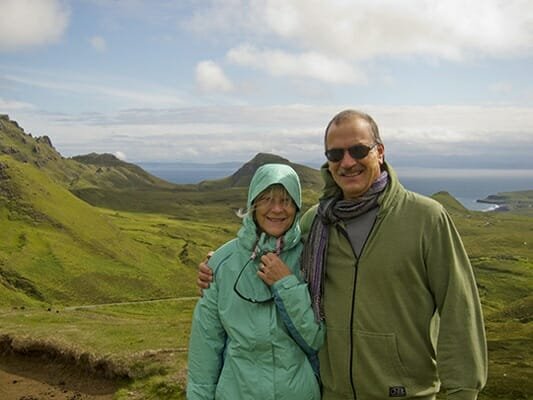
The next day we made our way around the three peninsulas of the Isle, and this is our first stop — Cuith-Raing. It was so beautiful but so windy I was afraid to hike higher!
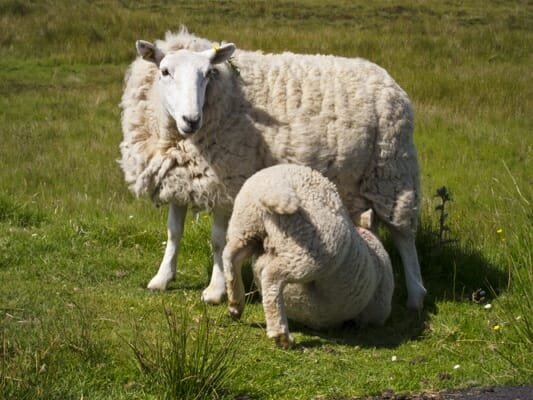
Sheep are everywhere, and sometimes they don’t even want to move out of the road. We got a few great photos of sheep, but this is my favorite.
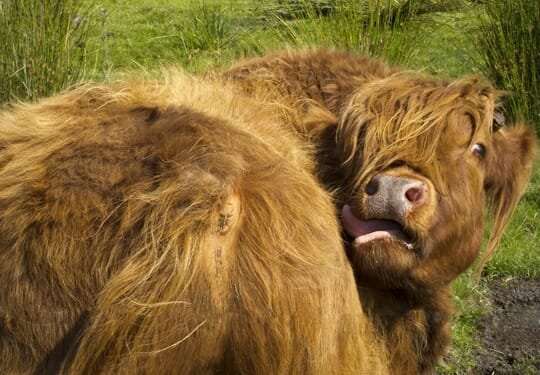
Mark couldn’t wait to get a photo of the Highland Cattle. I think this guy had something he wanted to say to Mark.
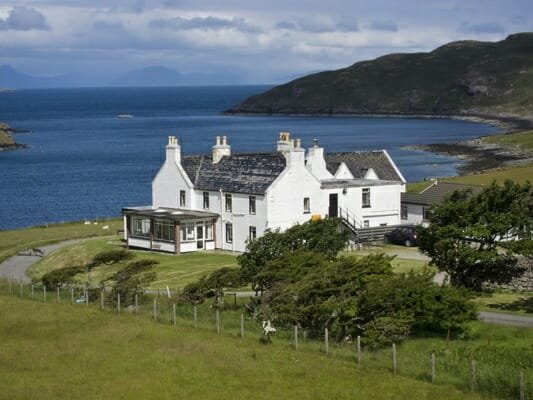
The many scenes like this along the sea tempt you to take too many pictures!
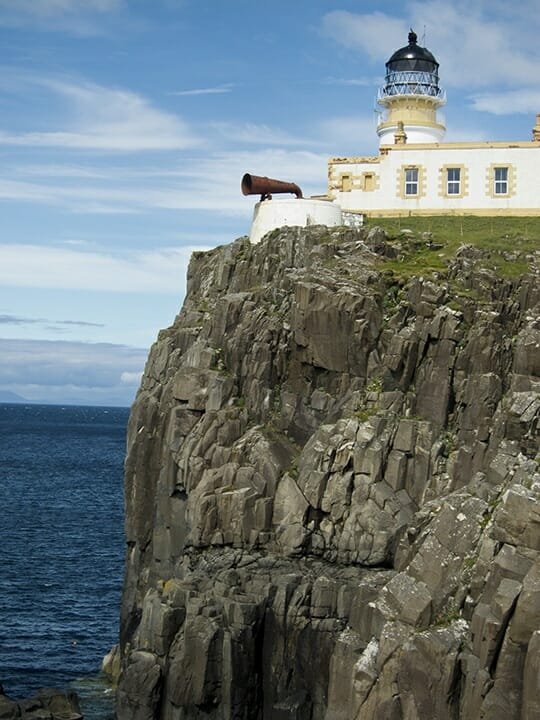
After visiting Dunvegan and having a bacon and egg roll at the Dunvegan Bakery (in operation since 1870), we headed for the western point of the Isle where Neist Point Lighthouse stands. It is quite a hike with hills and stairs up and down to get there but worth every step.
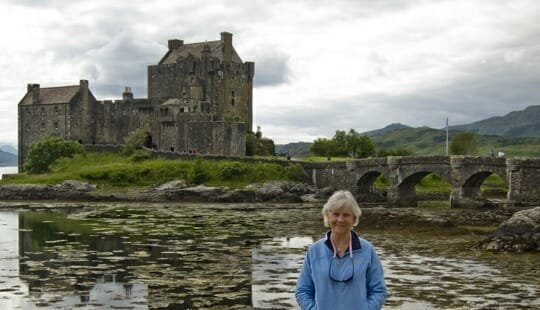
Completing our tour of the peninsulas, sadly it was time to leave the mystical Isle of Skye. The Eilean Donan Castle is something to look forward to near Dornie after you leave the Isle. The first fortified castle was built here in the mid-13th century. We didn’t go in because it was too late, but sometimes just seeing something is enough.
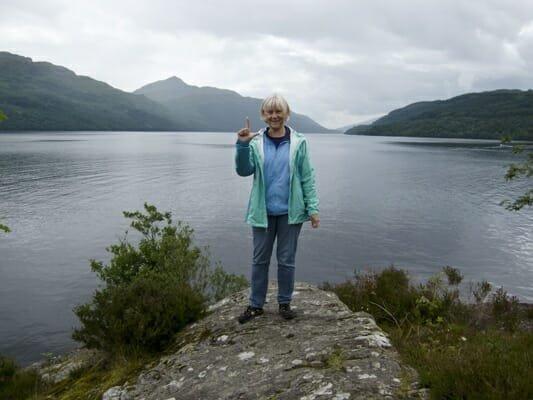
The L doesn’t stand for loser, it stands for Loch Lomond (so we would remember which lake). After leaving the castle, we drove toward Invergarry and then to Fort William where we spent the night. The next day we drove through Glen Coe, Tyndrum, Crianlarich, and to Loch Lomond. It’s so amazing to visit places you’ve sung songs about for as long as you can remember.
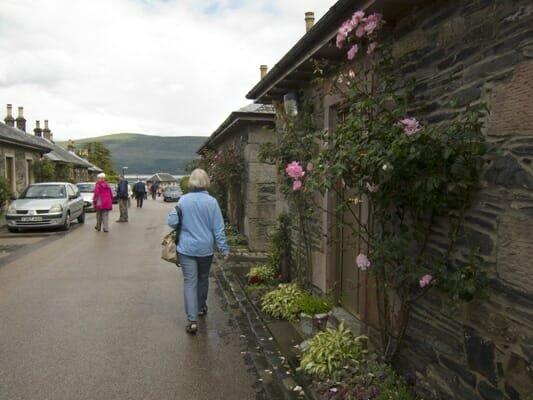
The village of Luss on the western shore of Loch Lomond was a welcome and recommended-by-everyone stop. We explored the town and had fish and chips for lunch before saying goodbye to the Scottish Highlands and heading to Glasgow.
After our week in Edinburgh, we rented a car for a road trip and while we had a general direction in mind, we basically went where the road took us and to places people told us not to miss.
Stirling, St. Andrews, Dundee, through the Cairngorms National Park and the Grampian Mountains, Braemar, Lin of Dee, Grantown-on-Spey, Inverness, Loch Ness, and Dornoch, this is the circuit that comprised the second leg of our Scotland adventure.
Magical places, some of whose names you have heard seemingly all your life and some new and strange. No, we did not see the Loch Ness Monster, we did not visit a whiskey distillery, and I feel that I missed seeing the little fishing villages I had imagined in the northeast, but what we did see was magnificent.
We realized the grandness of it would not be totally evident in our photos — these scenes have found a home in our hearts and memories instead. (All photos @2012, Betsy and Mark Blondin)
Our first stop after leaving Edinburgh was Stirling, Stirling Castle and the Wallace Monument. Echoes of heroes, nobility, and legends whispered loudly in these places. Our first glimpse of Stirling Castle and Robert the Bruce standing guard in the rain was gray. In this castle, you can experience what life here was like; furnishings, tapestries, actors in full dress to answer questions, models of people working in the kitchens, guided tours, and tapestry looms made the 16th century come alive. Here is a cool timeline of the castle that shows how it changed hands between the English and the Scots, its reformations over the years, and who lived there including Mary Queen of Scots.
Looking across to the monument to William Wallace from Stirling Castle, yes, in the rain.
It was late when we arrived at the Wallace Monument, so the visitors center below and the information center in the monument were closed. A 20-minute uphill walk through the deep woods brought us to this. Not only is there a lot of history here but also a beautiful park with hiking and running trails.
You might think of St. Andrews as a small Scotland town that is the home of golf. It is the international home of golf, but it is also many other things. There really is a St. Andrew and the remains of St. Andrews Cathedral (1160 AD) and castle (1200 AD), and the town is also home to St. Andrews University, founded in 1413.
St. Andrews Cathedral was the largest building in Scotland for seven centuries, and here you can see the cemetery on the grounds.
Too cold and rainy for us to walk out and explore, we at least enjoyed the view of St. Andrews Castle and imagining what it might have been.
The beach at St. Andrews made famous in Chariots of Fire.
We spent our first night on the road at the Longforgan Coaching Inn. We arrived at around 10 p.m., and even though the kitchen was closed, Alistair, the owner, cooked us a great hamburger anyway. After some lively conversation we headed for bed. We enjoyed an equally delicious breakfast before heading for central Scotland with directions from Alistair in hand for the best sightseeing route to Inverness. It was a friendly and heart-warming experience in Longforgan near Dundee.
After leaving Longforgan the next morning, we started seeing breathtaking scenery, and it kept getting better. We headed north and through Cairngorms National Park and mountains.
After stopping at Braemar, we went to the Linn of Dee, a rapids where the river shoots through a rock gorge. The River Dee flows from the Cairngorms all the way to the North Sea at Aberdeen.
In the woods near the River and Linn of Dee.
We had vistas like this around every curve of the narrow winding road, it seemed.
Our second night was spent in a hostel near Loch Ness, and the next day this is one of the views as we headed back toward Inverness and on to Dornoch. Do you see Nessie in the Loch?
Urquhart Castle’s dramatic ruins overlook Loch Ness. This castle was once under the control of Robert the Bruce and has a long, violent history.
The farthest north we made it was to Dornoch, and it was beautiful. The Royal Dornoch Golf Club overlooked this beach, and it was beautiful, too. And on to the Isle of Skye…
Our road trip ended in Glasgow, another enchanting city with a feel different from Edinburgh but with photo opps around every corner.
Here we explored for two days before making our way to Newcastle, where we explored some more, returned the rental car, and took the overnight ferry to Amsterdam. Glasgow and Newcastle had treasures of their own to discover, and we tried to find them all.
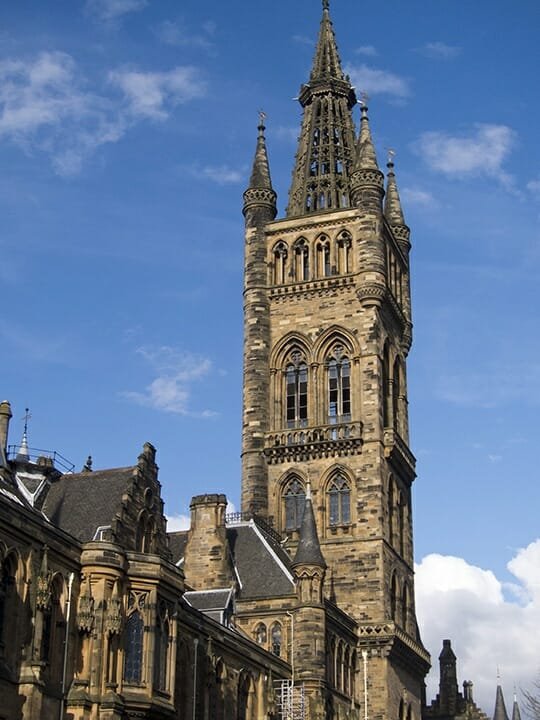
We arrived at our hotel mid-afternoon and took off exploring immediately, down Byres Road to the University of Glasgow, founded in 1451, and which is as photogenic as it is impressive.
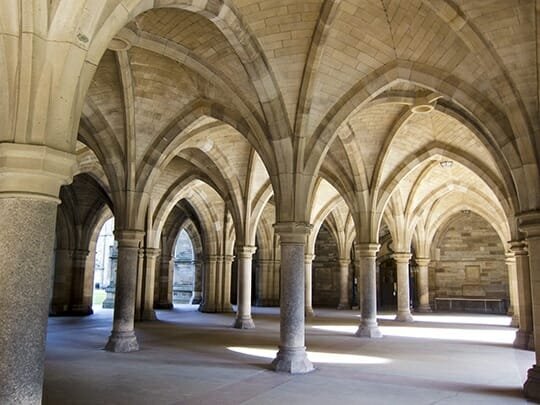
It was fun to explore the campus. We were the only ones around since it was summer holidays and late afternoon, and these arches had us imagining students passing through here for hundreds of years.
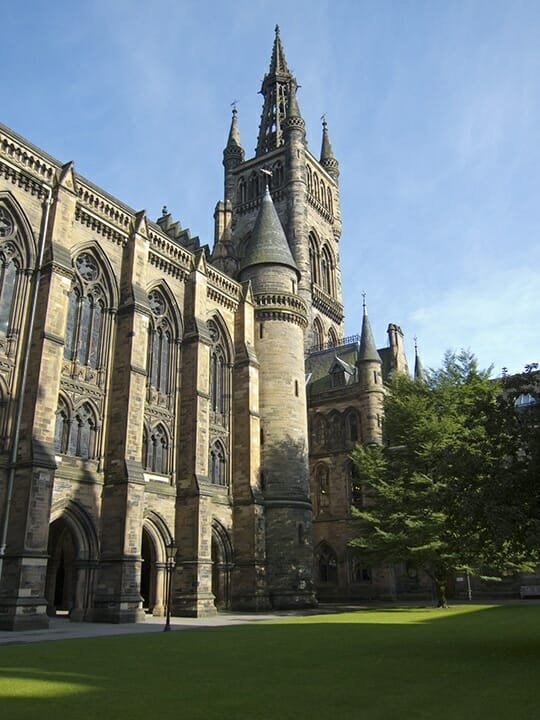
Another view of Glasgow University from inside the courtyard.
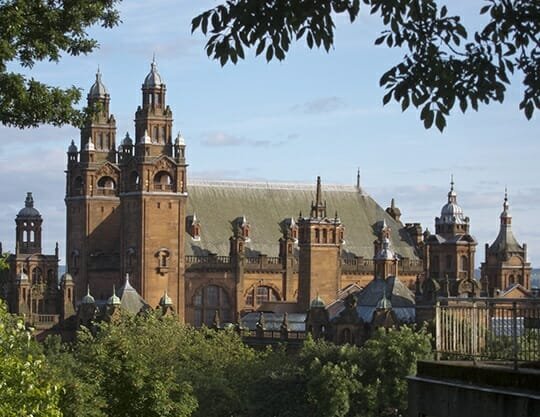
Looking at Kelvingrove Art Gallery and Museum from the university campus. This museum and the National Museum of Scotland in Edinburgh are remarkable in that they are museums with natural history, science and technology and history, as well as art galleries — literally something for everyone. Also, they are both admission free!
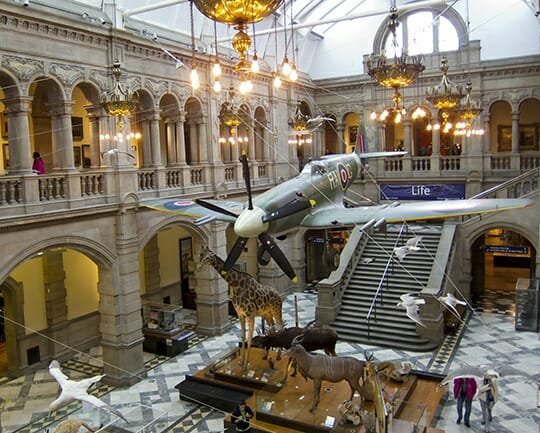
The grandeur and scope of Kelvingrove is challenging to show in photos, there is so much to see and learn.
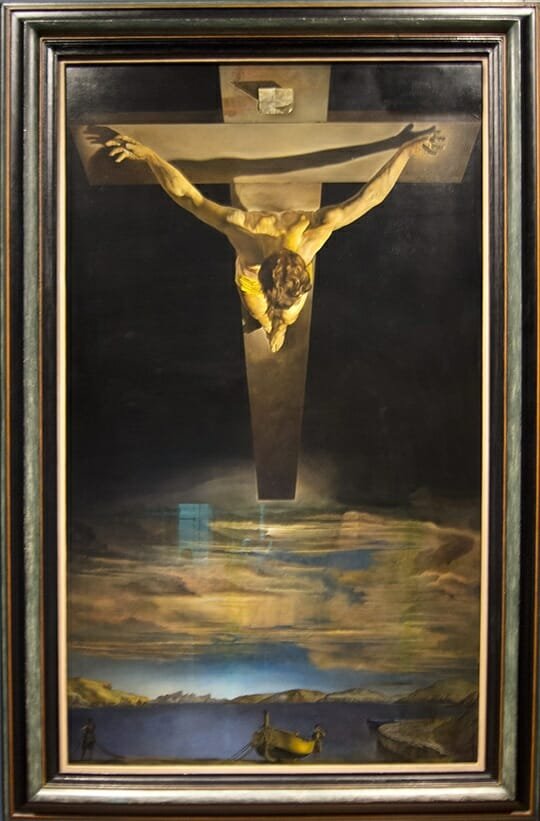
Salvador Dalí’s Christ of Saint John of the Cross at the Kelvingrove.
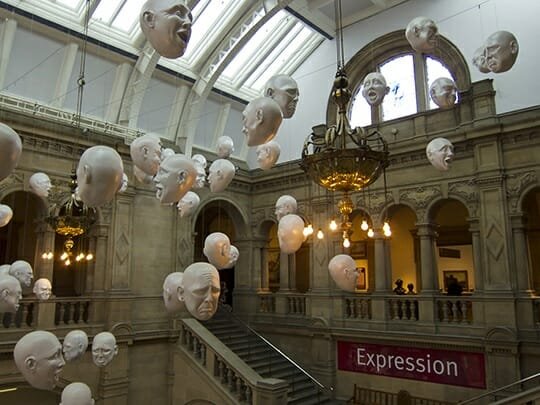
A conversation piece display, to say the least, at Kelvingrove.
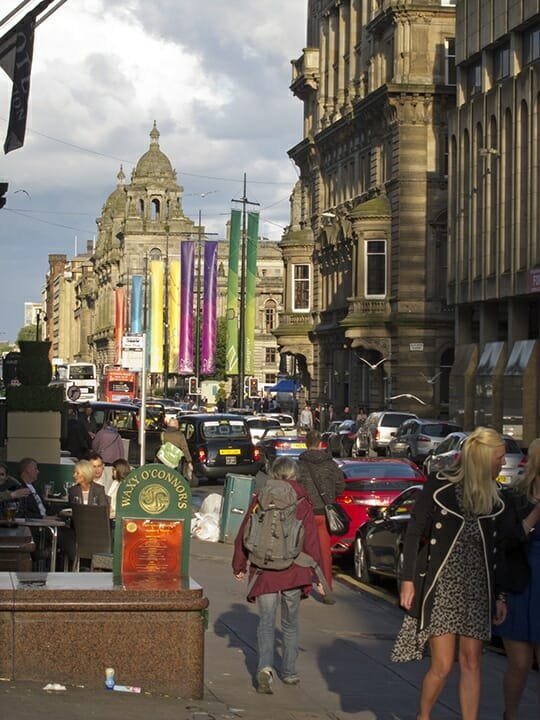
On George Street approaching George Square, the main square of the city where there is always plenty of activity.
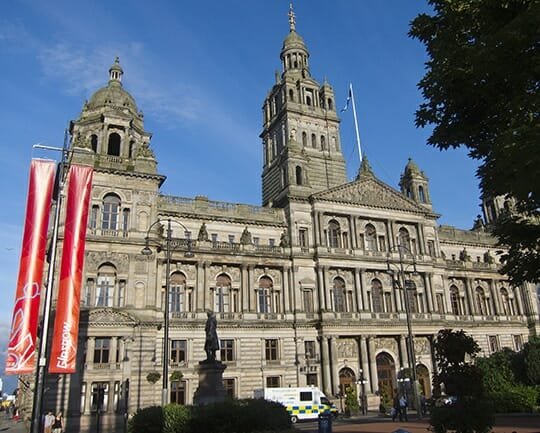
The Glasgow City Chambers, home of the city council dominate the square and were opened in 1888.
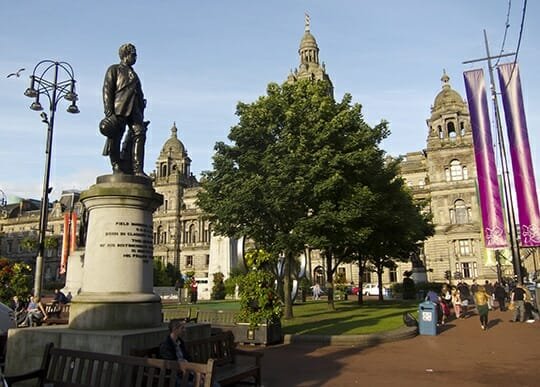
George Square is named for King George III, but many people point out that there is no statue of him on the square because the people were so unhappy with him for losing the colonies. 🙂 The statues around the square do include those of Queen Victoria and Prince Albert, Robert Burns, Thomas Campbell, and James Watt.
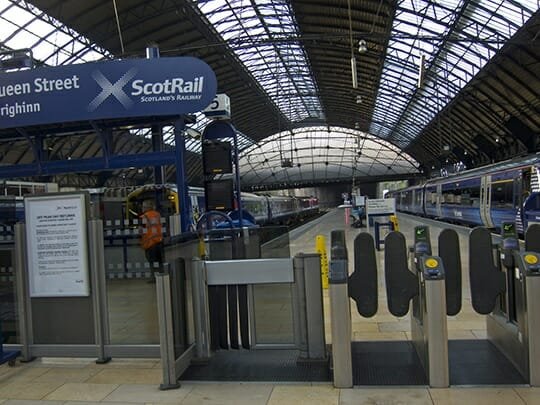
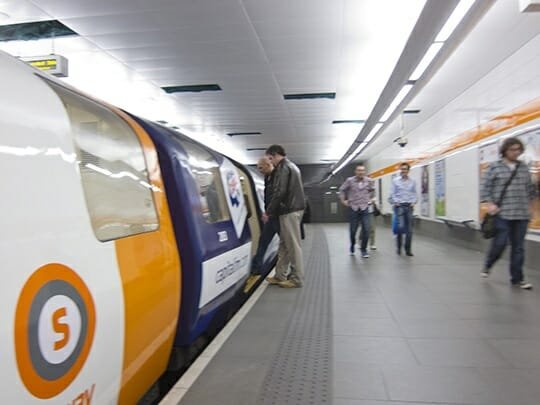
Transportation around Glasgow is easy. Central Station sits conveniently at George Square, and the subway circles the center city so you can’t get lost.
We thought the Glasgow Subway was very cool and user-friendly. Then we were even more impressed to find out that it’s the third-oldest subway system in the world, opened in 1896.
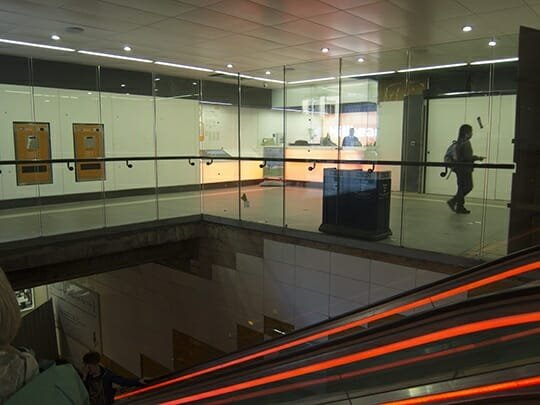
Glasgow Subway station in neon.
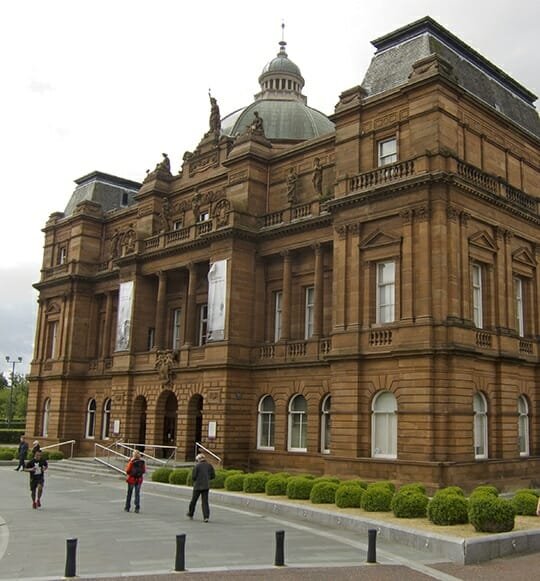
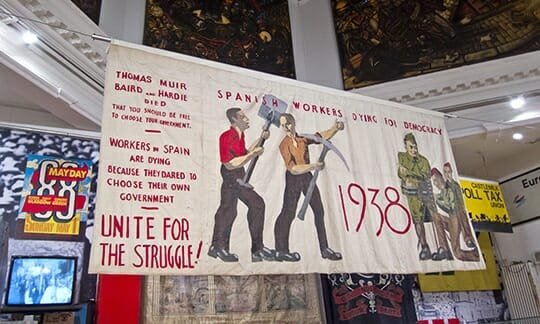
The People’s Palace and Winter Gardens is an amazing place and one of our favorites. It tells the story of Glasgow since 1750 through the people’s perspective.
The People’s Palace was opened in 1898 as a cultural center for the people and since the 1940s it has been a museum of Glasgow’s social history.
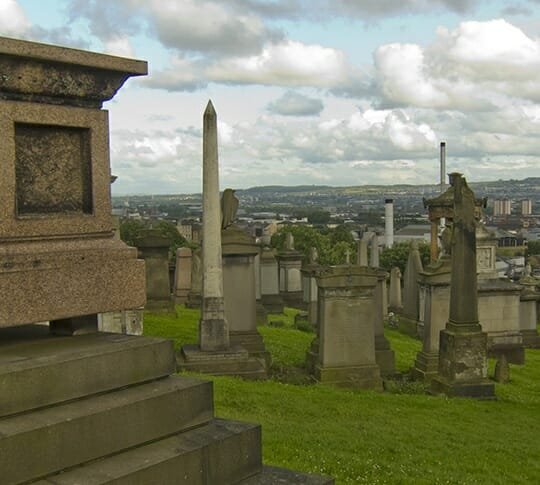
The Glasgow Necropolis land was made into a cemetery for the upper classes in the 1800s. It is adjacent to the Glasgow Cathedral and affords beautiful views of the cathedral and the city.
From Glasgow, we drove straight to Newcastle upon Tyne in order to have some time to see the only city we were visiting in the UK outside of Scotland.
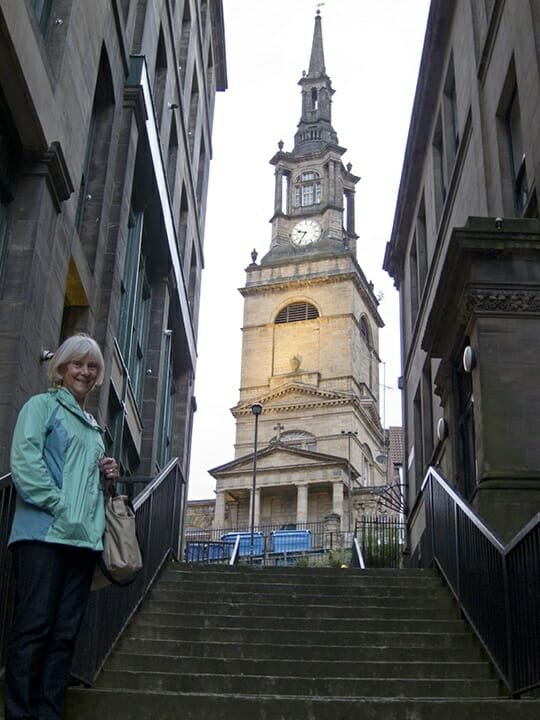
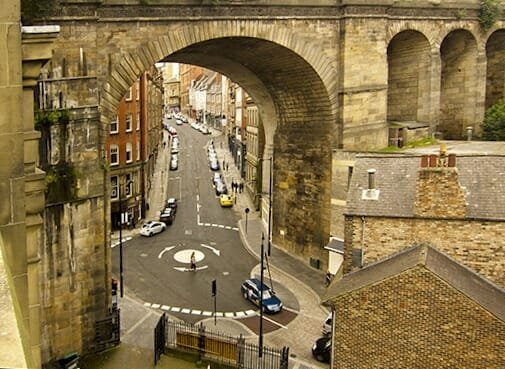
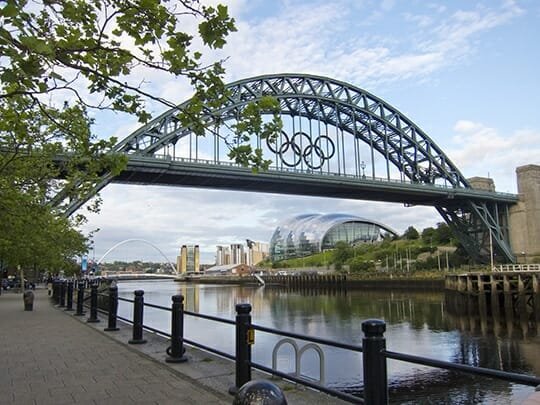
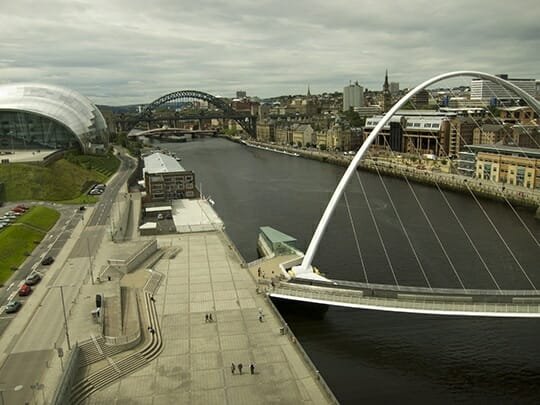
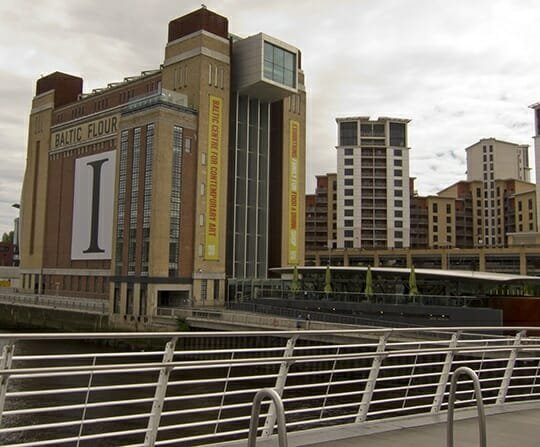
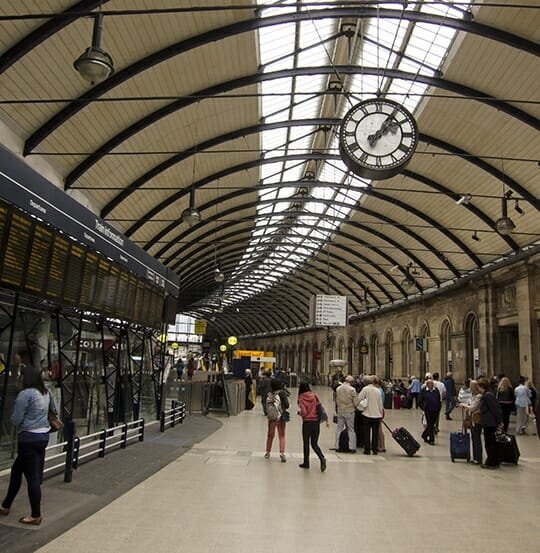
Newcastle has plenty of remarkable sights, streets with stairs and tunnels, and an eclectic waterfront on the River Tyne.
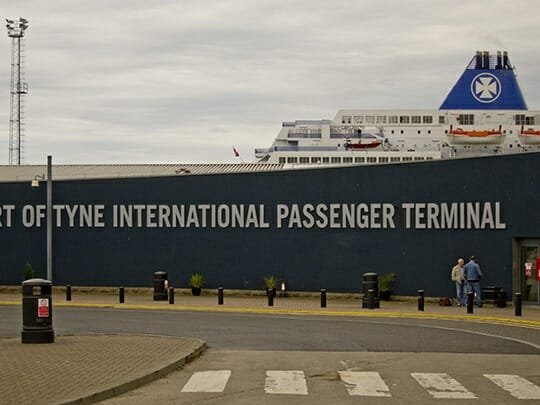
The Port of Tyne International Passenger Terminal with our ferry to Amsterdam waiting behind the entrance… and we say ‘see you later’ to bonnie Scotland and the UK.
Bagpipes and kilts; green hills dissolving into the sea; William Wallace, Robert the Bruce, and Bonnie Prince Charlie; kings and queens and castles; heroes and legends — we saw and heard them or their echoes during our two-week explore of Scotland. We sampled fish and chips, Sunday special roast beef, and even tasted haggis and tatties!
I had wanted to visit Scotland for many years. My father was a Baxter, and while I had no information about his father’s history, I felt drawn there just as some people are drawn to Ireland or Italy or other exotic places.
And I wasn’t disappointed. We ignored the cool, rainy weather that dampened our activities especially during our week in Edinburgh and visited almost all the sites on our list. We never hiked to Arthur’s Seat in Holyrood Park (the highest point in Edinburgh) because it was a long way up in the rain to have your view spoiled by clouds! But of course the Edinburgh Castle is a place of great views, too.
For our second week we rented a car and explored some of the central, north and west of Scotland as well as Glasgow. Even to Mark, for whom Scotland wasn’t a longtime wish, the countryside, glens, lochs, munros, towns and vistas were impressive.
When we told someone we were going to spend two weeks in Scotland, the response was “two weeks — are you sure?” We are happy we did in spite of the fact that it wasn’t necessarily cheap and we lost money with the dollar to pound values, and here are the visuals to prove it.
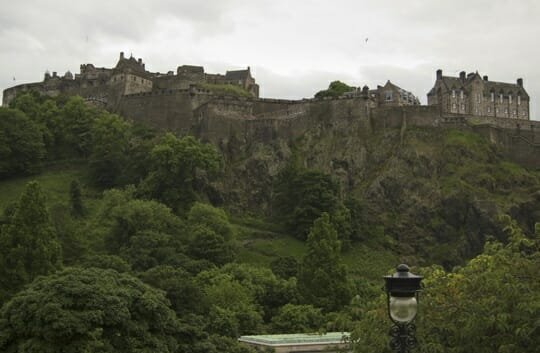
No better place to start than with Edinburgh Castle. Because the castle sits on a hill in the midst of the city, you can appreciate views from many places. The castle has evolved with a fascinating history over the years, with the oldest building dating to the 12th century.
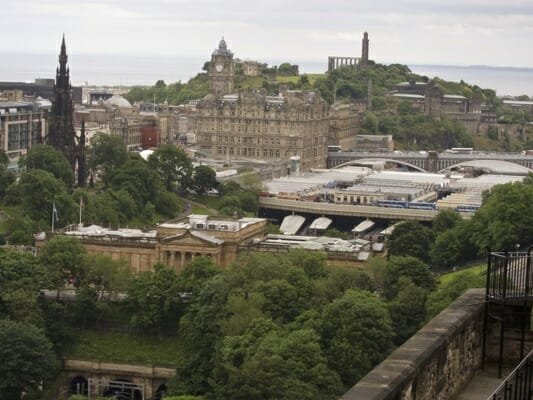
And here’s a view from the castle — the Walter Scott Monument (dark spires) is visible to the left, Waverley Train Station in the center with the Scottish National Gallery in front of it, and Calton Hill in the distant center with the Firth of Forth (river) visible behind it.
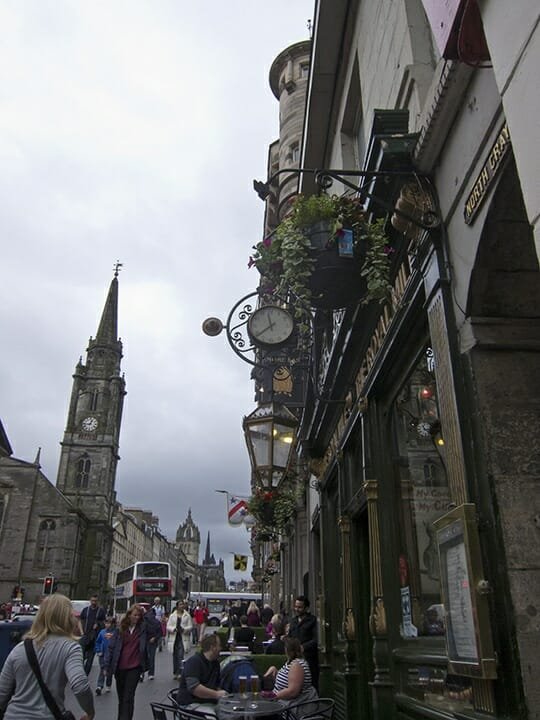
The streets of Edinburgh are full of grand architecture, history and photo opportunities – this is the Royal Mile in Old Town looking toward the castle. To give you an idea how old Old Town is, construction of the New Town began in 1767.
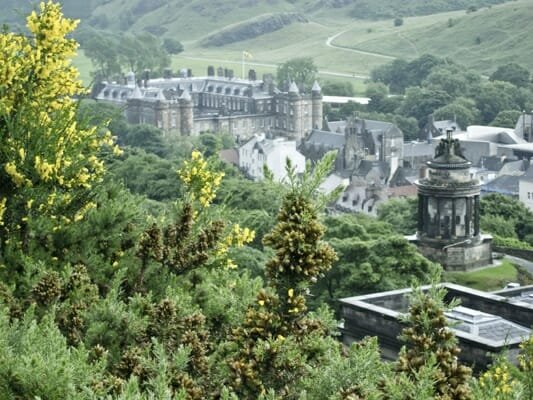
From Calton Hill, you can enjoy various views of the city — here we were looking down on the Queen’s Palace, the Palace of Holyroodhouse, with Holyrood Park beyond.
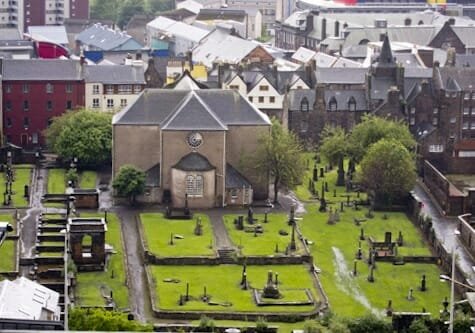
A cemetery and church as seen from Calton Hill — churches and cemeteries are not only prominent and beautiful in Scotland but also full of history. A famous church and burial ground in Edinburgh is Greyfriars Kirk where the renowned Greyfriars Bobby is buried.
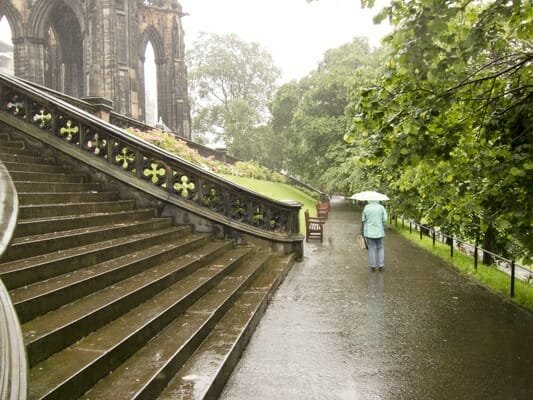
Did we say we had lots of rain? Here I am under the umbrella in East Princes Street Gardens near the Scottish National Gallery with part of the Walter Scott Monument on the left.
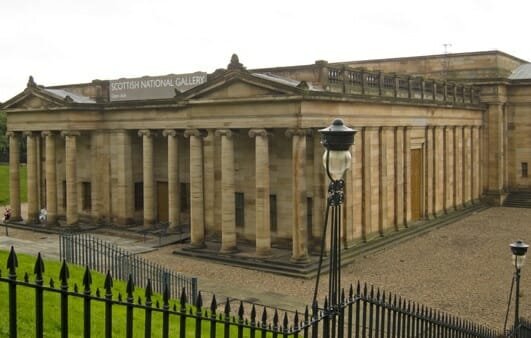
The Scottish National Gallery, home to the national collection of fine art from the early 16th century to the late 19th century.
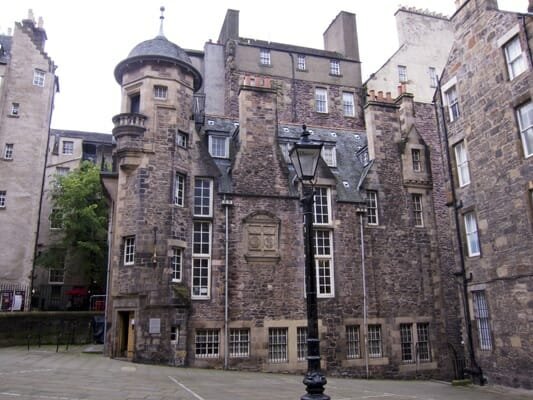
The Writers’ Museum in Lady Stair’s Close is a celebration of the lives of Robert Burns, Sir Walter Scott, and Robert Louis Stevenson, three beloved Scottish writers — and it’s a very cool house, originally built in 1622!
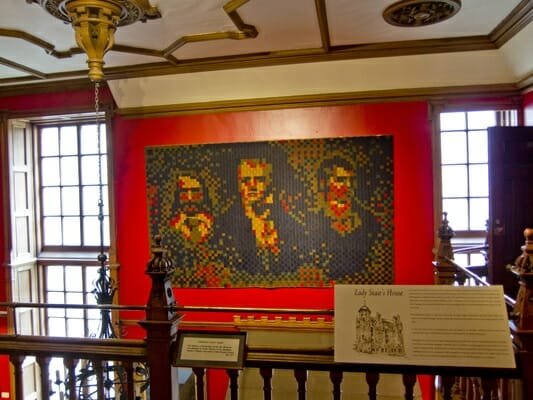
Inside the Writers’ Museum
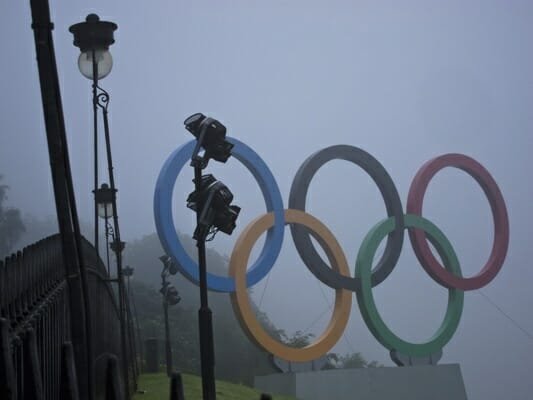
In the UK places we visited, we saw tributes and enthusiasm for the 2012 Olympics. The Rings in Edinburgh were usually shrouded in mist or rain while we were there.
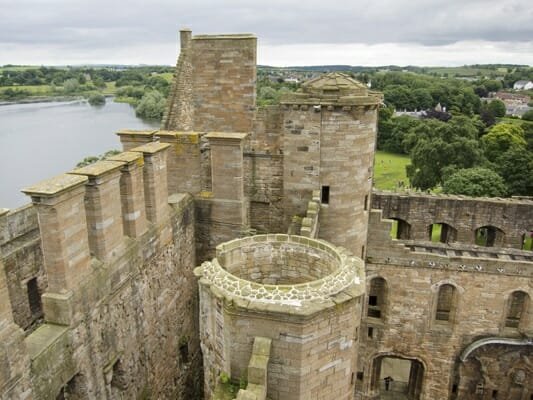
We took a side trip for a day to Linlithgow Palace – easy to see why, besides for defensive reasons, nobility built castles and palaces in scenic places. The Palace is essentially a ruin, but you can explore everywhere inside and out.
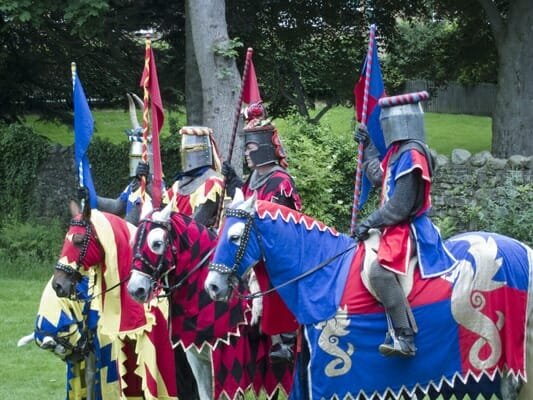
We visited Linlithgow on a day of a jousting tournament re-enactment – full of color and fun.
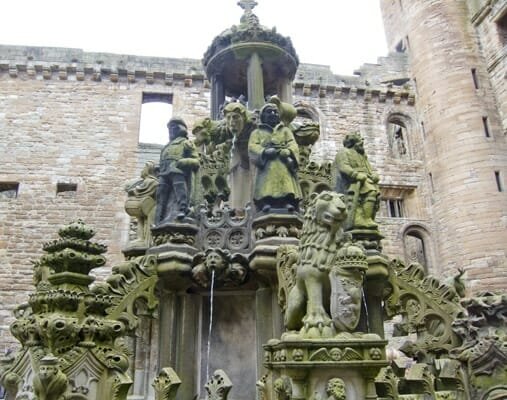
Things like this fountain at Linlithgow Palace that were built centuries ago are truly awe-inspiring.
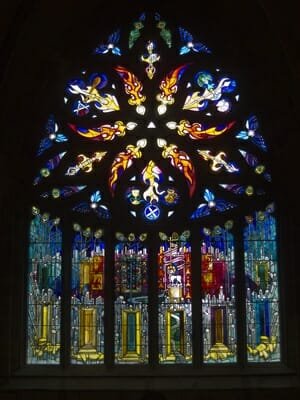
Beside Linlithgow Palace sits the 15th-century St. Michael’s Kirk, and this glorious stained glass window is full of symbolism.
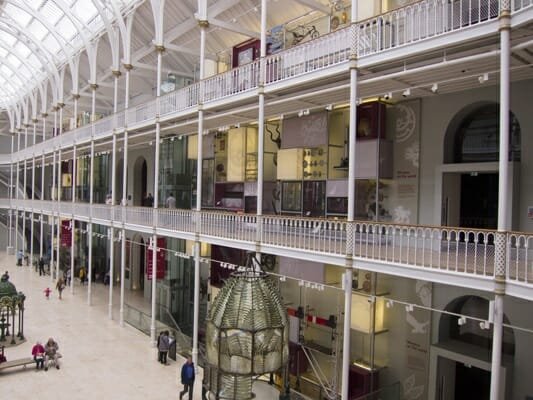
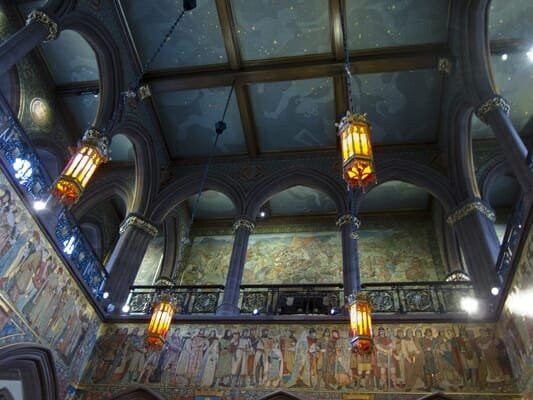
The National Museum of Scotland, with seven levels of wonders, including Scottish history, science and technology, nature and animals, industry, art and much more, was so impressive, we tried to stay past closing time! From dinosaurs to Dolly the Sheep, the National Museum is definitely on the must-do list. And best of all, most of Scotland’s museums are free, always with donations welcome, which is the way museums should be so they are accessible to everyone.
The Scottish National Portrait Gallery is another impressive and informative Edinburgh destination. We spent a lot of time reading and learning about the clans , the kings and queens, and the interlocking history of British and Scottish royalty, and we never really got it straight. We were sympathizing with UK students trying to learn their history when eventually we were told that it’s not taught in great depth – no wonder.
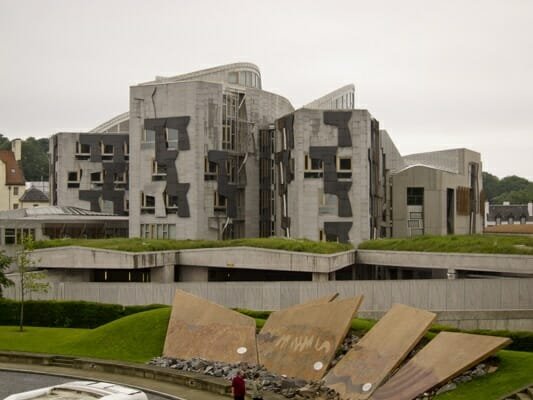
There were no tours available on the day we visited The Scottish Parliament, so make reservations if you want a tour, but the building, Debating Chamber, and photography exhibit were still worth seeing. Scotland will have an election in 2014 whether to become independent from Britain, and that issue inspired great conversations with many people we met. We heard everything from ‘definitely yes’ to ‘definitely no’ to ‘well, we just don’t know enough about the details and how it would all work’.
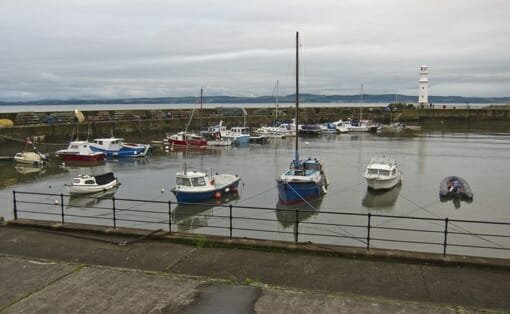
Along the Firth of Forth the waterfront of Edinburgh around Leith and Granton is in great transition. A shopping center, modern homes and apartments, and the Royal Yacht surround scenes such as this, of boats in a small harbor, and a colorful history. We had a fun dinner here on the waterfront at the Old Chain Pier. Eating out is not inexpensive in the UK, so we chose restaurants carefully and started to split our dinners which worked out well.
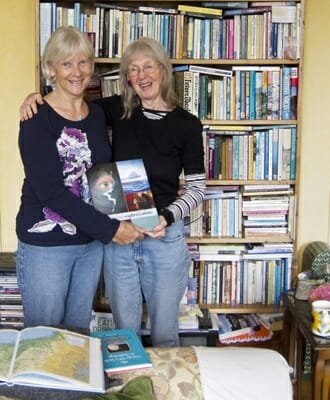
One of our goals in Edinburgh was to deliver a copy of Migraine Expressionsto Moira, a poetry contributor who since 2008 had become an unmet friend. At long last our friendship was confirmed in person, and we thank Moira and Jim for their hospitality and warmth – and lunch and dinner! That book traveled many miles and took a very long time to reach Moira.
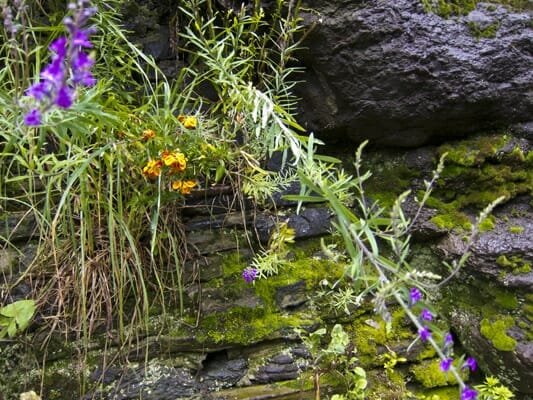
Near Calton Hill – the color of tiny flowers and the ever-present green of Scotland.
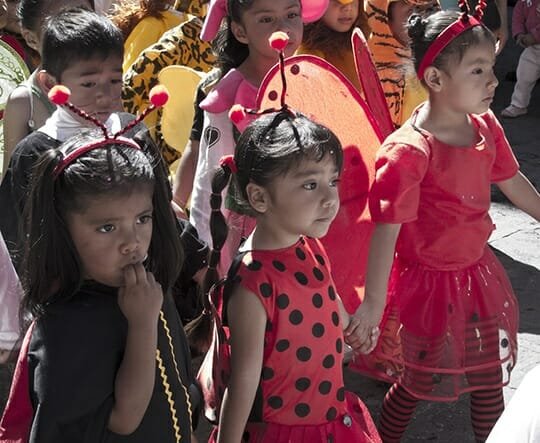
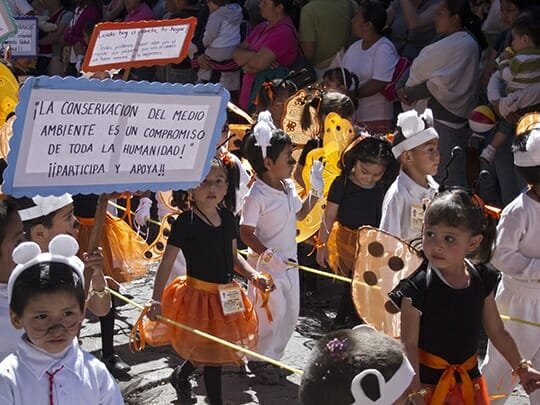
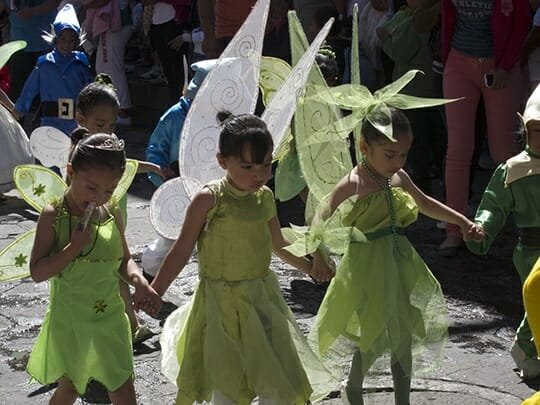
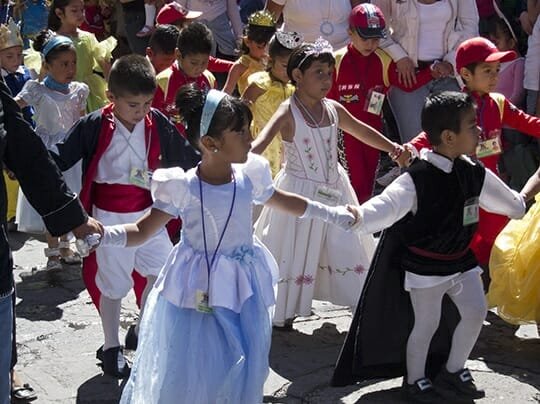
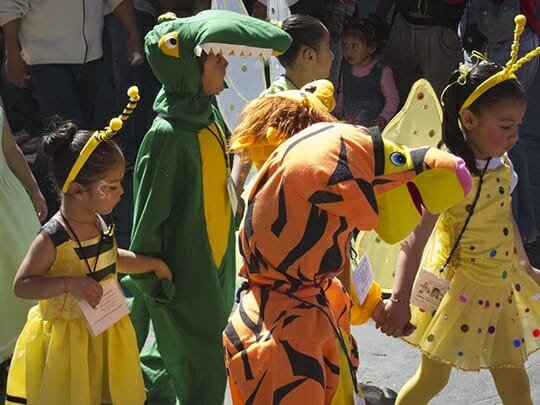
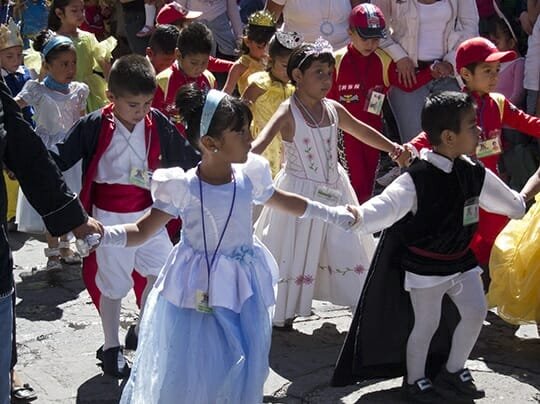
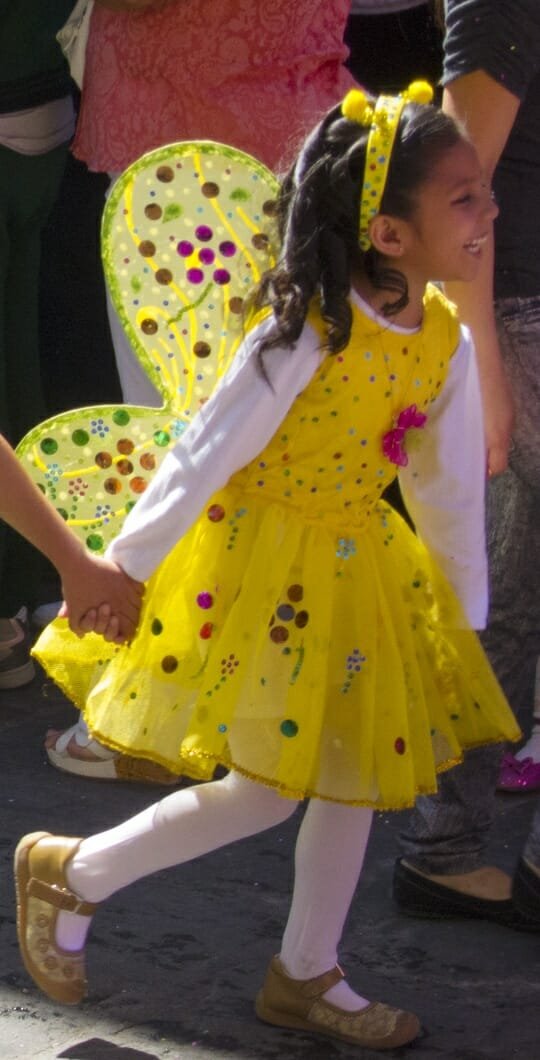
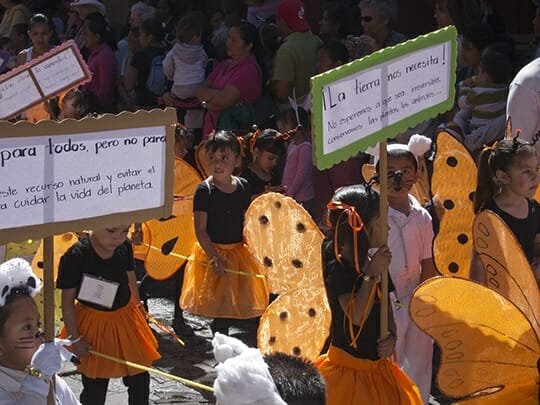
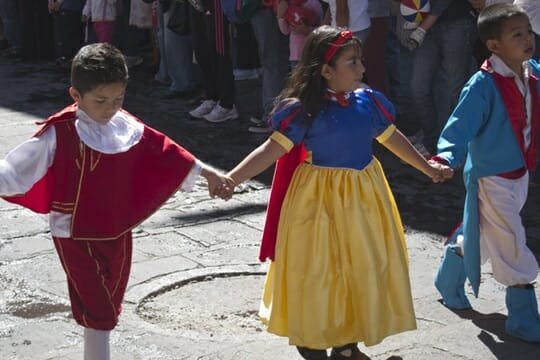
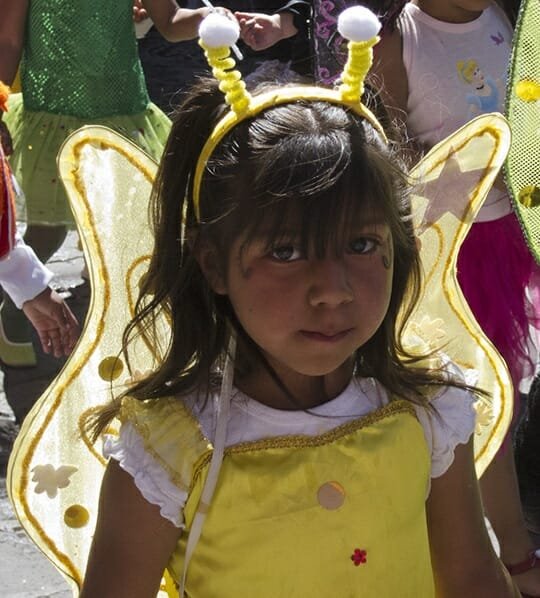
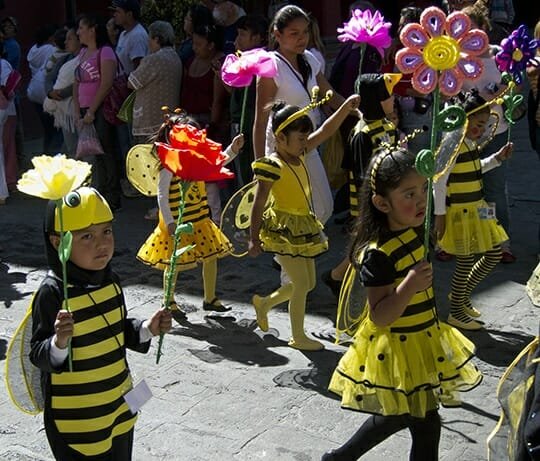
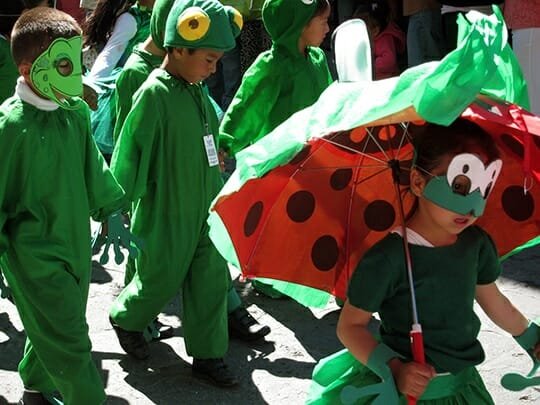
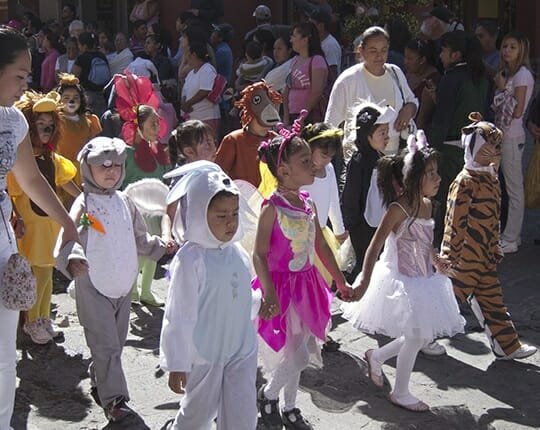
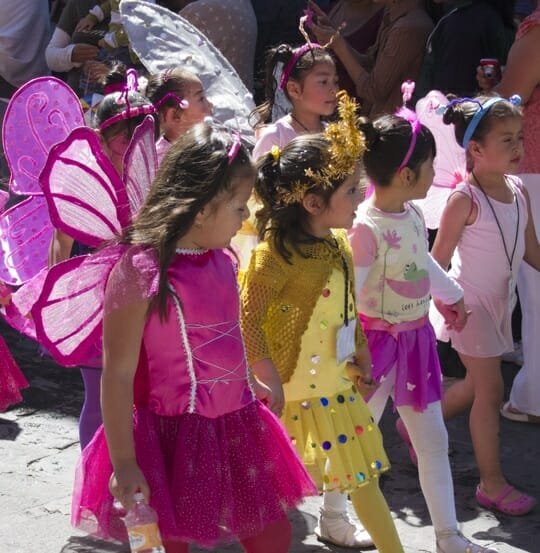
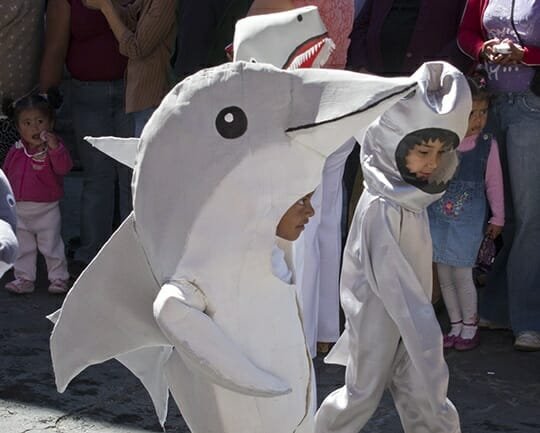
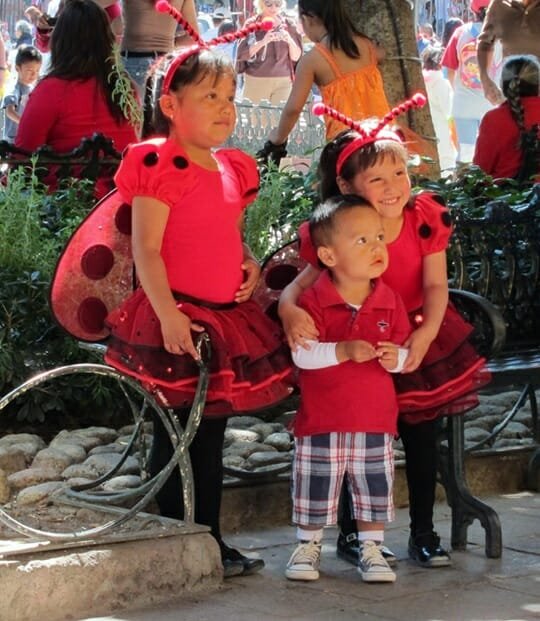
Celebrate! For the Spring Equinox, the children of San Miguel paraded through the city as animals, butterflies, frogs, bees and countless characters in bright and happy colors on March 21. The sun was hot, the route long, and the town abuzz with music, chants and cheerful reminders for us all to celebrate the Earth and respect the environment, especially the precious water. The spring parade of los niños is one of the best parades I have ever seen, and I particularly appreciated all the hard work of the children, their parents, and their teachers! See for yourself…

 Heading southwest, the path from Dornoch through Dingwall, Gorstan, and Kyle of Lochalsh to the Isle of Skye; then Invergarry, Fort William, Glen Coe, Tyndrum, Crianlarich, Loch Lomond, and Luss to Glasgow was the third leg of our journey around Scotland.