Who is an Expat?

Who is an Expat?

golden wire globe

At Home Abroad: Expat Expressions


Is there such a thing as an Expatriate or Expat in 2014?  Or are these words lost to the 20th century?

Why are we examining these questions? Because a growing number of people are now living or planning to live abroad, and we’re gathering their modern-day expat stories for an upcoming anthology titled  At Home Abroad: Expat Expressions.

We have collected stories from people around the world who have left their countries of birth for various reasons and have captivating stories to tell.

These stories make us consider: Is the definition of expat tied to the amount of time spent away from one’s home? What constitutes home? If all that is left of home is packed in a storage unit and your address is a postal box for gathering mail, are you an expat? Do you need to be disgruntled to be an expat? Is a perpetual traveler an expat?

Many people who work abroad for multi-national corporations self-identify through their blogs and forums as expats.

Then there are people like us who have traveled for years, living in a series of countries, without a home base.

Untethered freelance workers with a lust for travel and cultural experiences can be found just about anywhere on the planet.

Retirees represent a huge bloc of expats. They live in all corners of the world, and they are fascinating and courageous.

Try to buy a domain with the word expat in it. They are in use. Clearly, many of us view ourselves as expats.

While we have much in common, our circumstances are not identical. We feel that all of these groups fall under the category of expatriates or expats, but not everyone agrees with that definition. Some would reserve the word expat for early to mid-20th century travelers. Certainly, the word and the people it represents have a storied history.

Places like Paris and people like Ezra Pound, Gertrude Stein, F. Scott Fitzgerald, T. S. Eliot, Isadora Duncan, and Alan Seeger come to mind. At that time being an expat amounted to a movement.

It’s clear the word has diverse applications, including permanent travelers, people working in other countries, and those retiring abroad. See the definitions at the end of this post.

We don’t need to label the wide variety of lifestyles that involve living or traveling in another country — for our book we’re using the word “expat” to describe people who spend extended periods of time outside their home countries.

Having put the definition challenge behind us, we are excited and proud to say that in the last month or so we’ve been entrusted with amazing expat stories that will encompass the contemporary range of at-home-abroad experiences. They are inspiring, informative, challenging, and thought-provoking. These stories will help illuminate how expats relate to their world.

The adventuresome expat spirit is alive in the 21st century!

And it’s not too late. If you have an expat story, please contact us. Our deadline for submissions is November 1.

Word Metro Press Presents At Home Abroad: Expat Expressions

Wikipedia
An expatriate (sometimes shortened to expat) is a person temporarily or permanently residing in a country other than that of the person’s upbringing. The word comes from the Latin terms ex (“out of”) and patria (“country, fatherland”).

Cambridge Dictionary

expatriate-noun. someone who does not live in their own country

Angloinfo

An expatriate (often abbreviated to ‘expat’ or sometimes ‘ex-pat’) is a person ‘temporarily or permanently residing in a country and culture other than that of the person’s upbringing or legal residence’. In other words, somebody who isn’t from ‘around here’.

Collins

expatriate-noun.  a person who lives in a foreign country


Slow Travel — Then and Now

Slow Travel — Then and Now

Slow Travel, then and now

Slow Travel. It’s the art of living in a place for a limited time, immersing yourself in a new culture, learning as much as you can about the people, the language, the life there, and then choosing a new destination and moving on. Repeat again and again.

For the last six years we have lived as slow-travelers in Mexico, Central and South America and Europe. Our untethered, slow-travel lifestyle in which we work remotely caught the attention of the Huffington Post and Alena Hall wrote this article about us.

But the slow travel life we live now was not possible a decade or two ago. How do we know this? Because we lived a version of it 20 years ago using the technology available then to live a dream.

That dream in 1996 was the project we called Blondins’ Assignment America. We slow-traveled through the United States for nine months, roughly paralleling a school year while our children attended their local school in Michigan via the Internet. It was groundbreaking.

On September 30, 1996, we left our home in Boyne City, Michigan. What might be the world’s largest field trip and hands-on learning experience began in Cleveland, Ohio, with science, rock and roll, and natural history. It progressed to marine life in Maine, the story of independence and immigration in New England, and national history and heroics in Philadelphia. It then intensified during our two-week stay in Washington, D.C. during an election cycle, and never slowed as we headed West.

To give you an idea how ambitious we were, here is a  list of places we visited in just the first month and  here is an article about our first 10 weeks.

We received a fair amount of press at the time, which led to a U.S. Department of Education invitation to be featured speakers at a conference called “Families, Technology and Education.” Our paper was called, “People Make Dreams Come True, and Technology Expands the Possibilities: An Educational Journey across the United States.“ Pretty cool — and still relevant.

While the 90s may seem like the middle ages technologically, our Power Point presentation played well to a crowd of 400-500 educators from around the country. It included a pretty sophisticated video on animal and plant life our children produced in Big Bend National Park.

At that time high-speed Internet was rare. Google did not exist. Yahoo, Netscape and AltaVista were early players but wireless was still a dream, so we connected  wherever we could for email and uploading web pages using dial-up. Dial-up, you say?

We would walk into 7/11s, Laundromats, local businesses, libraries, and even museums with local access numbers (you might have to Google that one), our laptop and a 50-foot phone cord. Strangely enough, after telling our story about school via the Internet, most people agreed to share their phone line. It was always a challenge but we met fascinating people in the process.

Fast forward 20 years. We have accessed the Internet in some remote areas of the world with just a Wi-Fi code — and the ability to ask for it in a foreign language.

Travel sometimes feels too easy now. There was very little infrastructure in place in 1996 so when we landed in a new place, the local visitors center was our go-to source for information. Now we maneuver at will using a phone.

The past 20 years have propelled us from dial-up to ubiquitous wireless, from folding maps to GPS-guided navigation, and from limited cell access to smart phones more powerful than the laptop we used. Then, we used a 1.2 MP Kodak camera; now, we take high-resolution images on phones. It’s brilliant.

Today we are still using current technology to live an untethered lifestyle, but we know firsthand what a wild trip technology has taken in 20 years. We felt like pioneers in 1996 and now the planet  hosts millions of travelers instantly documenting their adventures to the world. The variations of our story are endless – and now, like then, technology can make dreams come true.


Betsy and Mark Blondin have traveled and lived in diverse places in Latin America and Europe during the last six years, meeting expats with wonderful stories that inspired their latest book: At Home Abroad: Today’s Expats Tell Their Stories. They have three grown children and enjoy the slow-travel lifestyle. Betsy is a freelance editor who enjoys helping others publish their work, and Mark is a data storage consultant. Join them at TodaysExpats.com or on Facebook at At Home Abroad for more about the book and its remarkable authors.

We hope you visit Blondins Assignment: America for insights into that journey and keep in mind the site was built as we traveled using Microsoft’s  Front Page and that we have left it vintage for historical and sentimental reasons.

City Bus Tours – A Valuable Tool for Slow Travel

City Bus Tours – A Valuable Tool for Slow Travel

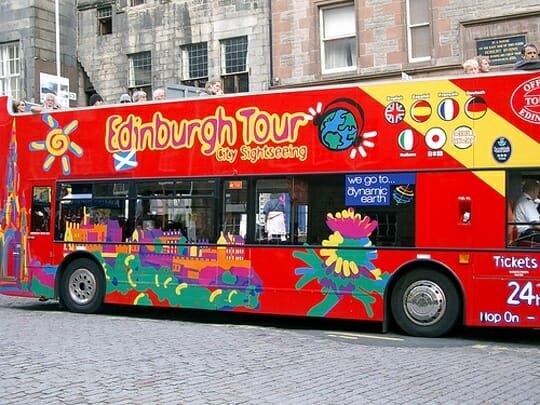
Edinburgh City Tour Bus

Say what you will. As slow travel veterans, we have come to appreciate this staple of city tourism. We arrive in a city determined to know it — to walk, live, eat, shop, and cultivate a deep understanding. These city bus tours offer the opportunity to do the once around and orient yourself to a place. Hear the historical overview and pinpoint places for future probing, while snapping pictures and visualizing the directions and locations of key places. City tours are generally reasonably priced, and we like that.

One of our first slow travel experiences and city bus tour was in Granada, Spain. That one gave you 48 hours to get on and off. We planned it so we could visit some out of the way places like the Science Center while we got our bearings in the city. The cost was 17 euros.

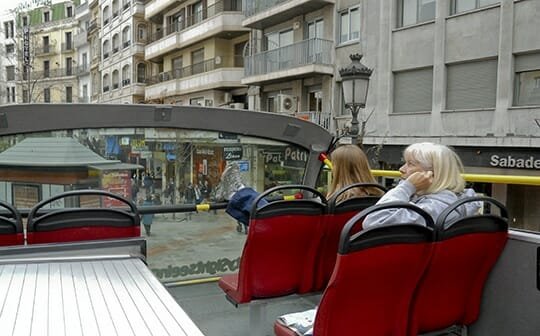
Granada Spain view from top of bus (more…)

Slow Travel & Funky Apartments

Slow Travel & Funky Apartments

it all looked good

The most (possibly only) tiresome part of slow travel  is finding apartments. Sure, if we had unlimited resources or even just lots of money, it might be one of the more fun aspects. But for us, it usually involves a lot of searching and then hoping. Funky apartments can be charming.

We have found some good ones in our slow travel journey.  Our apartment in Cuenca, Ecuador, pops to mind. The people we rented from in Crucita, Eucador, knew the people in Cuenca, so as we were ready to leave the beach we had a nice three-bedroom, 6th floor, modern apartment, close to the centre,  to rent  for $850/month. Of course we had struggled to find the Crucita house. Finding good beach rentals in Ecuador is challenging.

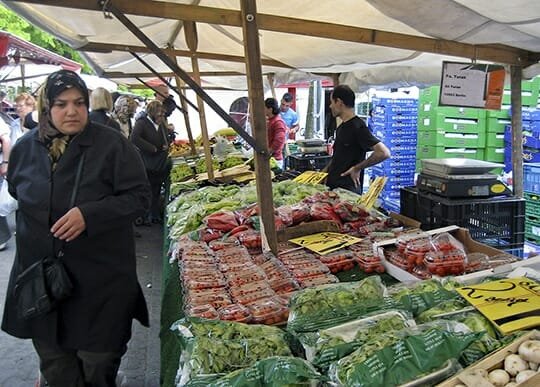
Those gems pop up, and we’ve enjoyed our share.  The funky apartments are memorable as well.  For example, we were in Berlin for our son’s graduation and planned to slow travel  to spend some time with him. We focused on the Neukölln neighborhood, at the time a Turkish area with a thriving weekly market.  The neighborhood was in the process of gentrification with new bars and restaurants opening almost daily. Rents were low and the variety of value-priced restaurants amazing, which made it a cool place to live.

Turkish market 540 (more…)

Guatemala, Slow Travel

Guatemala, Slow Travel

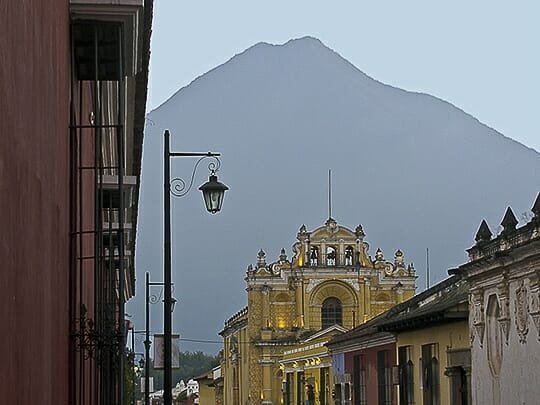
San Pedro ihospital_adjacent church540

Antigua, Guatemala – San Pedro Church & Hospital & Volcán de Agua

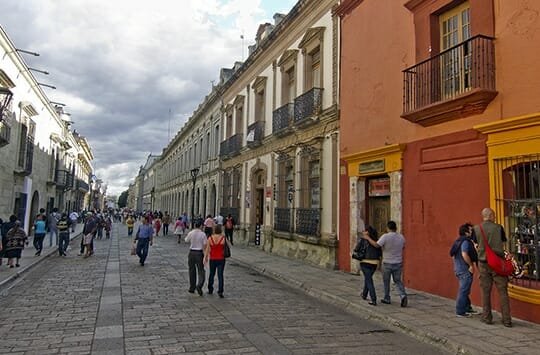
Slow travel demands flexibility. For example, earlier this year we had planned to stay in Oaxaca, Mexico, for a few months, get some work done and take Spanish lessons. For a decade or more we had heard about this beautiful city and after a few days there, we understood.

oaxaca540

Street scene in Oaxaca, Mexico

As background, our arrival in Oaxaca was preceded by a month of travel, at the end of which we were tired, overspent and anxious to settle down and work. (more…)