One goal of immersing ourselves in the Buenos Aires culture was to learn as much Spanish as possible. We began by placing a Craigslist ad for a Spanish tutor that received unexpectedly rich results. We narrowed the respondents down to four or five and then scheduled interviews. That process worked really well, and we chose to work with Maria.
Learning a second language anytime if you’re not 5 years old or growing up in a bilingual household is difficult, but learning when you’re in your 50s can be paralyzingly intimidating!
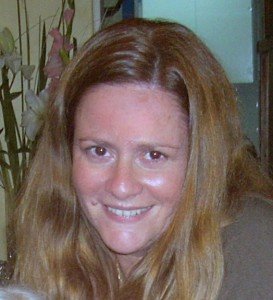
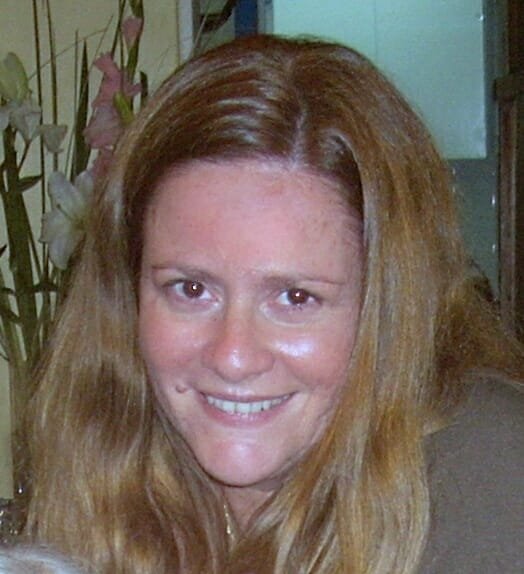
Our Spanish teacher, Maria
Maria seemed to understand; she didn’t giggle or laugh too much at our Mark’s horrible pronunciations, or even at our inability to carry on anything approaching a meaningful conversation.
Let’s stop here for a second. Verbs in Spanish are amazingly effective and unbelievably complex. They convey meaning far beyond English verbs. The concept is easy: verbs convey gender, context, relationships, all the tenses, etc., so If you can’t conjugate verbs effectively, get out of the room. The rest of the language is relatively easy.
After roughly two months of three-day-a-week, two-hour classes, we had mastered present and some past tense conjugations. We could — for the most part — convey what we wanted or needed to in stores, restaurants and taxis. It wasn’t pretty but we were understood. Well, Betsy was understood, Mark was struggling with the “T” sound. As Maria kept reminding us, no “cha cha cha.”
It drove us mad once trying to convey that something made us triste (sad). Looking straight at the person, we made faces, ran fingers down our cheeks to illustrate tears, and repeated the word several times but could not make the person understand. That is how important pronunciation is. The “t” sound seems simple but it isn’t, and you have to roll the “r”. We don’t realize how subtle these sounds can be.
It was particularly funny as we practiced our burgeoning language skills that when we failed to understand what someone was saying to us in Spanish the first time, they would repeat it louder and then again louder. If you are ever guilty of this behavior to a non-English speaker, believe us, repeating things louder and louder does not help the other person understand.
We had so many funny and trying experiences with everyday communication. Our portera (doorman) was a super person, and we came to really enjoy him. He spoke almost no English. We saw Ruben several times a day and became friends but never communicated very well verbally, although you can’t say we didn’t try really hard.
Classes were intense. Brain matter was pulsing, neurons flashing. After two hours, if felt like someone had been walking on your skull. It was the definition of “brain dead.”
We laughed, worked hard, practiced, used our knowledge every day, and in the end, we can say this much, we had fun and did the best we could. They say learning a second language is one of the best mental exercises. That may be true, and for us, it was all of that plus making a new and forever friend.
Need a wonderful Spanish teacher?
So if you’re looking for a great Spanish teacher in Buenos Aires, no matter what your skill level, we recommend Maria! (Yes, she’s a real Spanish teacher with great credentials and not to be confused with Maria in The Sound of Music.) And the name wouldn’t be pronounced the same in Austria, either.
The Spanish we did learn while in BA is a credit to Maria, and what we didn’t learn can only be blamed in our case on the students.
Maria speaks four languages and is also conveniently a travel agent who can help you with your travel plans in Argentina and other countries. She’s an excellent source of local information as well, and what she doesn’t know, she will try to find out for you. Her e-mail is majo1313@arnet.com.ar.
Maria is so much more than a Spanish teacher. Muchas gracias to our friend, Maria!
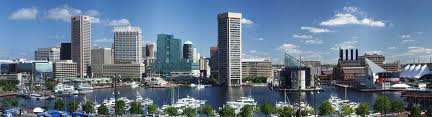
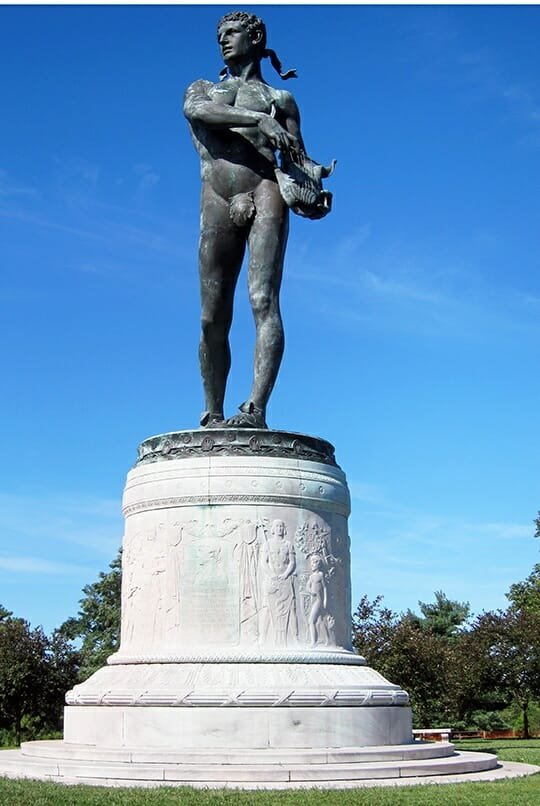
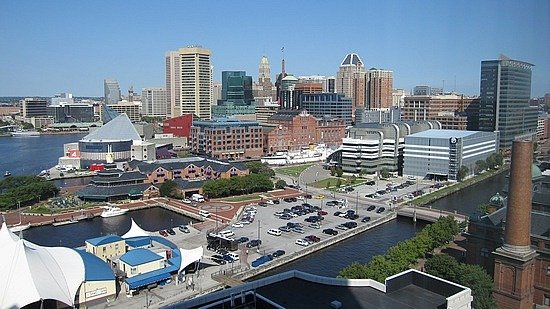
B’more, Charm City, America’s Comeback City, The City of Firsts, Monument City… I prefer the latter name because it must be the oldest and from our experience so far, represents history’s legacy and the architectural beauty of the city.
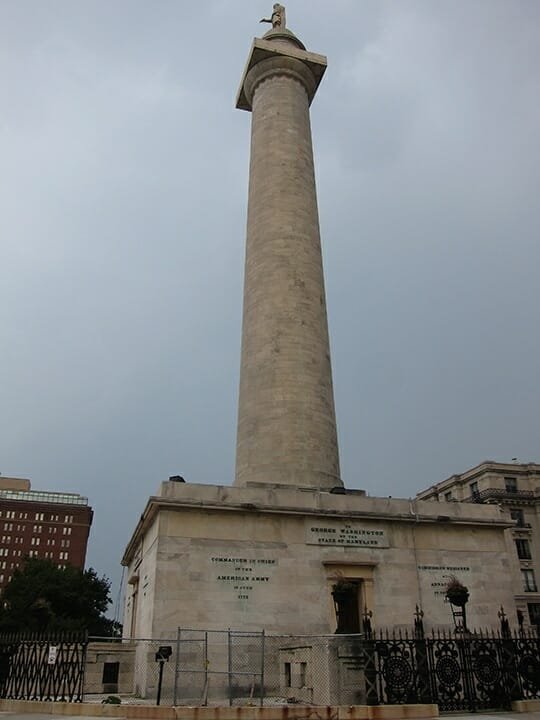
John Quincy Adams first coined Baltimore the “monument city” when he visited in 1827 and saw the Battle Monument dedicated to those who died during the War of 1812 and of course the 178-foot-tall first monument to George Washington that dates to 1815 (which by the way is close to where we are staying in Mount Vernon).
We have been here a little over a month. As I write this we are experiencing a heat wave of epic proportions, or at least it feels that way after several days of triple digit temperatures. There is much to see and do here and we have barely made a dent in exploring this city.
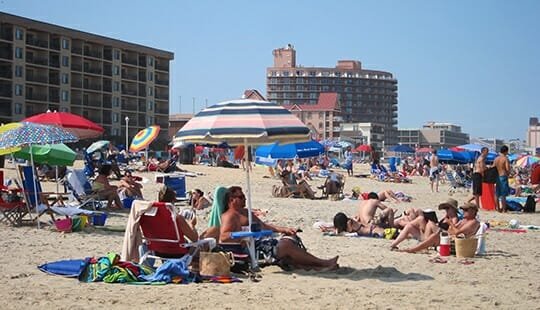
Ocean City, July 2011
We were able to take a three-day side trip to Ocean City, Maryland, for much-needed beach time. Oh boy, it is like time stood still there — salt water taffy, games and rides on the boardwalk, a fast food bonanza. The beach is timeless and gorgeous.
Baltimore has a jazz legacy, being the birthplace of Billy Holiday, Eubie Blake, Cab Calloway, and Chick Webb; we have yet to experience all that is offered here.
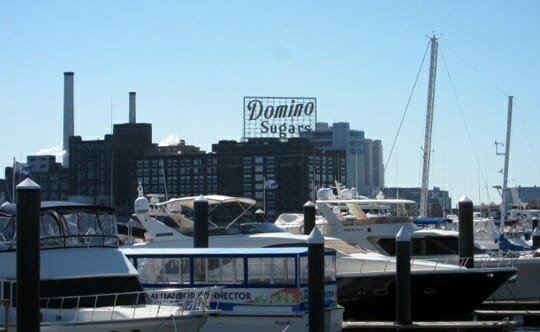
It is an area rich in history and flavor. We are looking forward to some good music and cruising the harbor in the water taxis!
It’s a timely place to be. Exactly 150 years ago this month not far from here, the First Battle of Bull Run gave the Confederate forces a taste of victory and the North reason to realize it would be a long and bloody war.
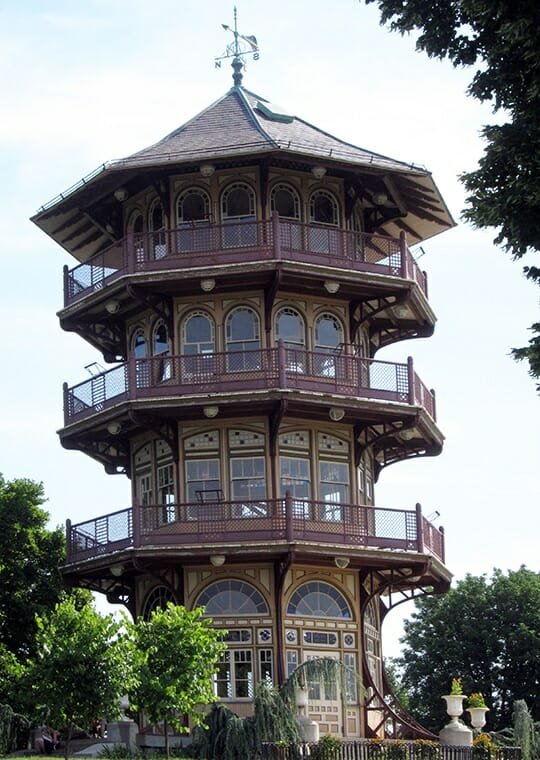
The pagoda at left is in Patterson Park which provided the high ground and key defensive position for U.S. forces against British ground forces in the Battle of Baltimore during the War of 1812.
This is our second extended stay in the South. Last year we spent a couple of months in Morganton, North Carolina; we appreciate our time in places where contemporary and diverse American culture is steeped in history.
Baltimore is not without its current struggles, echoing those of other U.S. cities — unemployment, crime and housing blight — but it appears to be fighting to overcome, and we have encountered nothing but friendly and happy (even if overheated) people here.
More from Charm Monument City as we battle with the heat to do and see more.
On Wednesday June 15, 2011, we left Buenos Aires on one of the first flights to the United States out of the capital after the eruption of the Puyehue volcano in southern Chile spewed its ashes across Argentina.
The winds played capricious games with itineraries across the continent. Our original flight was for Monday the 13th. Ever the optimists, we took the $40, one-hour cab ride to the airport for our scheduled flight. We found ourselves back in our apartment pretty quickly, 80 bucks poorer. We were told Friday was the earliest available flight to the U.S.
Tuesday was the scramble day, trying to find a flight to the States. We looked at every option out there. A previously scheduled memorial service three days away on Friday in Michigan was not something we were prepared to miss.
Around noon on Tuesday the best option was to take a very long bus ride (700 miles) to Santiago, Chile, which would put us on the west side of the ash cloud. That bus was leaving at 5 pm. It was decision time, make the memorial at all costs or accept our fate in Buenos Aires.
Before we needed to make that decision, at around 12:30 pm, an email came from the local United Airlines representative saying that they had a “special flight” leaving at 9:00 am the next morning if we wanted to be on it. He said the winds were shifting in a hopeful direction and it was supposed to rain overnight, so they thought they could get the flight out. Amazingly, that flight left on time, which had us landing in the U.S. Wednesday evening.
Thursday morning we headed to Flint, Michigan, some 576 miles away in our 2003 Buick. The memorial loomed on Friday at 1:00 pm. With time to spare, we shared in the memorial and spent the weekend with relatives.
Downtown Flint Above the Cobblestone Street
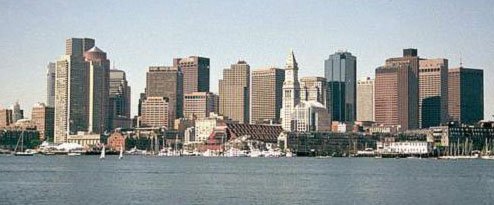
Boston Skyline
The following Tuesday we drove to Boston, Massachusetts (725 miles), to help our daughter move. A good night’s rest in a motel and back on the road to Baltimore, Maryland (411 miles). So, seven days, some 5,000 flight miles and 1,700 driving miles since landing on our special flight out of Buenos Aires on Wednesday evening we began settling into our Baltimore apartment. It is Sunday the 26th, time to get busy.
We have much more to write about Buenos Aires. We spent four wonder-filled months in that great city. Our Spanish improved, we enjoyed several museums, some excellent meals, saw Placido Domingo perform live outdoors, listened to a symphony at Teatro Colon, reveled in spectacular natural beauty, and met some wonderful people. If you ever have the opportunity, seize it — get to know Buenos Aires.
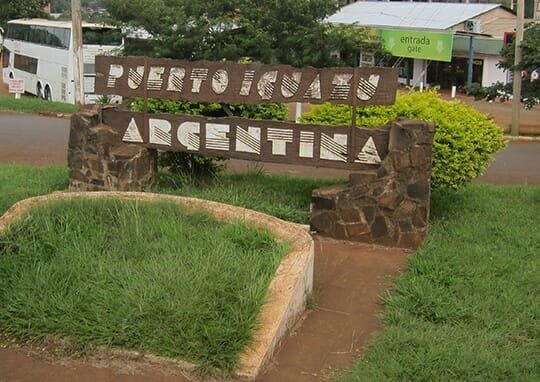
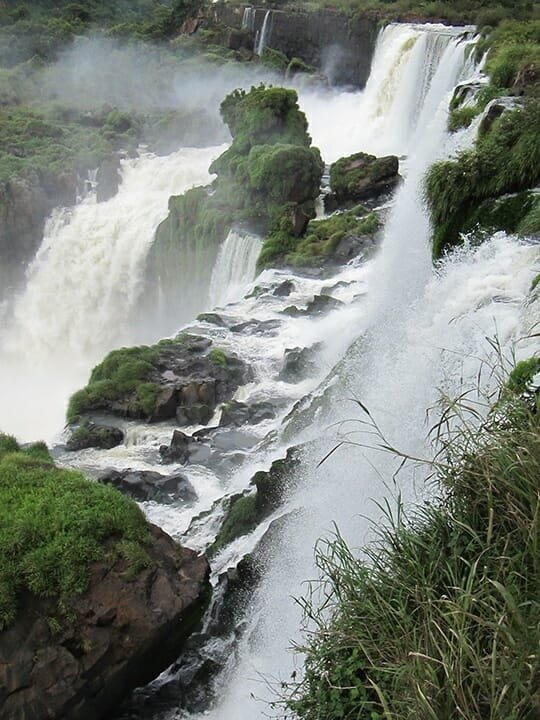
Iguazú Falls is on every must-do list for Argentina for good reason. Listed among the elite waterfalls of the world, it is often compared to Victoria Falls in southern Africa and Niagara Falls in the U.S. Reportedly when Eleanor Roosevelt saw the Iguazú Falls, she exclaimed, “Poor Niagara!” It is easy to see why.
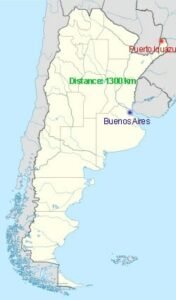
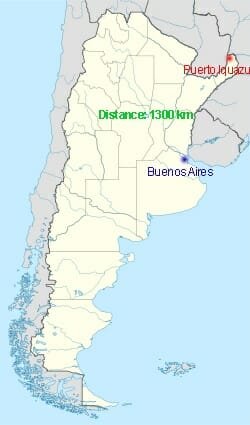
As with all road trips, this one takes some planning. The map at the left gives some perspective; it is roughly 800 miles from Buenos Aires (blue) to Puerto Iguazú (red), the city that serves as the staging area for the falls. The road there is mostly two lanes with heavy truck usage, so the going is slow. We debated renting a car or taking the long bus ride on Argentina’s much touted bus system. Short of flying, which we deemed too expensive, the bus seemed best.
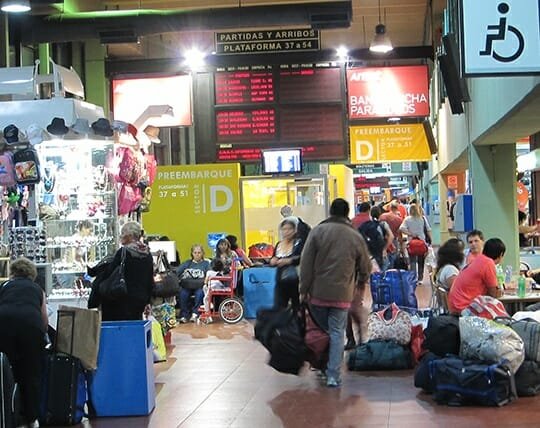
BA bus station
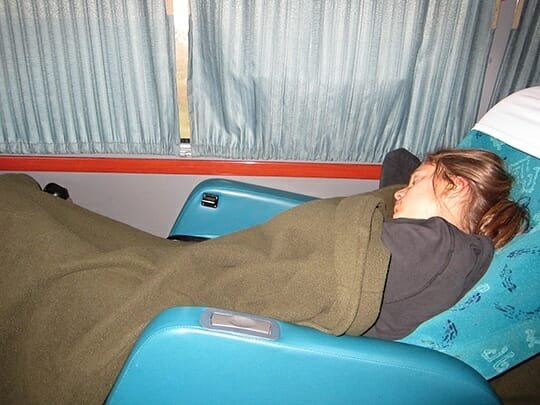
We bought our tickets and arrived at the BA bus station in Retiro early for our 7:30 pm red-eye bus. The schedule called for us to arrive in Puerto Iquazú at around 11 am the next day (Friday). We anticipated a brutal 16-hour bus ride and it was long, but the modern bus complete with our “couch” chairs, reading and listening materials, and nonstop movies made the ride doable and interesting – although much of it was in the dark by design.
Arriving mostly on schedule, we rolled on over and checked into our hotel which was a couple of blocks from the bus station. A little dazed from our checkered sleep, we decided to wait until the next morning to visit the park .
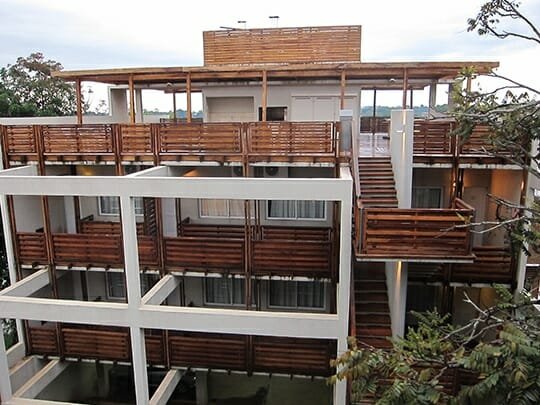
Our room at the Yreta Hotel was about what we expected; two bedrooms, a kitchen and a large common area. Unpacked, we headed out to explore Puerto Iguazú, a small and walkable town with tourist shops, restaurants, adventure sport shops, and jungle excursion companies, all centered around the waterfalls. We asked the usual sources about a restaurant for dinner and discovered Doña María, which we all recommend after eating there two nights. The salad buffet was extraordinary.
The weather report for Saturday was not looking good with rain in the forecast. After dinner we stopped into the bus station and on the spur of the moment scheduled a tour for Wanda and the Jesuit Mission San Ignacio, a few hours away. We all looked at each other to decide if we could take another bus ride, but faced with the probability of rain at the waterfalls we booked it. More on that trip later… I am going to jump a day ahead to Sunday and our visit to Iguazú National Park.
Iguazú Falls, called Foz do Iguaçu in Portuguese and Cataratas del Iguazú in Spanish, sits on the Argentina – Brazil border and is a UNESCO World Natural Heritage Site. It was discovered in 1541 by Alvar Núñez Cabeza de Vaca and established in 1984 as a Natural World Heritage Site.
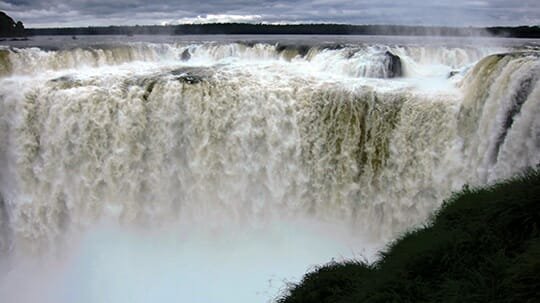
There are anywhere between 75 and 275 independent waterfalls, depending on whom you ask. The largest, four times the width of Niagara Falls, is the U-shaped Garganta del Diablo, “Devil’s Throat,” which measures 269 feet tall, 492 feet wide and 2,296 feet long. At one spot, visitors can be surrounded by 260 degrees of waterfalls.
The mighty Garganta del Diablo !
Here is video we took at Garganta del Diablo which speaks for itself (turn up the volume for a realistic sound):
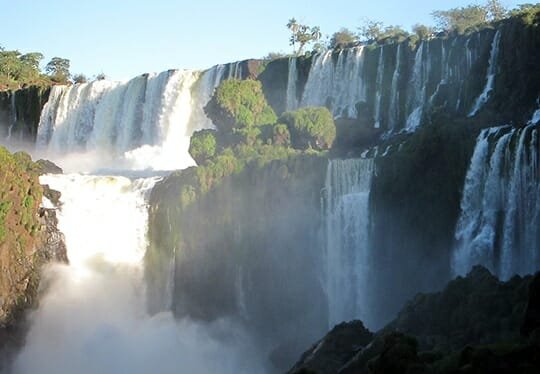
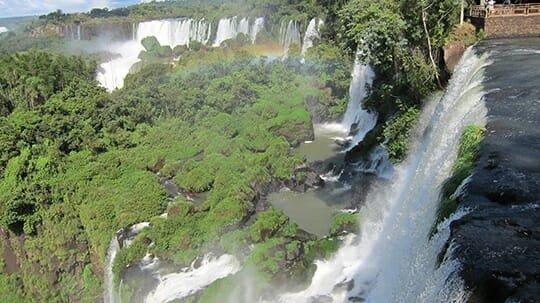
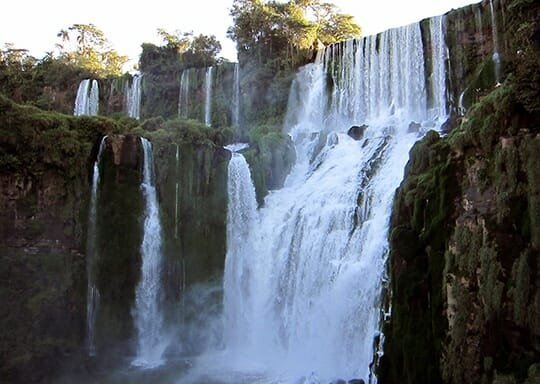
Enjoy some of the other falls in the park…
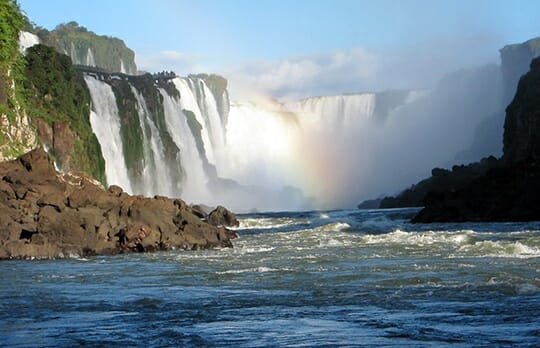
You can see a rainbow in this photo, which was common but always an added bonus.
You can start to see just how spectacular these falls are. It is one breathtaking view after another. It is the variety and intensity among the beauty of the natural setting that make this park so amazing.
We spent all day Sunday in the park. On Monday we returned and started our day with a three-hour nature hike, hoping to run into some of the great variety of wildlife. From the World Heritage Convention Web site:
“Fauna recorded within the park include giant otter, La Plata otter, ocelot, jaguar, puma, margay, brocket deer, American tapir, collared peccary, white-lipped peccary, great dusky swift, solitary tinamou, ornate hawk eagle, red-breasted toucan and harpy eagle. Giant anteater has been recorded as well as pampas deer, black howler monkey, capybara, puma, black eagle, chimango caracara, crested cayman and urutu viper. Noteworthy birds include solitary tinamou, harpy eagle, black-fronted piping guan, glaucous macaw, vinaceous-breasted and red-spectacled parrots and white-tailed trogon.”
We quietly hiked the 6-km path that Monday morning hoping to spot some of the exotic birds and animals. On this day it was the black howler monkey that made a spectacular appearance:
Okay, if you have seen Niagara, then by now you know Mrs. Roosevelt was commenting on the obvious.
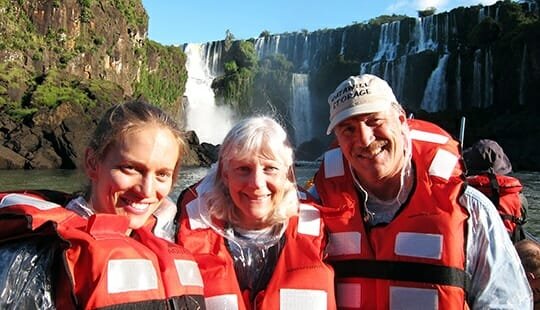
Later that day we decided to take a boat ride closer to the falls:
While we did take a thorough drenching, we also got even closer to the Garganta del Diablo. Cameras were pocketed as the boat brought us closer to the Devil’s Throat and under another waterfall.
The natural beauty of this park defies description.
Iguazú Falls was shortlisted as a candidate to be one of the New 7 Wonders of Nature by the New Seven Wonders of the World Foundation.
The falls have been featured in several movies including Moonraker (1979), The Mission (1986), O Trem Caipira (1994), Tummy (1995). Happy Together (1997), Mr. Magoo (1997), Miami Vice (2006), In the Hands of the Gods (2007).
Interesting side note
Why Hydroelectric power belongs in the world’s energy mix explained: Itaipu Dam located a few miles upstream from the Iguazú Falls.
“Having more power than 10 nuclear power stations, it supplies the second largest city on the planet with zero-emission electricity since 1984, still being extended until 1991. 26% of the electrical power consumption of Brazil and 78% of Paraguay are supplied by ITAIPU.”
After an amazing road trip, it took courage to face the long bus ride home. Here is one of us with our game face on.
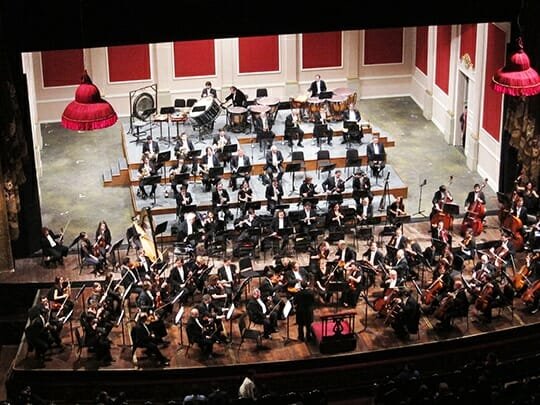
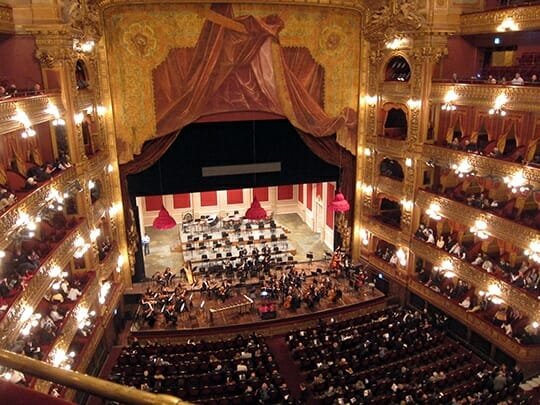
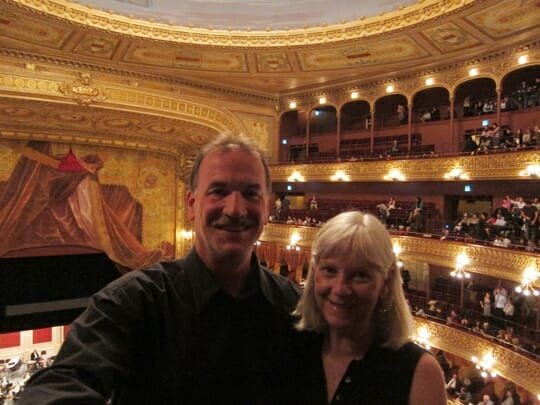
On a beautiful late fall evening in May we experienced a concert at the world-famous Teatro Colón. Considered one of the top five accoustical venues in the world and having recently undergone a four-year, 100 million dollar renovation, this was to be one of the highlights of our stay in Buenos Aires.
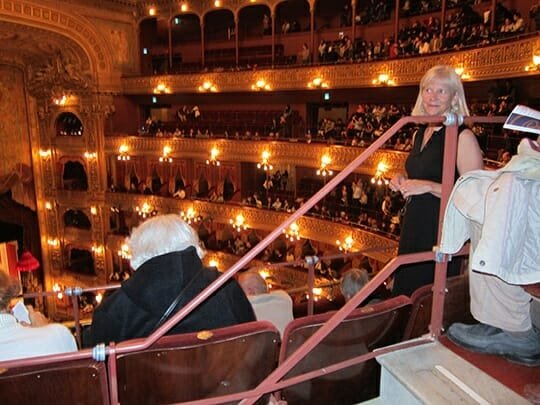
One goal of the massive renovation was to match what existed on opening day 1908. There was the presidential balcony, where in the 1950s Juan Perón and his wife Eva would watch Maria Callas. From the stage, the room rises with six levels of boxes and seating to the seventh tier with standing room for another 1,000.
This top deck aptly named paraiso (paradise) is the brain child of architect, Francesco Tamburini. Tickets can be had for a few pesos yet the sound is said to be the best in the house.
Gustav Mahler: Symphony No. 1 “Titan” 05.26.2011 | 8:30 PM
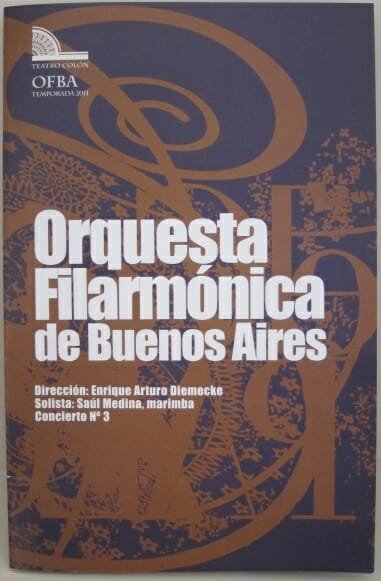
Arriving early that Thursday we were ushered to our center seats on the 4th tier of the theater to settle in for the performance. First up was Sául Medina who gave a dazzling performance on the marimba accompanied by the orchestra with conductor Enrique Arturo Diemecke. (If you are not sure about the marimba, that link is worth the read).
Here is a video clip of the performance:
Luciano Pavarotti once said it all: “The theatre’s acoustics (have) the greatest defect: its acoustics are perfect! Imagine what this signifies for the singer: if one sings something bad, one notices immediately.”
Hearing the triangle from the back of the orchestra made this comment ring true for us.
At the end of the symphony the crowd reacted enthusiastically to the performance with loud and sustained applause. Diemecke and the Orchestra responded just as enthusiastically.
If for some reason you aren’t able to attend a performance, there is a guided tour offered at a nominal price. The main Web site is here.