Last December, The Diagnosis, Death from Pancreatic Cancer

Last December, The Diagnosis, Death from Pancreatic Cancer

In September 2010, we were in Morganton, North Carolina, house sitting for a wonderful two-months. Unknown to us, the weeks to come would be simultaneously difficult, heart-wrenching and rewarding.

We had been in Flint with Mom for a few weeks in July, toward the end of which she was experiencing minor but nagging digestive related issues. We left Flint in early August shortly after her 83rd birthday for our two months in Morganton.
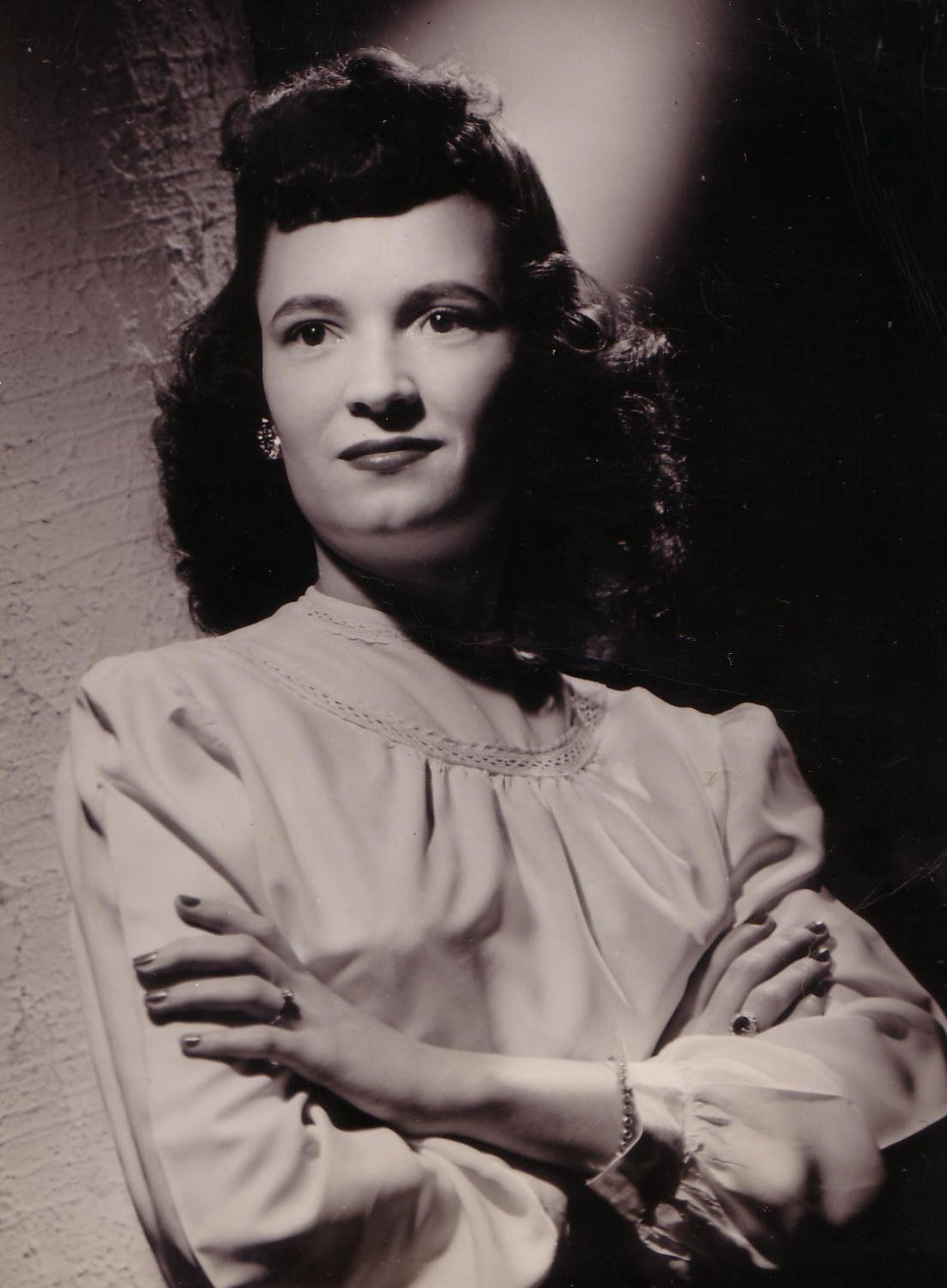
Betty Jane Blondin 1927-2010, RIP

The whirlwind started in late September when a routine call to Mom went unanswered. A call to my sister revealed that my mother had entered the hospital. She was admitted with jaundice, which led to the insertion of a stint and a biopsy taken, we were later told, from the tip of the pancreas.

In the next couple of days her condition improved. Not strong enough to live alone, she was transferred to a nursing home for rehabilitation. We arrived in Flint on October 4. The next few days were spent familiarizing ourselves with doctors, symptoms, health insurance coverage and Medicare regulations, while assessing the nursing home conditions, Mom's condition and determining how, when, and even if we could get her home. We still didn't have a diagnosis.

It was not easy, we were dealing with at least three specialists trying to pinpoint who was responsible for what, which offices to deal with, talking to receptionists, more tests, reports, a second biopsy, calls and more calls, returned calls, sorting and processing information, Internet research, interactions with the nursing home, all while reassuring a weakened but brave and determined Mother that we were there for her and would all do the best we could.

Looking back, the next call should not have been such a heart-stopping surprise. I was in the car when the oncologist office called, the office manager introduced herself and said, "I didn't want to break the news to you this way..." it was a shock to hear the diagnosis of pancreatic cancer.

I was not conversant on the disease but knew the prognosis was not good. The University of Michigan had confirmed cancer from the biopsy. Appointments were scheduled and options clarified, but in the end we were facing up to six months of life. The next step was clear -- we were out of the nursing home and setting up in Mom's house.

Hospice was called, interviews held, and a service chosen. Hospice brought a veritable hospital room and a nurse two times a week along with help for baths. This all happened fast. Mom was still very weak, and many times it would take two of us to help her to the bathroom. In and out, and in and out of the wheel chair handled with as much grace as possible.

We managed the next few weeks, the drugs took a toll on Mom's energy level, we had a Thanksgiving meal, her friend and hairstylist came twice to do her hair, and we had laughs, but as the days progressed we witnessed Mom's decline.

Our daily routine was pretty simple: we read to Mom, walked her around the house, even got out one day on a fun trip to Hobby House, but the inevitable end was approaching. We just didn't know how soon. The hospice nurse was great, different medications were tried to keep Mom comfortable and she seemed relatively pain-free, but then she wasn't one to complain.

It was early December when the nurse suggested -- looking back, I am sure she considered the toll on my wife and me -- taking her into the hospice facility for a couple of weeks to stabilize her. We visited daily, took shifts, and were there as much as possible. On Saturday, December 18, 2010, Mom died in her sleep. While there must be more ideal ways to die, and many of us consider our perfect scenarios, being able to be there with her for the final months and allowing her the peace of being in her own home as long as possible, was a precious gift for all of us.

Mark Blondin, ExpatExpressions
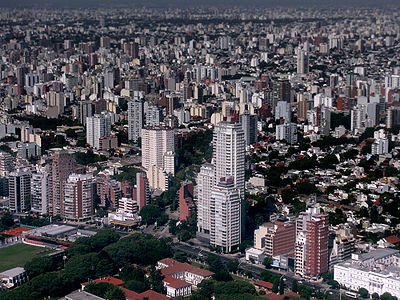
Hasta Luego Buenos Aires

Hasta Luego Buenos Aires

Buenos Aires

On Wednesday June 15, 2011, we left Buenos Aires on one of the first flights to the United States out of the capital after the eruption of the Puyehue volcano in southern Chile spewed its ashes across Argentina.

The winds played capricious games with itineraries across the continent. Our original flight was for Monday the 13th. Ever the optimists, we took the $40, one-hour cab ride to the airport for our scheduled flight. We found ourselves back in our apartment pretty quickly, 80 bucks poorer. We were told Friday was the earliest available flight to the U.S.

Tuesday was the scramble day, trying to find a flight to the States. We looked at every option out there. A previously scheduled memorial service three days away on Friday in Michigan was not something we were prepared to miss.

Around noon on Tuesday the best option was to take a very long bus ride (700 miles) to Santiago, Chile, which would put us on the west side of the ash cloud. That bus was leaving at 5 pm. It was decision time, make the memorial at all costs or accept our fate in Buenos Aires.

Before we needed to make that decision, at around 12:30 pm, an email came from the local United Airlines representative saying that they had a "special flight" leaving at 9:00 am the next morning if we wanted to be on it. He said the winds were shifting in a hopeful direction and it was supposed to rain overnight, so they thought they could get the flight out. Amazingly, that flight left on time, which had us landing in the U.S. Wednesday evening.

Thursday morning we headed to Flint, Michigan, some 576 miles away in our 2003 Buick. The memorial loomed on Friday at 1:00 pm. With time to spare, we shared in the memorial and spent the weekend with relatives.

Downtown Flint Above the Cobblestone Street

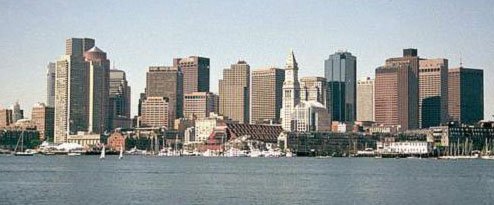
Boston Skyline

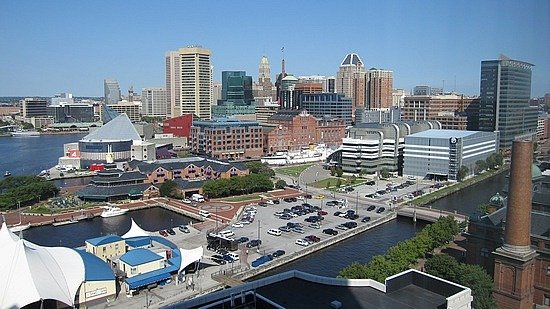
The following Tuesday we drove to Boston, Massachusetts (725 miles), to help our daughter move. A good night's rest in a motel and back on the road to Baltimore, Maryland (411 miles). So, seven days, some 5,000 flight miles and 1,700 driving miles since landing on our special flight out of Buenos Aires on Wednesday evening we began settling into our Baltimore apartment. It is Sunday the 26th, time to get busy.

We have much more to write about Buenos Aires. We spent four wonder-filled months in that great city. Our Spanish improved, we enjoyed several museums, some excellent meals, saw Placido Domingo perform live outdoors, listened to a symphony at Teatro Colon, reveled in spectacular natural beauty, and met some wonderful people. If you ever have the opportunity, seize it -- get to know Buenos Aires.

Stay tuned for more from ExpatExpressions...

Baltimore, Maryland

Not in America

Not in America

Never in America should a city like Flint, Michigan, be left to the kind of ruin we have witnessed. Even if one were to view it only from the narrow perspective of the economy, the country cannot afford it. But our view has to be greater.

Downtown Flint about the cobblestone street

This city is rich with a broad history, including being the birthplace of the UAW. A factory town like many others that fueled a generation of men and women to unrivaled economic prosperity. From that wealth the whole country benefited.

Our parents were either born in Flint or made it home after the war, eventually realizing a standard of living that propelled the next generation to college and beyond. That was the American Dream. At one point the median income of Flint was among the top five cities in the country. Today it is a shell of its former self.

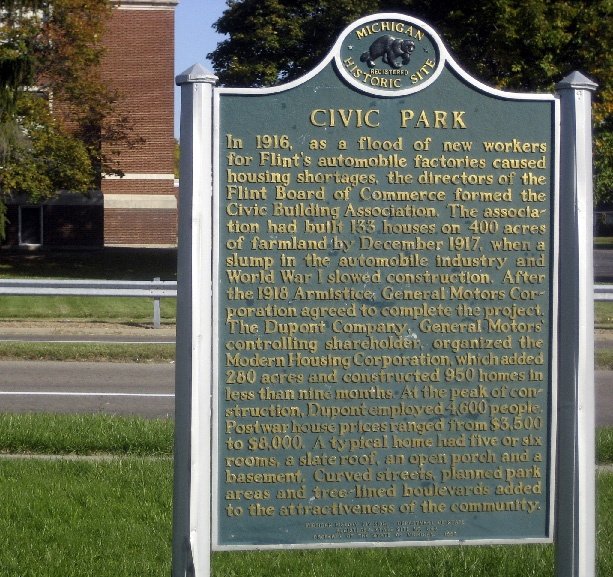
We recently returned to this city marred by economic collapse, and the devastation shocks our eyes and sensibilities. We both were born and raised here, lived in vibrant neighborhoods, attended Civic Park School and later Northern High School. We left in the early 1980s after the local economy had already suffered for nearly a decade.

Flint today is a political, economic, ethical, and moral failure of unprecedented scale. I blame our national politicians for their lack of leadership — but also all Americans, since we elect those who have contributed mightily to this nightmare.

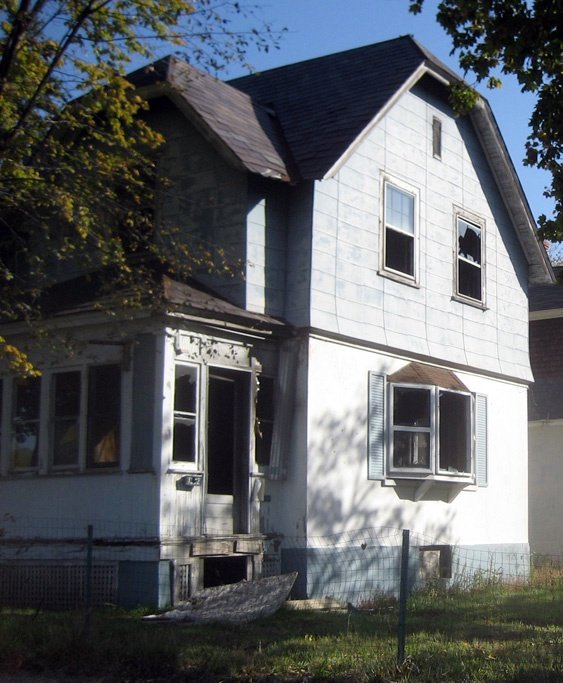
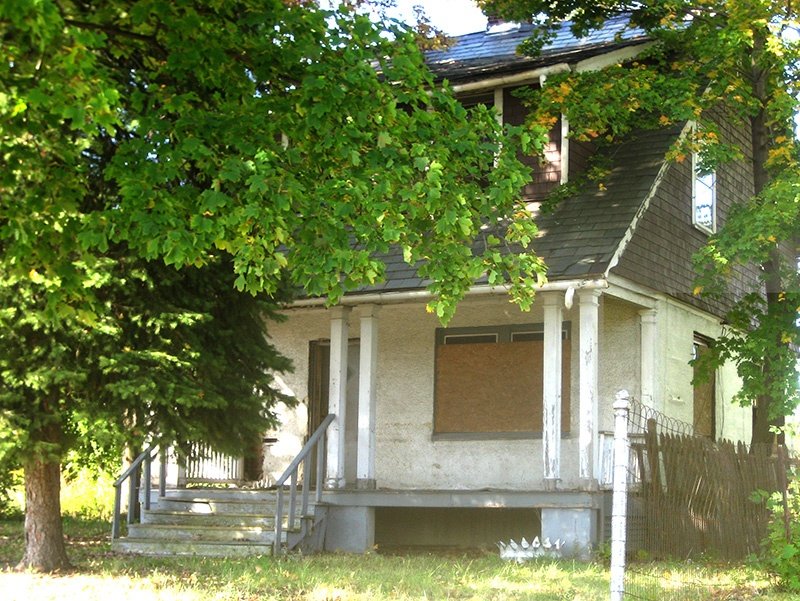
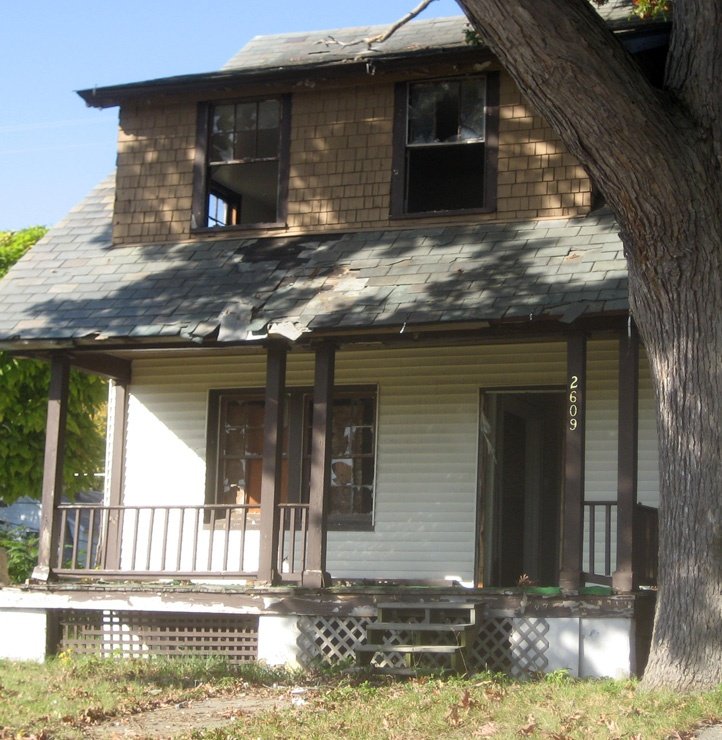
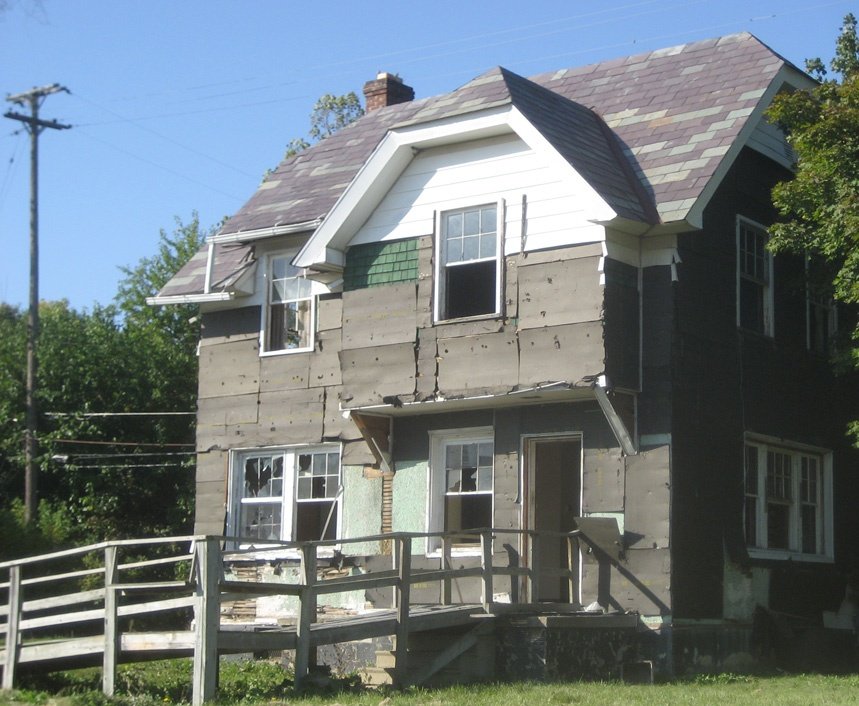
The human toll is catastrophic and can be found in any statistic you choose. The economic despair shows most obviously in blighted buildings, bulldozed homes, and devastated neighborhoods. Whole factories that hired tens of thousands have been wiped off the landscape. The city received funds for environmental cleanup so that someday these areas might be developed again. But will they?

The neighborhood we grew up in is now all but unrecognizable. Do most Americans know that this kind of poverty and neglect exists? Like the 9th Ward in New Orleans, will this one day come as a shock?

The lack of doors and windows is not unique

These are not isolated examples

It is hard to grasp the extent of the problem

It is like an indiscriminate violent economic storm passed

There are bright spots — the University of Michigan campus established downtown, a significant medical infrastructure, signs of new development that hold hope. But capitalism has been allowed to run wildly out of control here, seeking lower wages elsewhere in the country and the world. By blindly moving facilities overseas, the CEOs created a smaller pool of potential buyers. If you are making $10-20 versus $30-40 dollars an hour, you are driving a used car — not spending $20,000 or more on a new one.

The entire economy appears to be run for a smaller and smaller elite with a large and growing influence in Congress — securing the laws and tax breaks needed to operate with impunity, focusing laser-like on short-term profits and the bonuses those generate, ignoring social responsibility and any long-term vision.

We still have extended family and friends in the city. It is obvious what thirty to forty years of lost leadership and failed responsibility has cost. Flint is not alone. Our industrial base is teetering on extinction. This story is but one version while another is repeated in countless cities across the Midwest. But we are here now, and anyone can see that this is unacceptable.

This piece was written in October 2010. Four years later, in 2014, the state of Michigan appointed an emergency manager to cut costs in Flint — a mechanism that overrode democratic local governance. That manager switched the city's water supply to the Flint River without proper treatment, poisoning the water with lead. Thousands of children were exposed. Everything described above had already happened to Flint. Then the state did it again.

Workable Acronyms: WPA, FAP, CCC, FWP

Workable Acronyms: WPA, FAP, CCC, FWP

These acronyms spelled survival for a generation of Americans fighting their way out of the Great Depression. Now is a good time to look back and consider their meaning for today.

Recently we spent two wonderful months in northwest North Carolina and wrote about the 75th anniversary of the Blue Ridge Parkway, a project that began in 1935 as part of the New Deal's Works Progress Administration (WPA).

While researching the Parkway, we discovered much more about the landmark programs created under the 1935 Emergency Relief Appropriation Act that helped America recover economically from the Great Depression. Many of the work-generating programs created are well-known, others are more obscure. The WPA eventually became the largest employer in the country.

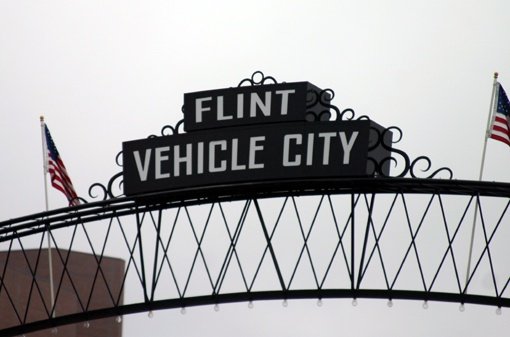
Image of sign in Flint, Mi. Flint Vehicle City

Our current road finds us in Flint, Michigan, a city steeped in history associated with the New Deal. While traveling about the country we can't help but stumble across the WPA legacy. Among the building and infrastructure achievements included in that legacy are the Merritt Parkway in Connecticut and the 127-mile Key West Overseas Highway, the Triborough Bridge, Lincoln Tunnel, Central Park Zoo and LaGuardia Airport.

Building these iconic structures, including the Orange Bowl in Miami, the Oregon State Capitol, the Tennessee Supreme Court building, the Kansas City city hall and the Oklahoma City municipal auditorium, provided jobs, a sense that the country was moving again and a lasting heritage.

All told, WPA workers produced 650,000 miles of roads and built or improved 124,000 bridges, 800 airports and 125,000 public buildings, including schools, hospitals and post offices as well as parks, fairgrounds, and rural electrification and sanitation systems. And why don't we do have a WPA program today? It gets better.

The Federal Writer Project (FWP) worked on the cultural side employing writers, editors, and historians. Some 6,600 individuals were employed by the FWP. This group is best known for its series of state guidebooks, but with people like Saul Bellows, Jason Pollack, Studs Terkel, and John Cheever employed, the FWP published more than 275 books, 700 pamphlets and 340 ''issuances'' (articles, leaflets and radio scripts).

The Civilian Conservation Corps (CCC) hired men between the ages of 18 and 24, providing work related to the conservation and development of natural resources. They built more than 800 parks that would eventually become state parks, planted billions of trees, developed forest fire-fighting methods, and constructed buildings within the nation's public lands. History has something to teach us.

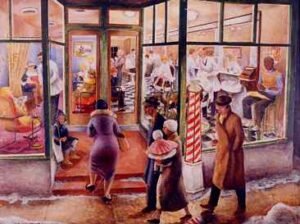
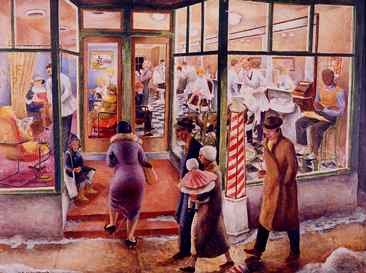
James Turnbull, Barber Shop, 1936

The Federal Art Project (FAP) operated from August 29, 1935, until June 30, 1944, creating more than 200,000 separate works. FAP artists created posters, murals and paintings.

Can you imagine getting anything like these programs implemented today?

Even then in what must have been a much more progressive or at least resourceful America, there was significant resentment toward these programs, especially the WPA which many decried as hiring a bunch of "shovel leaners." John Steinbeck jumped into that fray in his essay, "Primer on the '30s": “It was the fixation of businessmen that the WPA did nothing but lean on shovels. I had an uncle who was particularly irritated at shovel-leaning. When he pooh-poohed my contention that shovel-leaning was necessary, I bet him five dollars, which I didn’t have, that he couldn’t shovel sand for fifteen timed minutes without stopping. He said a man should give a good day’s work and grabbed a shovel. At the end of three minutes his face was red, at six he was staggering and before eight minutes were up his wife stopped him to save him from apoplexy. And he never mentioned shovel-leaning again."

Here in Flint, Michigan, we have an example of the work done through the WPA, the Flint Farmer's Market. Built in 1940 by WPA workers, the original building stands to this day. The steel trusses supporting the roof are the originals from the 1920 Union Street Building brought over on railroad cars.

As the nation struggles to find its way out of the current economic morass, these programs stand as testament to leadership, ingenuity, and the power of people through their elected officials to work their way out of difficult times.

Our history follows us as we move about the country. The roads, bridges, buildings, art and parks created through these historical  programs hold a contemporary message while enriching our travels on the next road.