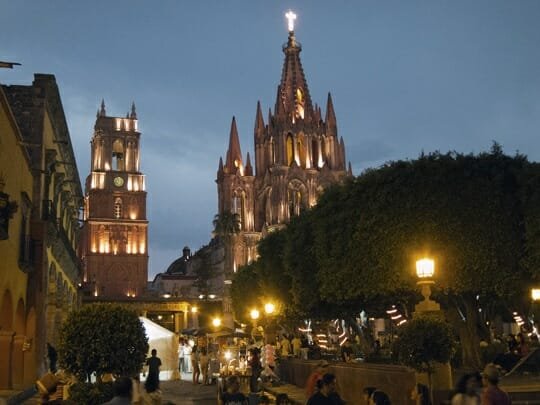
We arrived in San Miguel de Allende on March 6. Our month in Key West was ending and we had debated options — Ecuador someday, Chile, Oaxaca, a couple of cities in the U.S. — before settling on San Miguel after finding a beautiful home to rent in el Centro.
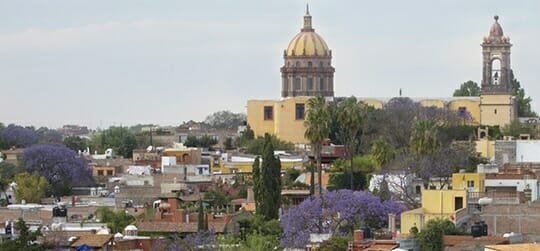
The Jacaranda trees are in bloom, splashing color around the city ©2012
In the two weeks since, we had found our way around town, had several great meals, met scores of people — many with great stories, all with a love for San Miguel — and found our favorite vendor, Dominga, for fruits and vegetables at the nearby market. We had seen two plays, caught a movie at the local theater, started yoga three times a week with Alejandro and Spanish lessons two or three times a week with Lilia. We went days at a time without turning on the television. There was too much to do.
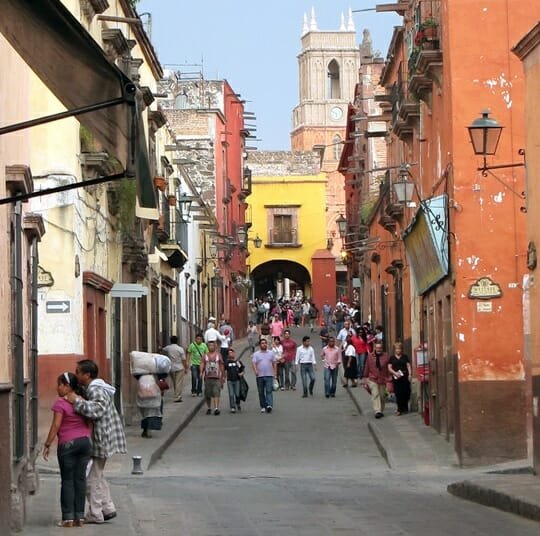
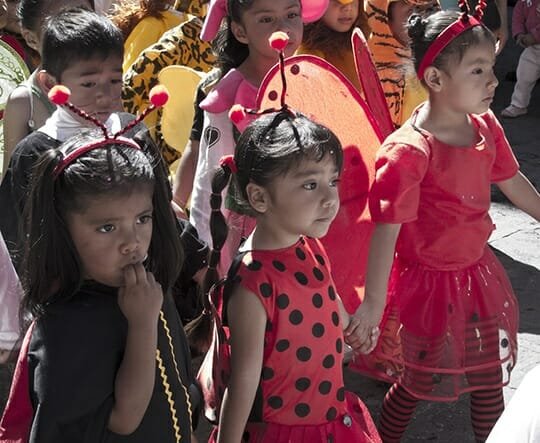
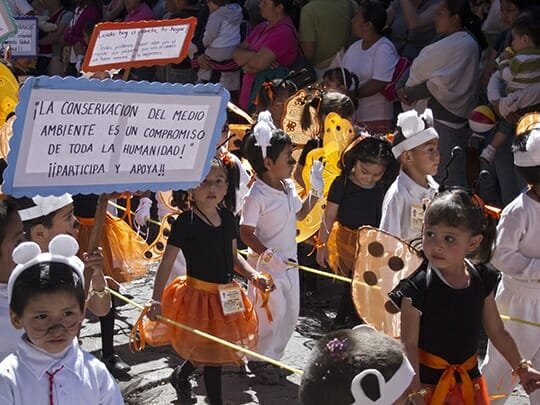
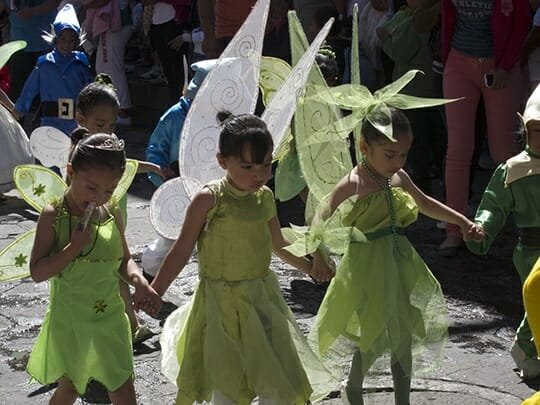
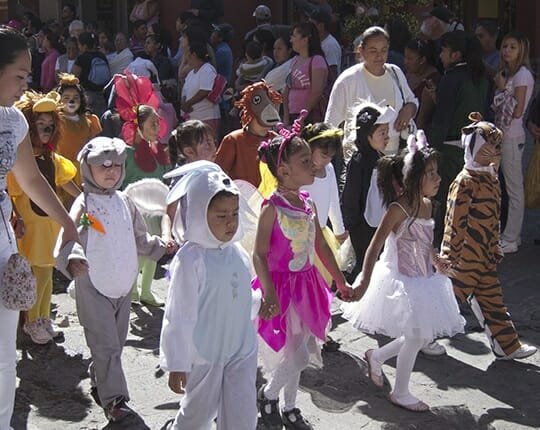
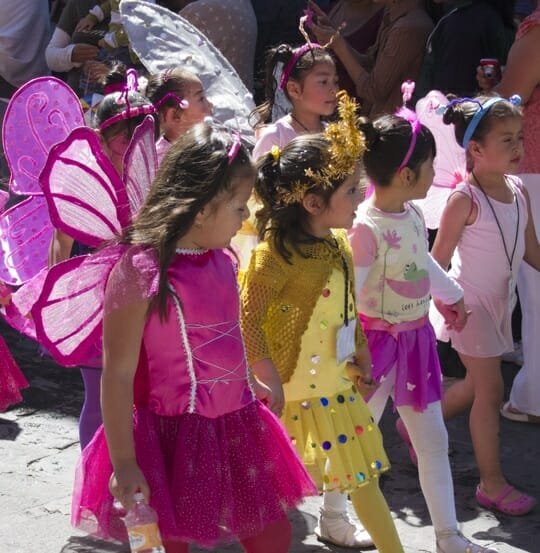
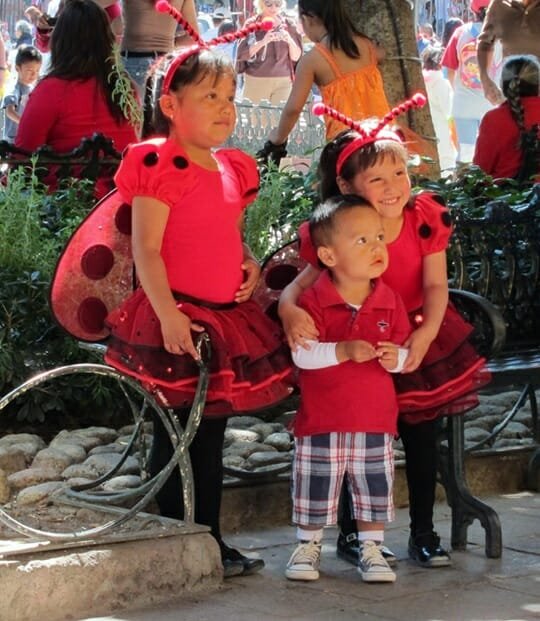
Colorful and busy streets ©2012
Wednesday night we were scheduled to meet a local expat and his girlfriend for Happy Hour at Harry's. We arrived around six, settled in at the crowded bar for two-for-one martini night, and fell into conversation — as has become a recurring event — with a professional photographer on our left. He described the challenge of keeping an edge in a world where millions own high-quality digital cameras, know Photoshop, and shoot thousands of photos, one of which will inevitably be a gem. His niche is HDR photography.
We had meant to stop at two martinis. We had four. Our friends became a no-show, and it was time for dinner. Note to self: Rule #1, warm climate = tall drinks. Rule #2, if you break the first rule = two martini limit.
It was a short but measured walk to Ole' Ole', a restaurant that had become our reliable choice for a great meal.
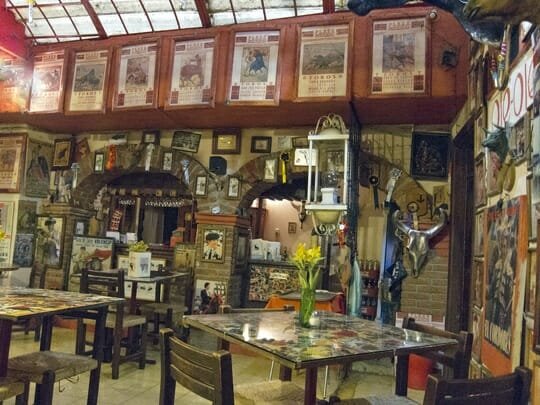 We sat down next to four Mexican gentlemen and ordered. I noticed a bottle of Patrón tequila — empty — and a new one arriving. I was not used to the custom of ordering a bottle of liquor for the table, which on reflection is very civilized. It turned out we had crashed a birthday party. Introductions were made, a shot of tequila shared, a hearty Feliz Cumpleaños! We ate, drank, talked, laughed — some of the laughter directed at our Spanish. During the conversation we learned that one of the men was a bullfighter of some stature, another the owner of the restaurant, the other two an engineer and an architect.
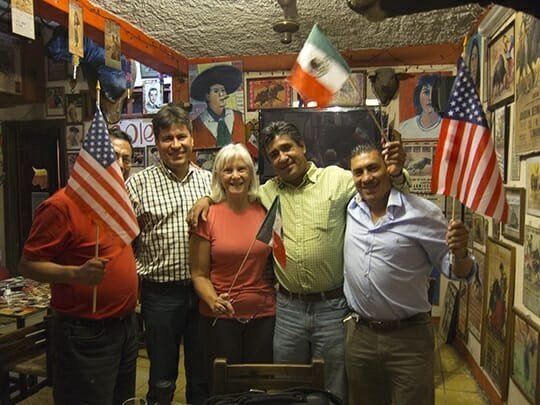
Later in the evening: Alejandro, Victor, Betsy, Mauro and José ©2012
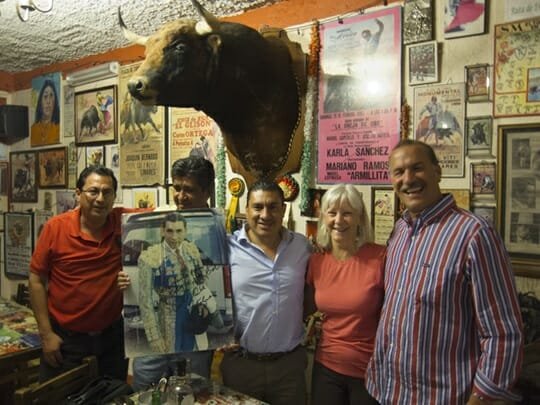
Our new friend holds his bullfighter photo from the wall in the restaurant ©2012
Meanwhile, I was learning that an empty glass is an invitation. As my shot glass was being filled, I heard: "otra, mi amigo." The fill came before the words, and it was not a question. This went on as the bottle emptied. Fortunately we lived only two blocks away.
The next day started slowly. By four we were ready for our Spanish lesson. Betsy had volunteered to teach English to the children in our teacher's pilot program; I spent that time talking with the teacher before class.
Leaving hungry, we went looking for the Venus, a Thai restaurant we'd heard so much about, found it, and walked in around seven as a guitar player was setting up.
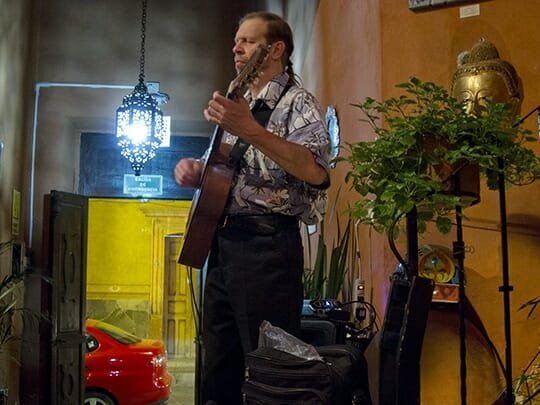
Andrei Krylov ©2012
We could not have planned it better. His name is Andrei Krylov, from St. Petersburg, Russia. In the 1980s and '90s he played guitar for the Russian State Concert Company Lenconcert and the Old Petersburg music theater. Since then he had traveled the world and recorded more than 50 albums — Classical, Russian romance, Gypsy, Flamenco, Folk, Jazz. We watched and listened, sometimes with chills, as he willed every ounce of music from his guitar. From Bach to 400-year-old Russian gypsy songs to jazz, he moved through it all. On Friday he gave a concert at the Biblioteca, which we attended, and were captivated again.
It isn't unusual for artists of this caliber to appear in San Miguel. The city's post-World War II history laid the foundation for what it is — a place where the culture runs deep and the doors stay open.
Many people had told us their hearts belong to Mexico. We were beginning to understand why.
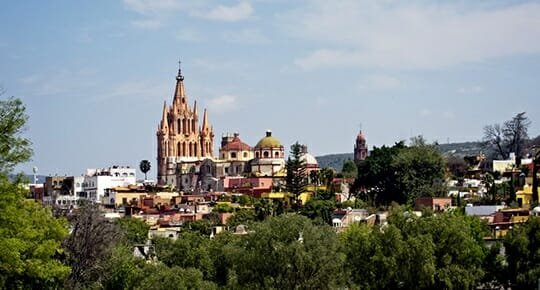
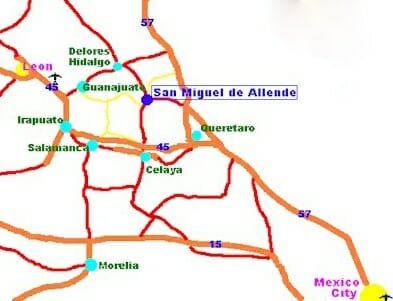 Located about 274 km (170 mi) NW of Mexico City at an elevation of 6,500 feet, San Miguel de Allende (SMA) has an excellent climate, warm and friendly people, a rich heritage and designation as a UNESCO World Heritage Site. The city has a population of around 140,000 (mas o menos), about 10,000 of which are expatriates, mostly from Canada and the United States.