Semana Santa in San Miguel de Allende, Mexico

Semana Santa in San Miguel de Allende, Mexico

In 2010 and again this year we found ourselves in Catholic-dominated countries with strong Holy Week traditions dating back centuries. Although personally not religious, one can't help but be amazed at the traditions and devotion of those who are committed believers. Here in San Miguel those traditions and the devotion were on display for Semana Santa.

Semana Santa

In 2010 we enjoyed a world famous celebration of Semana Santa in Granada, Spain. The crowds there were magnitudes larger, the pageantry enormously impressive and the scale and scope of the celebration breathtaking. Semana Santa in San Miguel is beautiful, impressive in its devotion, and has a solemn meaningful feeling created by the devout Catholics who migrate here. We are told Catholics from all over the country come to San Miguel for Semana Santa because this city preserves the historic traditions. Let's take a look at those...
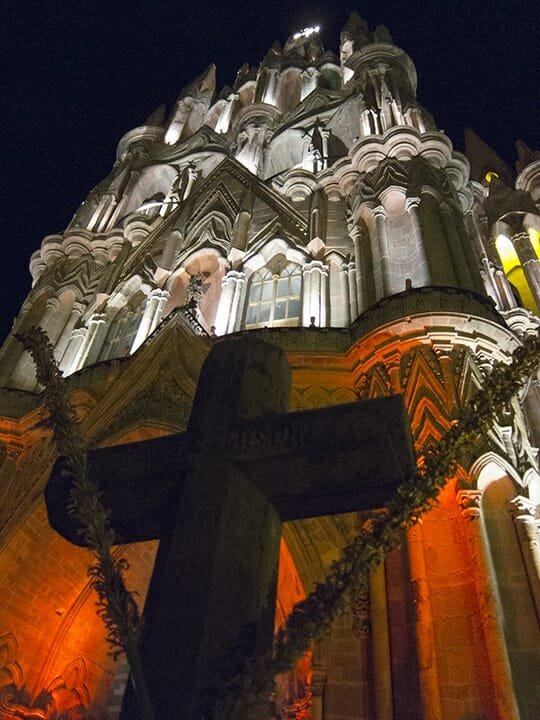
Holy Week (Latin: Hebdomas Sancta or Hebdomas Maior, “Greater Week” in Christianity) is the last week of Lent and the week before Easter. The week begins with Palm Sunday (Passion Sunday), we all know that one. Not so familiar, Holy Monday (or Fig Monday), Holy Tuesday and Holy Wednesday (sometimes called Spy Wednesday). This quickly gets complicated for many of us. Toward the end of the week things heat up,  there is Maundy (Holy) Thursday and of course Good Friday. On Holy Saturday the celebration of Easter begins after sundown. Easter Vigil is the longest and most solemn of the Catholic Church’s Masses, lasting up to three or four hours.

The San Miguel celebration started on Friday March 30, on that day, Our Lady of Sorrows, San Miguel is adorned in purple, white and green. Homes, businesses and public spaces decorate altars that are on display late into the night. The display hosts offer visitors fruit drinks or ice cream.
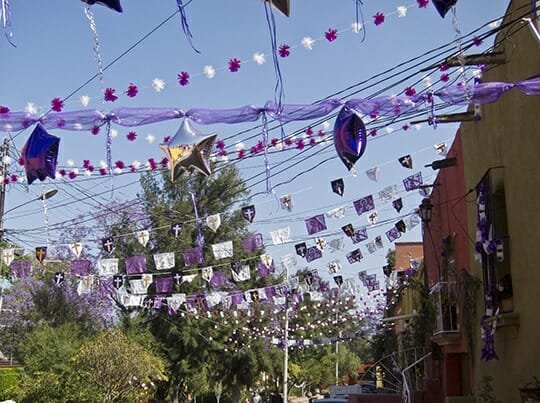
Neighborhood decorated in purple and white

Here are a two altar displays using grasses, flowers and oranges for Our Lady of Sorrows celebration...
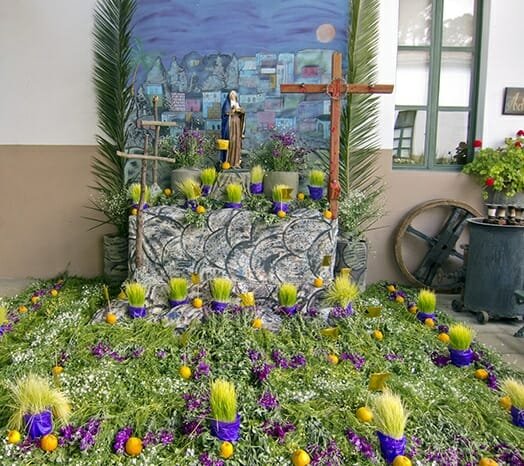
Typical Our Lady of Sorrow display
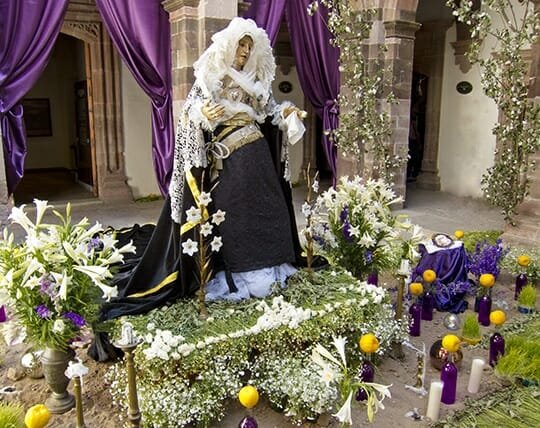
A Favorite

The story unfolds beginning with Palm Sunday, with two processions representing Christ's entry into Jerusalem, where he is greeted by palm waving residents. Seemingly everyone in the city was waving palm fronds. It was the palm weaving that caught my eye...
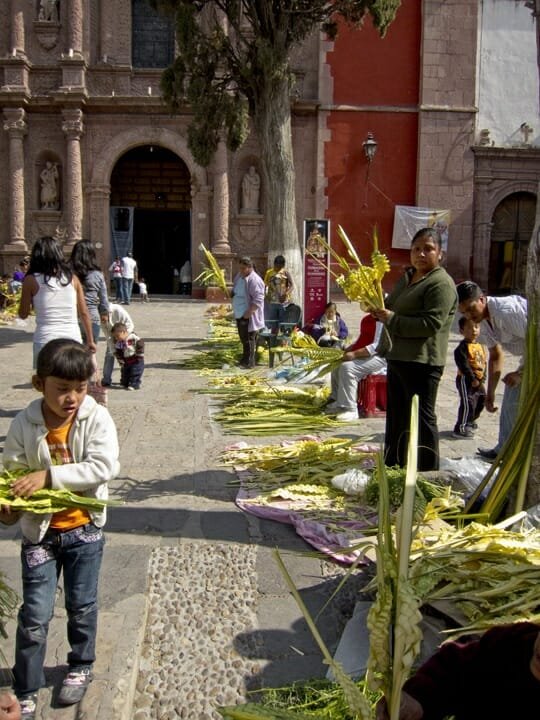
Palm Sunday
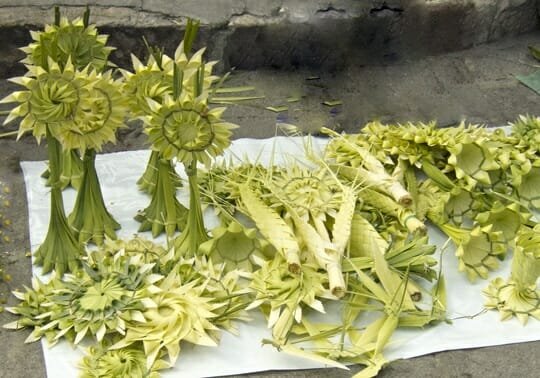
 

The artistry of palm weaving was on display everywhere.


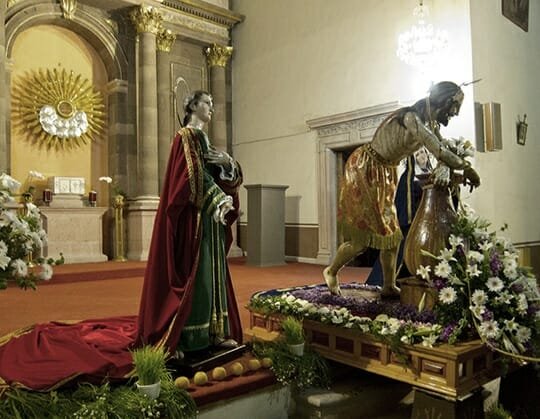
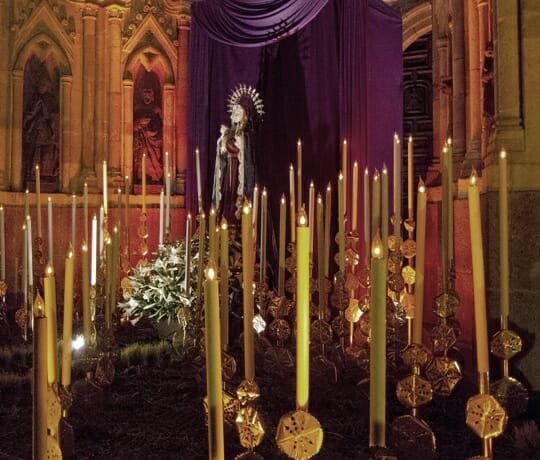
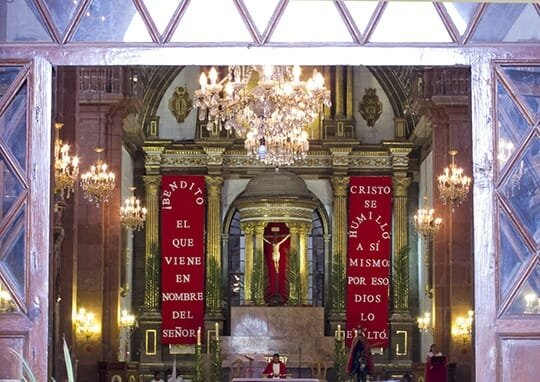
For us the next big event was Jueves Santo, when all the churches in town set up altars representing Christ in different passages. We visited ten of the 14 churches,  joining throngs of people waiting in long lines to walk through the church and see the displays.
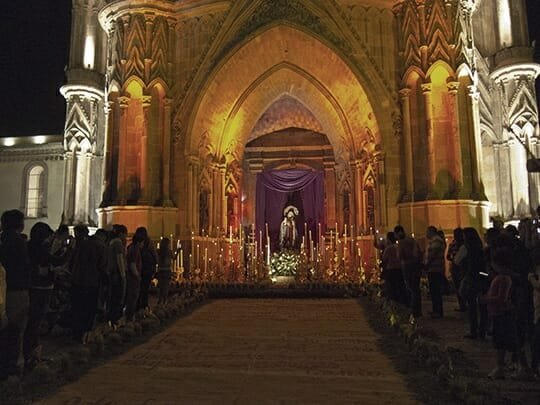
church at night

These traditions go back hundreds of years. It seemed like the entire city turned out.
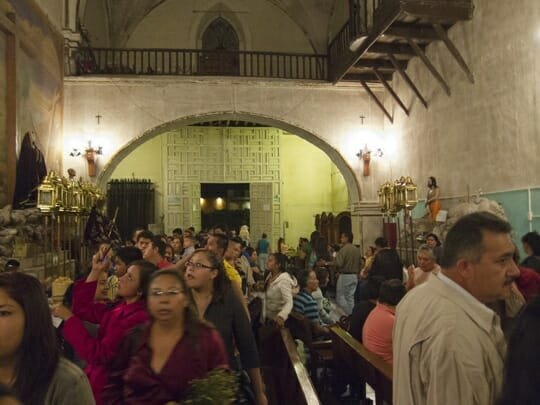
 And each scene was different.
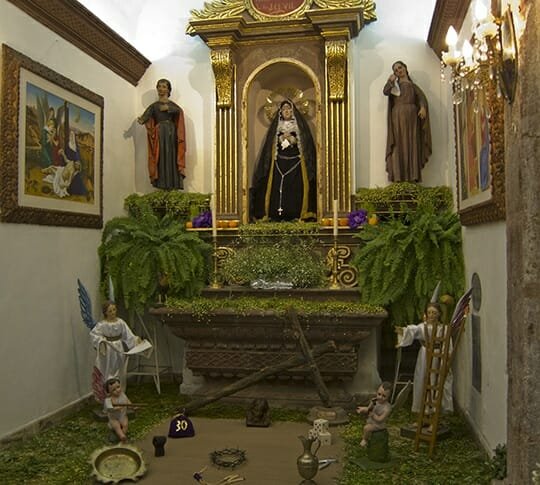
typical church scene

candle lit church
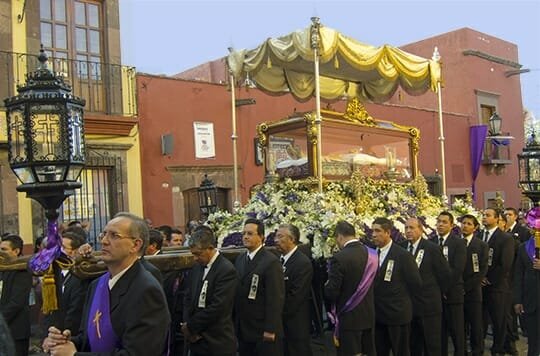
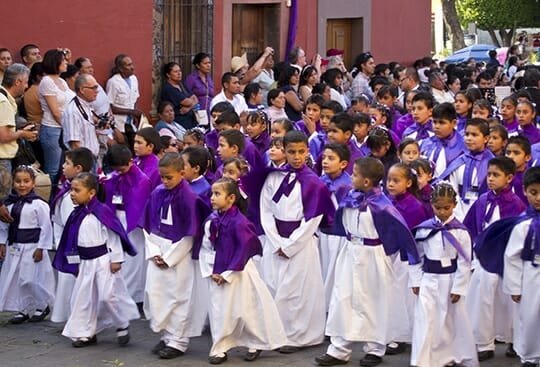
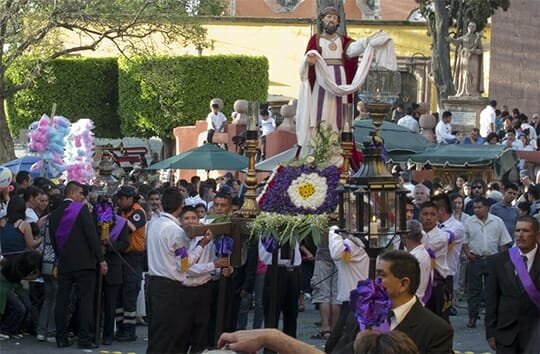
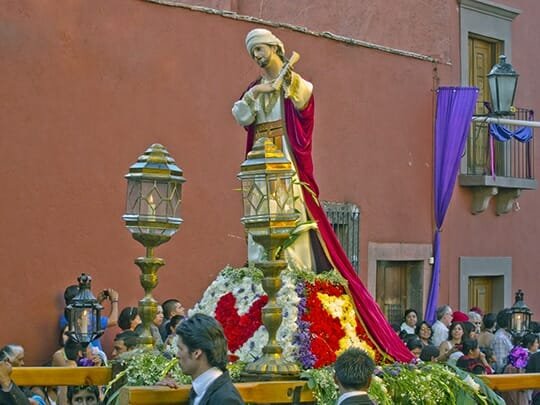
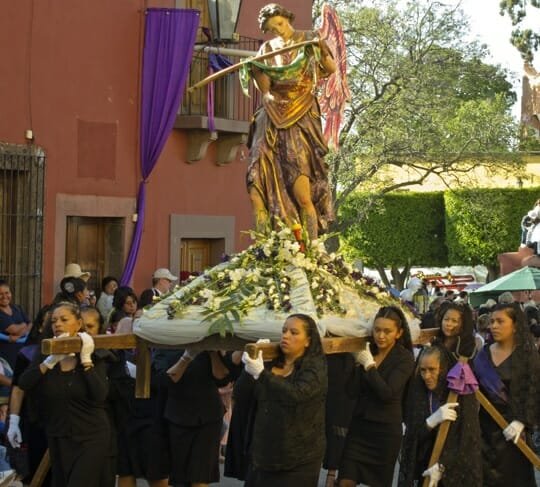
On Viernes Santo or Good Friday there were two processions; the one in the late afternoon was billed as the climax of the celebration with Roman soldiers, angels, an 18th century life-size figure of the Virgin of solitude and a statue of the body of Jesus. It was said that about 2,000 San Miguel residents participated. Here are some shots from the procession.
The Children
The Scene

Woman Marchers

Towards the End
Semana Santa in San Miguel has been honored for centuries. The city swelled with people from all over Mexico. Around noon on Easter things lightened up with Quema de los Judas which was a hilarious event.  Holy Week is over, the streets have been cleared and cleaned. Spring is in full bloom.

Semana Santa in Granada 2010

Semana Santa in Granada 2010

As we enter the Holy Week 2011, we take a look back at Semana Santa in Granada, Spain, 2010. We are told there will be celebrations here in Buenos Aires and a larger one in Luján, which is a two-hour bus ride from here. But in Spain, cities like Seville and Granada have few rivals for the Holy Week celebration. Happy Semana Santa 2011!

We wrote an account to families and friends last year...

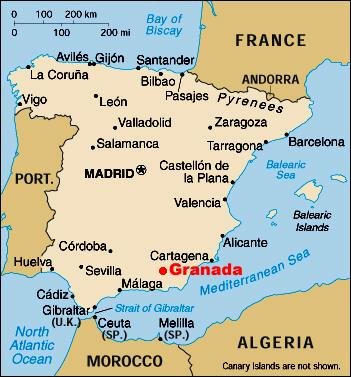
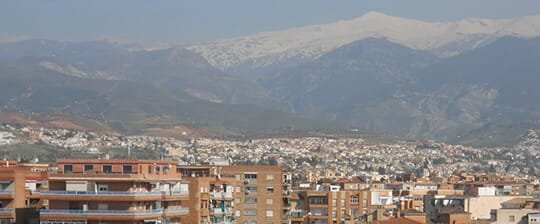
Granada sits at the base of the Sierra Nevada Mountains in Southern Spain. Semana Santa began during our second week of a month-long stay in Granada, Spain.

There is just no way to capture the scene around this festival. Nightly we have seen people in the tens of thousands crowding the street in a sea of humanity as religious processions pass. Most of the stores have been shut since Wednesday. The festival continues well into the morning hours. While the temperatures have been cool at night, crowds stay huge well past midnight.

Background

Holy Week (Latin: Hebdomas Sancta or Hebdomas Maior, "Greater Week" in Christianity) is the last week of Lent and the week before Easter.

The week begins with Palm Sunday (Passion Sunday), we all know that one. Not so familiar, Holy Monday (or Fig Monday), Holy Tuesday and Holy Wednesday (sometimes called Spy Wednesday). This quickly gets complicated for many of us. Toward the end of the week things heat up, there is Maundy (Holy) Thursday and of course Good Friday. On Holy Saturday the celebration of Easter begins after sundown. Easter Vigil is the longest and most solemn of the Catholic Church's Masses, lasting up to three or four hours.

Setting:

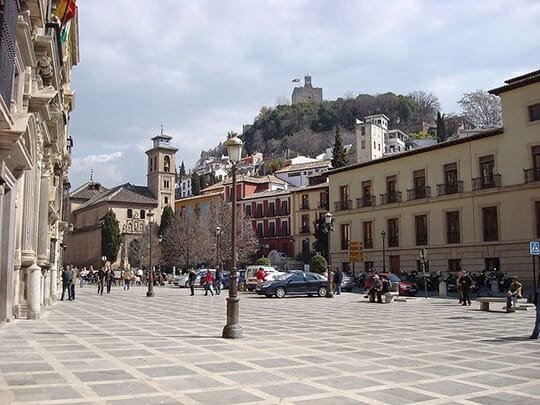
Our base for this Holy Week celebration is an apartment we rented next to Plaza Nueva in the Albayzin neighborhood at the base of the Alhambra, a Moorish citadel and palace in Granada.

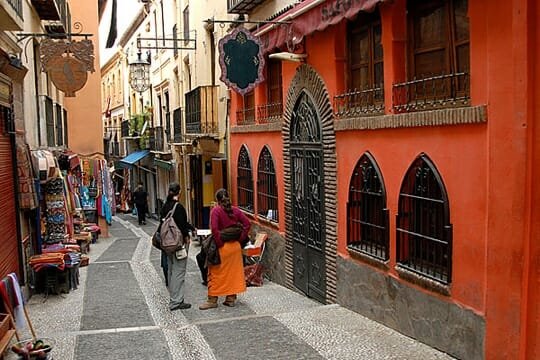
To further define our choice location, the Albayzín (also written as Albaicín) area of Granada is the Moorish quarter of the city that retains the narrow, winding streets of its Medieval Moorish past. It was declared a world heritage site in 1984, along with the more famous Alhambra.

With such fundamental human history being re-enacted this week, the omnipresence of the Alhambra with its own religious heritage provides a somewhat trenchant perspective on the entire celebration.

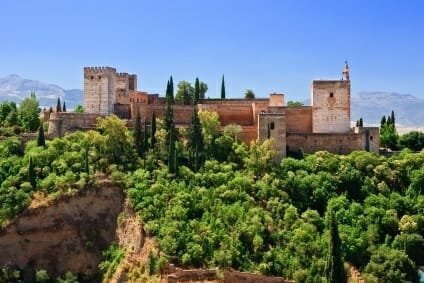
The Alhambra, literally "the red one," is a palace and fortress complex completed early in the 14th century by the then Moorish rulers. The history of the time period is a rich testament to Moorish culture in Spain and the skills of the craftsmen and builders of this era. Moorish poets described it as "a pearl set in emeralds" in allusion to the color of its buildings and the woods around them. Read more if you get a chance. I believe it is the number one tourist attraction in Spain.

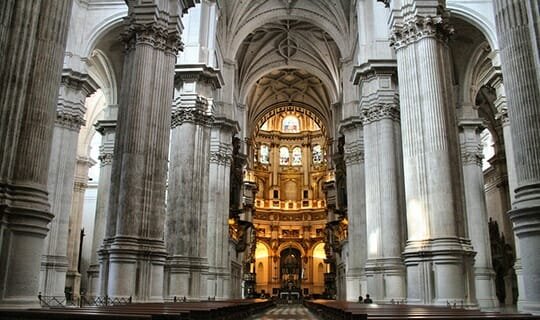
After the Christians conquered Granada in 1492 (another interesting story), the cathedral of Granada was begun in the early 16th century atop the site of the city's main mosque (not nice) and completed over a hundred years later. There is just no way to capture the scope and grandeur of cathedrals of this period. Here you get a glimpse.

So now you have the setting for Semana Santa in Granada, Spain, where Muslim and Christian cultures have intertwined for centuries. Let the 2010 Semana Santa begin...

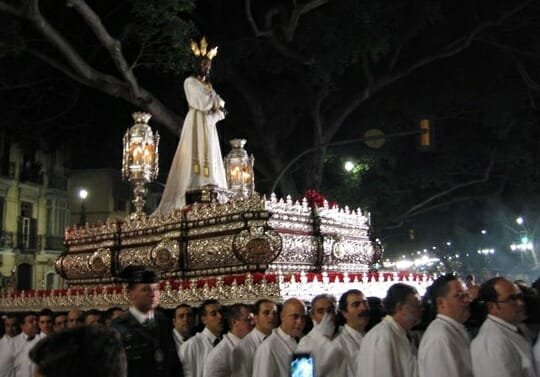
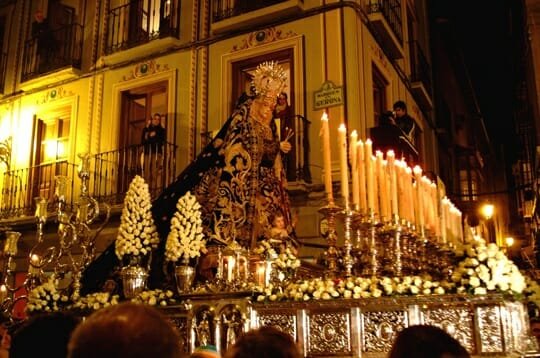
Granada has 32 brotherhoods belonging to the city's many churches and therefore, 32 breathtaking processions. The figures representing the scenes on the pasos are life-sized. In essence, the processions represent the Easter Passion, the story between the Last Supper and the Resurrection.

The entire scene is alive with color and sound. Emotions are stirred by the slow rhythmic beating of the drums and mournful sound of trumpets. The only way to get a sense of the drama is to watch some of this YouTube video.

http://youtu.be/yn1AbWnqv4I

The pasos are carried on the shoulders of men called costaleros, 20-40 per paso. What makes this amazing is that they are under the float and out of sight when the paso is in motion. And you have to remember that the streets, especially in the Albayzín neighborhood are barely wide enough for a single small car to traverse. This is athletic artistry at work and is wildly appreciated.

Since they cannot see where they are going, they follow the instructions of the capataz who walks in front of the paso, beating the ground with a stick to communicate. The basic maneuvers are simple, achieved with a shuffling movement of the feet. The difficulties come when the float must, for example, turn a particularly tight corner in a narrow street. This tedious maneuver is often applauded by spectators. Another crowd-pleaser is the swaying of the paso.

A typical float, which can weigh up to 6 tons is carried by up to 40 men. Footnote: According to this article, in 2011 women are now included.

Remember, this goes on for several nights and into the early morning hours. The crowds are enormous. Even to a non-believer, this historic event repeated year after year for centuries has no real parallel.

I hope this gives you a sense of Semana Santa. If you go either to Seville or Granada for Semana Santa, plan well ahead.

P.S.

Here are a couple of YouTube videos of our neighborhood in Granada:

http://www.youtube.com/watch?v=t2rAW1hXvYI

http://www.youtube.com/watch?v=LyV3W0GRs_A

And of the Alhambra:

http://www.youtube.com/watch?v=JDaodQLm8C8

http://www.youtube.com/watch?v=7MLKaVkEZxA