
by Mark | Oct 14, 2014 | Pulled Back
What’s going on? Are we witnessing mass emigration from the U.S.? What’s the deal with the never-ending get-away articles with tantalizing headlines like, “Best Place to Move Abroad,” “Retire Overseas at Half the Price,” “Top 10 Places to Live,” and “Most Livable Cities”? Do these articles signal a huge movement?
Judging by the weight of articles on the pages of Forbes, AARP, Money, Huffington Post, Kiplinger’s, USA Today, and others, we are led to believe that huge numbers of people are burnt out on the good old USA, don’t like where they live, tired of the rat race, adventuresome, seeking a larger understanding of the world, or can’t afford to stay put. Into the emigrant stew are those who are untethered workers, digital nomads, or just anxious to throw off the yokes of corporate life.
What these articles don’t address is: Why would they leave? What would make them take the risks? Why leave family and friends? What are they looking for? Is there a brotherhood of soon-to-be expats in the making? We’ve been close to this phenomenon and wanted to shine a light on the subject.
What we need is a bull*#*@ meter for articles titled Best, Cheapest, Most Livable, etc. Everyone is getting in on the action. One blog ranked El Paso as the third-best city to retire. Really? Miami was No. 1. Got to love those $15 mojitos.
While a great city, do retirees really want big winters and can they be convinced that Minneapolis is in the running for Top Places to Retire by an article in Huffington Post?
People who can’t find Ecuador on a map read articles such as, “Live on Social Security Like a King,” in reputable magazines and go to Kayak to book a flight and a hotel. Do they speak English there? Que no saben.
Mexico has always had an expat following, but the barrage of articles has gotten out of hand. We fell in love with San Miguel de Allende a couple of years ago, but a recent reader poll in Condé Nast Traveler’s Readers’ Choice Awards 2013 deemed it the best city in the world. Come on.
By the way, Charleston, South Carolina, was No. 3 in that same poll. Please. It is a nice city but their readers need to get out more.
What’s going on? We need clarity. Let’s hear from real expats, travelers, those actually living abroad. How many expats are there? Who are they? Is there a new type of expat? These questions intrigue us.
For six years we traveled and met amazing expats with a variety of perspectives and reasons to be living abroad. From retirees seeking a lower cost of living, to seasoned perpetual travelers, to everyday people with a curiosity that sends them out into the world.
The subject was so fascinating to us we decided to write a book. Not actually write it but collect stories from new and seasoned expats to get a sense of what is going on and share that first-hand information with our readers.
No catchy headlines, no stories designed to add clicks, but rather a volume of personal accounts from people who decided to leave their home countries for other places. We think it is enlightening. To get a complete picture, we included expat stories from as many countries as possible. TodaysExpats.com
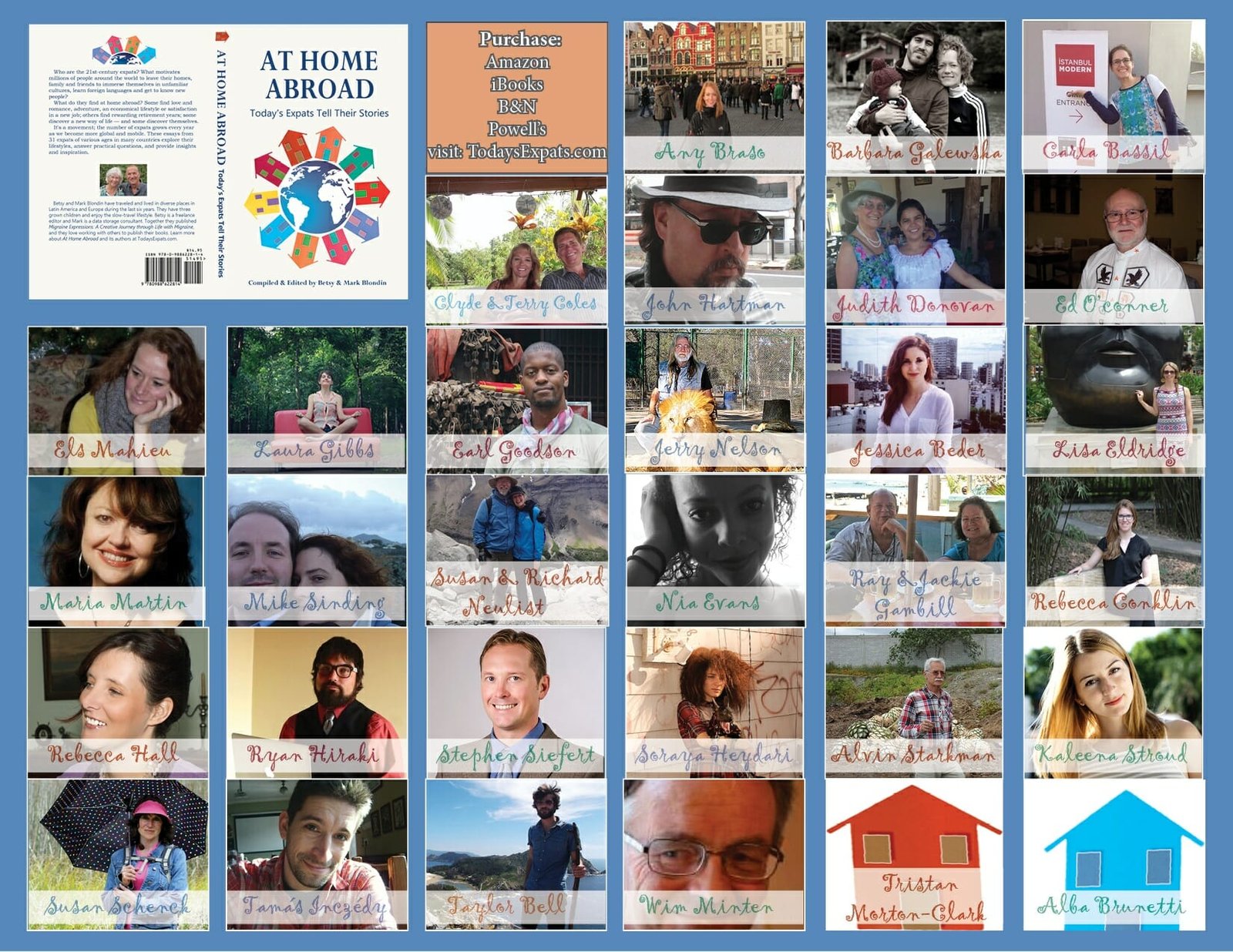
Authors

by Mark | Oct 6, 2014 | Pulled Back
At Home Abroad: Expat Expressions
Is there such a thing as an Expatriate or Expat in 2014? Or are these words lost to the 20th century?
Why are we examining these questions? Because a growing number of people are now living or planning to live abroad, and we’re gathering their modern-day expat stories for an upcoming anthology titled At Home Abroad: Expat Expressions.
We have collected stories from people around the world who have left their countries of birth for various reasons and have captivating stories to tell.
These stories make us consider: Is the definition of expat tied to the amount of time spent away from one’s home? What constitutes home? If all that is left of home is packed in a storage unit and your address is a postal box for gathering mail, are you an expat? Do you need to be disgruntled to be an expat? Is a perpetual traveler an expat?
Many people who work abroad for multi-national corporations self-identify through their blogs and forums as expats.
Then there are people like us who have traveled for years, living in a series of countries, without a home base.
Untethered freelance workers with a lust for travel and cultural experiences can be found just about anywhere on the planet.
Retirees represent a huge bloc of expats. They live in all corners of the world, and they are fascinating and courageous.
Try to buy a domain with the word expat in it. They are in use. Clearly, many of us view ourselves as expats.
While we have much in common, our circumstances are not identical. We feel that all of these groups fall under the category of expatriates or expats, but not everyone agrees with that definition. Some would reserve the word expat for early to mid-20th century travelers. Certainly, the word and the people it represents have a storied history.
Places like Paris and people like Ezra Pound, Gertrude Stein, F. Scott Fitzgerald, T. S. Eliot, Isadora Duncan, and Alan Seeger come to mind. At that time being an expat amounted to a movement.
It’s clear the word has diverse applications, including permanent travelers, people working in other countries, and those retiring abroad. See the definitions at the end of this post.
We don’t need to label the wide variety of lifestyles that involve living or traveling in another country — for our book we’re using the word “expat” to describe people who spend extended periods of time outside their home countries.
Having put the definition challenge behind us, we are excited and proud to say that in the last month or so we’ve been entrusted with amazing expat stories that will encompass the contemporary range of at-home-abroad experiences. They are inspiring, informative, challenging, and thought-provoking. These stories will help illuminate how expats relate to their world.
The adventuresome expat spirit is alive in the 21st century!
And it’s not too late. If you have an expat story, please contact us. Our deadline for submissions is November 1.
Wikipedia
An expatriate (sometimes shortened to expat) is a person temporarily or permanently residing in a country other than that of the person’s upbringing. The word comes from the Latin terms ex (“out of”) and patria (“country, fatherland”).
Cambridge Dictionary
expatriate-noun. someone who does not live in their own country
Angloinfo
An expatriate (often abbreviated to ‘expat’ or sometimes ‘ex-pat’) is a person ‘temporarily or permanently residing in a country and culture other than that of the person’s upbringing or legal residence’. In other words, somebody who isn’t from ‘around here’.
Collins
expatriate-noun. a person who lives in a foreign country
by Mark | Aug 21, 2013 | Deep In It
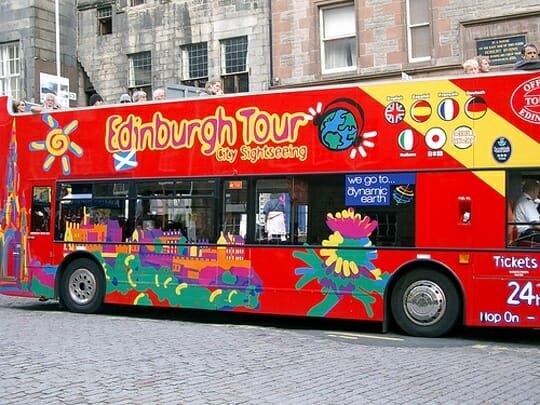
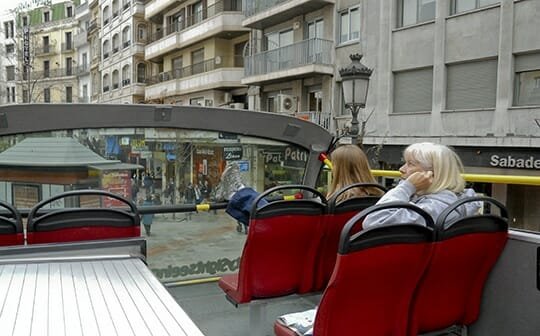
Say what you will. As slow travel veterans, we have come to appreciate this staple of city tourism. We arrive in a city determined to know it -- to walk, live, eat, shop, and cultivate a deep understanding. These city bus tours offer the opportunity to do the once around and orient yourself to a place. Hear the historical overview and pinpoint places for future probing, while snapping pictures and visualizing the directions and locations of key places. City tours are generally reasonably priced, and we like that.
One of our first slow travel experiences and city bus tour was in Granada, Spain. That one gave you 48 hours to get on and off. We planned it so we could visit some out of the way places like the Science Center while we got our bearings in the city. The cost was 17 euros.
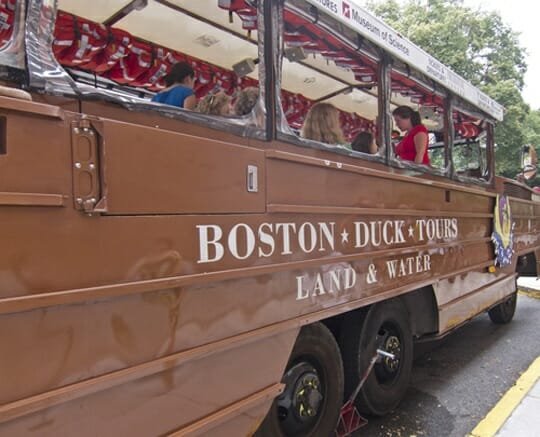
More recently we had an important visitor here in Boston and while we have been frequent visitors since 2003 when undergrad school started for our daughters, we had never done the world famous Duck Boat tour. This one is short and there is no getting on and off. Prices vary, go online to get deals. I doubt very many savvy travelers pay full price.
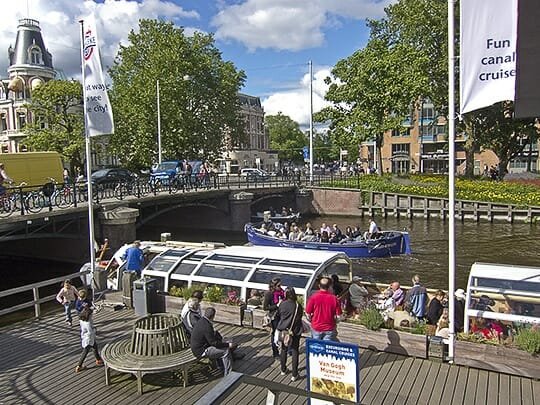
We found a variation of the above in Amsterdam. There are lots of operators. We chose one and enjoyed the canal view. While biking and walking are tailor-made for this wonderful city, we learned a bit, relaxed and enjoyed the water-level perspective.
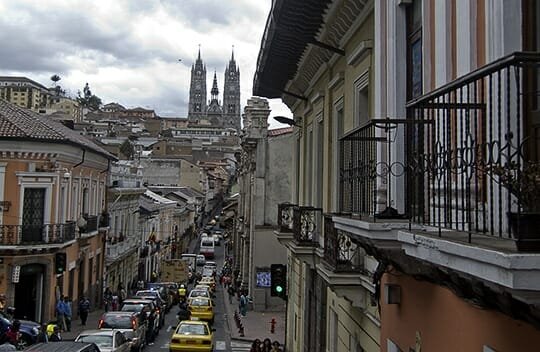
You can't find too many cities higher than Quito at 2,800 meters, but you will find city bus tours. The view from the top level of the bus offered a step-ladder perspective and the chance to take some nice photos. Plus the first few days walking in this low-oxygen city will have you gasping for breath. We gained some perspective and once acclimated we started walking and exploring. This one was $12 and you're allowed on and off.
Edinburgh, a beautiful, walkable city with character, history and charm. We got our first look-see on this tour, then spent the next week walking and busing.

Cuenca, Ecuador. We fell in love with this city, and it started on this tour.

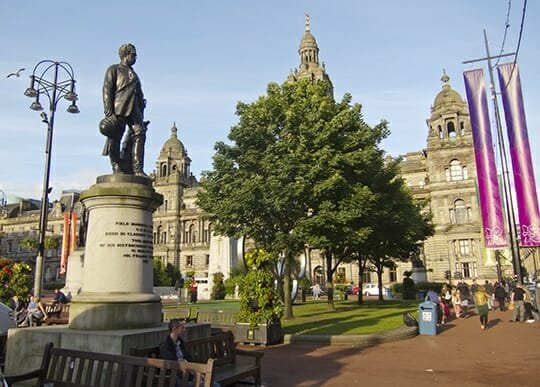
Glasgow, Scotland. This bus tour started in George Square. Glasgow is going to become a must-see city on every smart list. Well worth the time for slow travel.
Buenos Aires. La Boca will stun you with color and character. Get on the bus, get to know this amazing city.
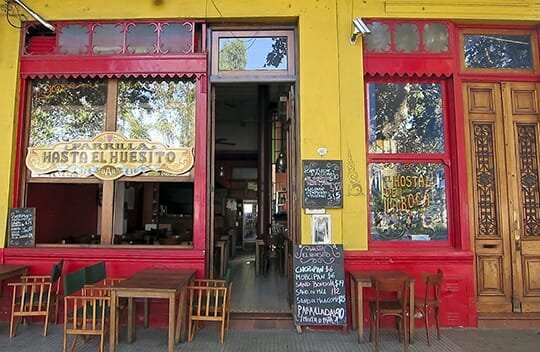
You meet interesting people from around the world, everyone is out for fun, and you learn something while not spending a fortune. Better yet, these tours offer the opportunity to make that first acquaintance with a city and possibly fall in love.

by Mark | Aug 21, 2013 | Pulled Back
The most (possibly only) tiresome part of slow travel is finding apartments. Sure, if we had unlimited resources or even just lots of money, it might be one of the more fun aspects. But for us, it usually involves a lot of searching and then hoping. Funky apartments can be charming.
We have found some good ones in our slow travel journey. Our apartment in Cuenca, Ecuador, pops to mind. The people we rented from in Crucita, Eucador, knew the people in Cuenca, so as we were ready to leave the beach we had a nice three-bedroom, 6th floor, modern apartment, close to the centre, to rent for $850/month. Of course we had struggled to find the Crucita house. Finding good beach rentals in Ecuador is challenging.
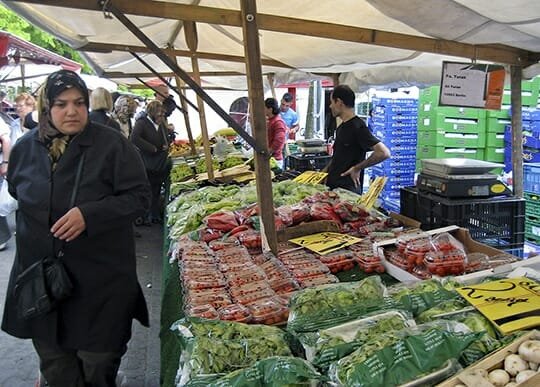
Those gems pop up, and we've enjoyed our share. The funky apartments are memorable as well. For example, we were in Berlin for our son's graduation and planned to slow travel to spend some time with him. We focused on the Neukölln neighborhood, at the time a Turkish area with a thriving weekly market. The neighborhood was in the process of gentrification with new bars and restaurants opening almost daily. Rents were low and the variety of value-priced restaurants amazing, which made it a cool place to live.
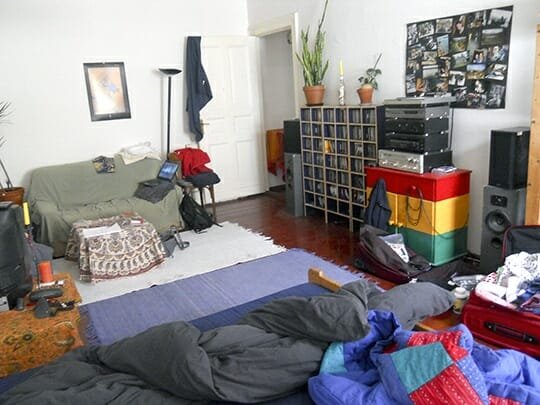
Craigslist was hardly used in Berlin, we couldn't get a response. We had better luck with the German version of airbnb. As we made our way through several possibilities, we found a "bachelor pad" a 20-something male nurse was subletting while on vacation. It was clean, cheap and in a perfect location. Did I say it was small? Futon, stereo, sofa, kitchen; two rooms. As we finalized the agreement (he spoke English), we asked about the rent and his response floored us. He said, "Just leave it on the kitchen table with the keys when you leave." To this day we remark on this "European" level of trust that is foreign to us. Unfortunately, this rental was only for three weeks so we needed another apartment.
Unfortunately, we found Mary, a struggling American artist in her mid-30's who needed some cash so she was renting her very nice one-bedroom apartment in a several degrees more upscale neighborhood for a month or two to earn some money. We haggled over the price and how long she would rent. We should have known there would be issues. We settled in to work and three weeks later she emailed us to back out of the agreement. She needed her apartment back. She whined and insisted and forced us into the market again. To this day, we can point to two bad experiences renting apartments, and both were with Americans.
Slow travel in Buenos Aires was on the tip top of my wish list. Early in 2011, we planned our stay as well as we could. In any large city there are clearly defined neighborhoods with distinct characters. This made finding an apartment in Buenos Aires all the more challenging. Each neighborhood has something to offer.
We were warned about San Telmo. Yes, it was hip, cool, arty, trendy and edgy. And it had an accompanied reputation as not entirely safe. We always take these "safety" warnings loosely. People see these things differently but when several people say it, we at least listen.
Helen from Australia answered an ad with an apartment in San Telmo. She sent pictures. We went for it. We wrote elsewhere on the blog about this apartment and I think it is worth the read. Bottom line, it was safe enough; still we decided to find another apartment. I like San Telmo. Funny, even now as I look back at the apartment pictures, I wonder why we ever moved.
Buenos Aires does have an active expat community, and we found Mike's YanquiMike site to be an invaluable place to touch base with the expat community. Also, expats and locals seemed to use Craigslist, so that was helpful. In the first two weeks we got to know San Telmo well and by hunting for apartments, much of the city. After some hand-wringing we found an apartment in Palermo for $850/month with a portero (doorman) whom we would later call a friend.
The experiences and the people associated with slow travel, not to mention the challenges to be met, are what make this form of travel special. As people become increasingly untethered from the office and as baby boomers look for authentic cultural experiences, slow travel is sure to grow. And one of the first steps for slow travelers is to find the perfect apartment at their destination.
by Mark | Aug 21, 2013 | Deep In It
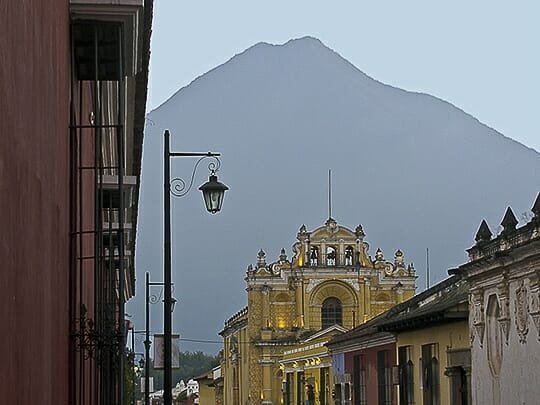
Antigua, Guatemala – San Pedro Church & Hospital & Volcán de Agua
Slow travel demands flexibility. For example, earlier this year we had planned to stay in Oaxaca, Mexico, for a few months, get some work done and take Spanish lessons. For a decade or more we had heard about this beautiful city and after a few days there, we understood.
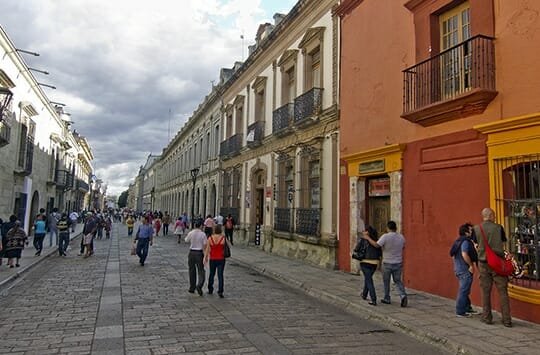
Street scene in Oaxaca, Mexico
As background, our arrival in Oaxaca was preceded by a month of travel, at the end of which we were tired, overspent and anxious to settle down and work. (more…)