Slow Travel Four Years Later

Slow Travel Four Years Later

“Traveling is a brutality. It forces you to trust strangers and to lose sight of all that familiar comfort of home and friends. You are constantly off balance. Nothing is yours except the essential things – air, sleep, dreams, the sea, the sky – all things tending towards the eternal or what we imagine of it.” – Cesare Pavese

***
Bacalar540straight

Constantly off balance. Yep. It’s hard remember the exact months or sometimes even the year of where we have been when during the last four years. A recent acquaintance after hearing our story said, “You guys are really out there, living on the edge,” and quickly added, “but in a good way.”

We call it slow travel. We target interesting places where we might want to live, do some research, and then go about finding an apartment — sometimes for a month, but three months is better. We both work remotely and need a routine to balance our schedules between work and play in order to pay for our travel.

We would love to have more flexibility in how long we can stay, but most tourist visas are granted for 90 days. In Europe the Schengen Agreement covers 26 countries with a common 90- day limit. In Central America the C4 Agreement sets similar parameters. Mexico has a six-month tourist visa. Some countries like Argentina allow you to leave for a day or two and return with a new 90-day visa, but that can be fickle.

Two to three months seems like a good  amount of time to experience a place, after which you can almost say you have lived there. Certainly it is more than a casual affair. It is time enough to get to know people and  burrow under the covers of a place.

Some exciting places where we have spent some slow-travel time during the last four years include:

Crucita and Cuenca, Ecuador
Dupont Circle, D.C., and Baltimore
Granada, Spain
Key West
Berlin
Boston
Buenos Aires
Florida
San Miguel de Allende, Mexico
Antigua, Guatemala
Amsterdam

When we add housesitting,  Morganton, North Carolina, and New Orleans get thrown into the mix. If we include one- and two-week places, the list grows to include Slovenia, Scotland and much of Mexico, Spain and Ecuador. (more…)

Slow Travel Finds Sardines on the Beach in Crucita

Slow Travel Finds Sardines on the Beach in Crucita

Early October, another beautiful morning at our tranquil Ecuadorian beach house. But our view of the consistently blue Pacific had changed. Large barcos lined the horizon while small fishing boats dashed out, docked, and returned overloaded with mounds of shiny sardines. We had been warned that our "California beach of the 1950s" would become a commercial fish-cleaning zone — but it happened fast, it was complete, and we were shocked.

During our three-month slow travel in Ecuador, we rented a beach house in Crucita for five weeks. It wasn't long before we found ourselves at the center of an intense local dispute pitting the sardine industry against advocates fighting to end the practice of processing fish on the beach. The shacks serve as pre-packaging plants for the giant canneries in Manta across the bay.

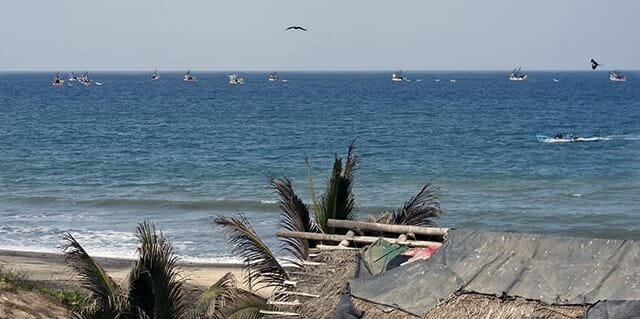
Crucita has a beautiful shallow bay. During the ten months of sardine fishing, the large barcos that follow the Humboldt Current just off the Ecuadorian coast use the bay for safety and to station themselves. We counted up to fourteen one day.

Slow travel discovers large fishing barcos off shore

The sardines are fished at night; it's best when moonlight exposes the shallow-swimming, silvery schools to the nets. The Humboldt also teems with larger fish — Manta, whose lights can be seen at night across the bay, is the tuna capital of the world.

The central fight revolves around a historical and supposedly illegal practice: cleaning and chopping the sardines on the beach. At daylight, locally owned small boats go out to the barcos, collect the catch, and bring it to shore.

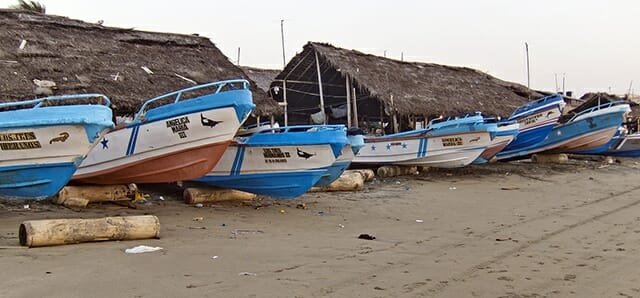
Small fishing boats line the beach of Crucita

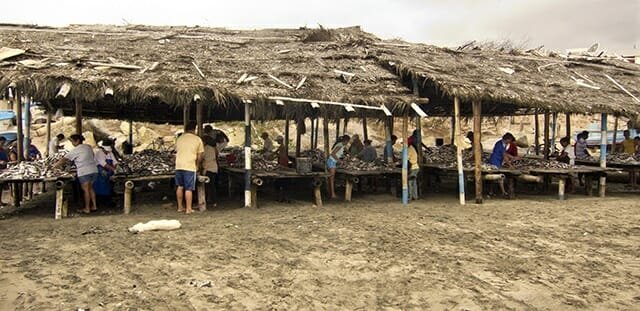
Crucita is one of the last fishing villages that allows the chop shacks on the beach. The open-air, thatched-roof, wooden-pole shacks are roughly 40 feet long and 30 feet wide. Inside, several tables — each about five feet wide, with wood planks running the full 30-foot width — serve as work surfaces. Each shack can have dozens of people working on both sides. One of those chop shacks was directly in front of our house.

Slow travel eventually revealed chop shacks on the beach of Crucita

Since Crucita is one of the last communities to allow the practice, sardines are also trucked in from nearby fishing villages — 30 to 40 sheds in all. The cleaned fish are then trucked to the major canneries in Manta, about 40 miles away. Those facilities include U.S. companies like Bumble Bee and Chicken of the Sea, though those two process tuna; other canneries specialize in sardines.

The fight to end this practice has escalated. The local government council allows it to continue, and the canneries benefit by receiving cheaply cleaned fish. The chop-and-clean shacks are a cash business. That helps explain why they remain.

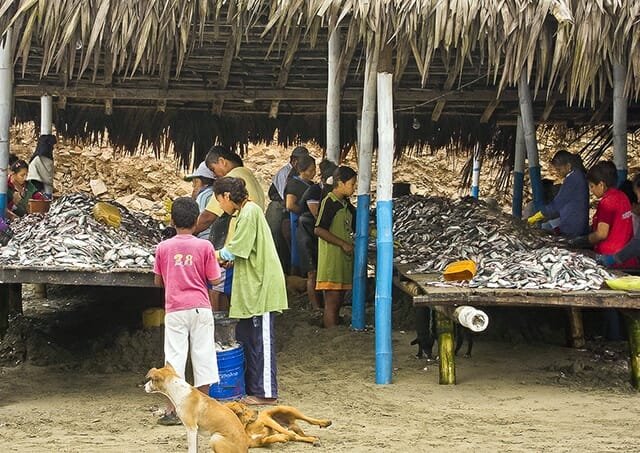
The workers on the beach aren't paid the wages they'd earn in a processing plant, nor do they receive the social security benefits they're legally entitled to. At high tide, the crews stand in water. Children are working. Add the unsanitary conditions and lack of refrigeration, and those nutritionally rich sardines we buy don't sound so appetizing.

Sardines piled high in chop shacks, dogs playing, kids cleaning sardines

The advocates believe the practice is illegal under Ecuadorian law and that the child labor has to end. They believe most of the workers are on their side — they would benefit from moving the operation off the beach to legitimate sites with better pay and conditions. But there is also a strict hierarchy among the sardine crews that tightly enforces the status quo.

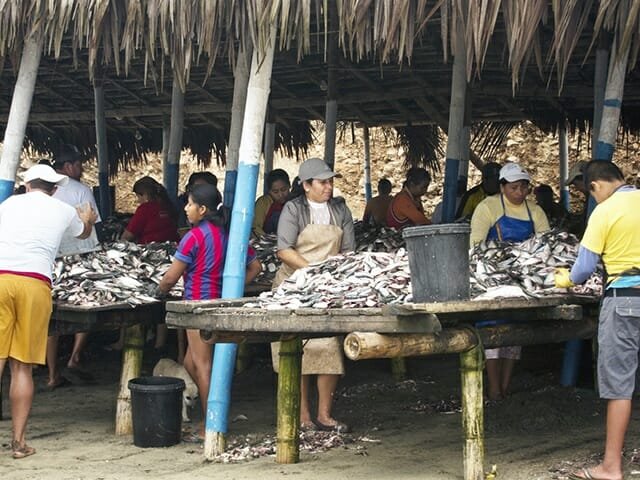
Another picture of locals working in the chop shacks

Shortly after the season resumed in October, we watched the beach transform into a bloody mess of fish guts flowing to the ocean, truck oil staining the sand. The chop-and-clean shacks had been documented extensively. They remained in active operation.

Whether President Correa was aware of the beach pre-processing operations was unclear. The advocates were working hard to reach local and regional officials and the newspapers, operating on the assumption that exposing the practice on a beautiful Ecuadorian beach would force public outrage and change.

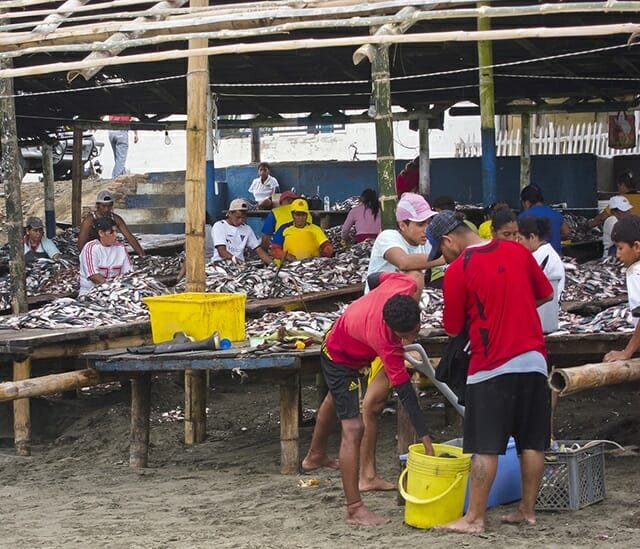
Amazing picture of sardines piled high on wooden tables under the chop shacks with locals cleaning

Ecuador was changing fast. Correa carried 60–70% approval ratings and was fighting entrenched interests on multiple fronts — but local councils are powerful, and new laws can get choked before they breathe. The lack of action here may have been a case of choosing one's battles.

The development was remarkable to witness: roads built everywhere, mandatory schooling implemented alongside child labor laws, a minimum wage, and social security. Before Correa, Ecuador had changed governments so often there was no stability. Now the country was in the grip of massive social, political, and economic change. Correa, worth noting, held a PhD in economics from an American university.

The organization responsible for fishing regulations is CEIPA. They were, or should have been, aware of the chop shacks after this article. Yet the shacks remained.

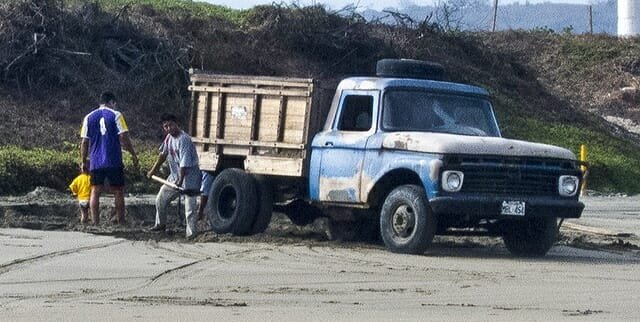
On my runs along the beach I kept passing a truck where three or four men vigorously loaded it with sand, then watched it drive toward town. They were selling the sand for mixing concrete for local construction projects.

Locals shoveling beach sand in truck for construction project

This story unfolded in bits and pieces during our stay, each new detail adding to the image — across the bay, where the canneries were, Bumblebee, Chicken of the Sea, the boardrooms had a nice view.

Slow Travel #59, A Birthday to Remember

Slow Travel #59, A Birthday to Remember

On November 17, 2012, I turned 59. It was a beautiful morning in Cuenca, Ecuador. We had a simple breakfast, then around ten took the 25-cent bus ride to el Centro. The city was bustling as we walked through the flower market, along the cathedral and down to the Tomebamba River.
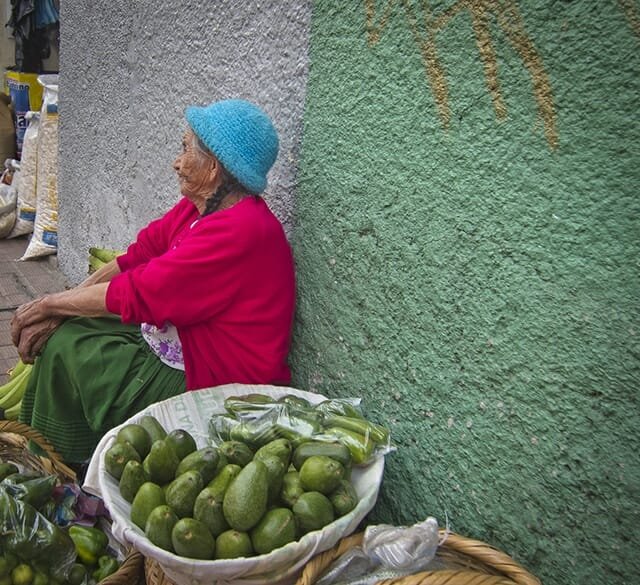
Brightly dressed Cuenca woman selling fruits on the sidewalk

We made our way to the Broken Bridge, where we enjoyed the music, bought some snack foods and sat by the river.
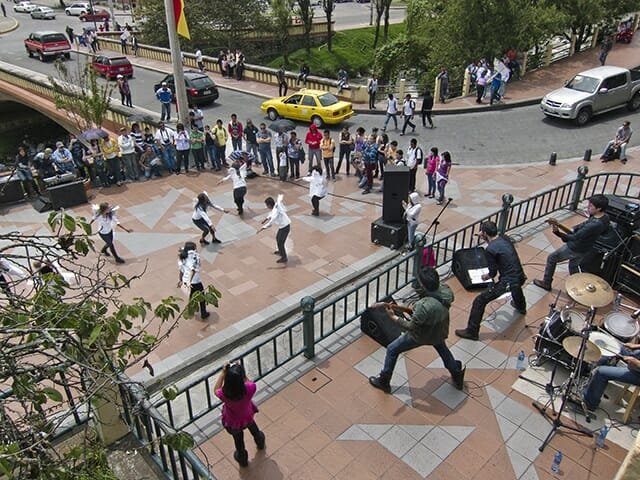
Music and dancing in square in Cuenca

It was a decision point: a movie and dinner at Joe's Secret Garden, rated the number one restaurant in Cuenca, or a bus excursion to el Agave, a Mexican restaurant located about 30 km south of town that we had heard about in Spanish class.
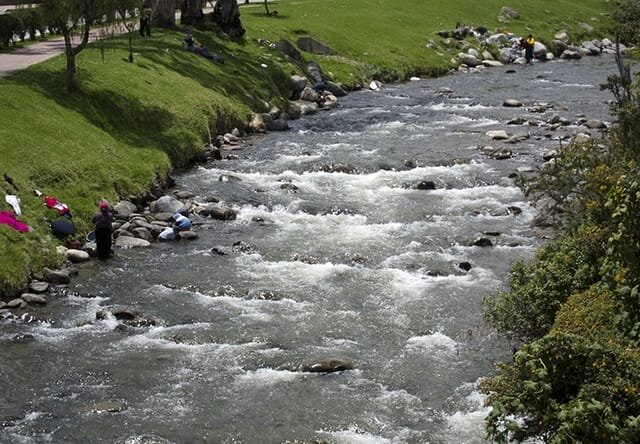
Beautiful mountain river through Cuenca with women washing clothes

Mexican food won out, so we hailed a cab to the always busy Terminal Terrestre. We were looking for the Girón, Yunquilla, or Tarqui bus — all headed south on the Pan American Highway. According to our Spanish teacher, one of them would take us to mile marker #17 and el Agave. We exited the terminal, dropped ten cents in the turnstile and walked among the thirty or so buses searching for the outgoing ones. The Girón bus was obscure but we found it.

The man handling ticketing was at the bus door, where we got into a discussion about mile marker #17, trying to establish that we wanted to be dropped off there. Our Spanish failed us — we tried everything including drawing a picture of a sign with #17 on it. Nothing. All three of us grew frustrated, but we got on the bus anyway because we were certain it was going in the right direction.

We knew the restaurant was near Tarqui, a small village south of Cuenca. As we sensed we were getting close, the ticket man came up and said in rather clear Spanish to get off at the next stop. We weren't sure we were in Tarqui but hoped our Spanish would be understood by someone else. We paid our $3 and slipped off the bus.

We asked at an outdoor restaurant near the bus stop, and the woman seemed to recognize comida Mexicana and pointed up the road. Her son, a young man in his twenties, was working hard to strike up a conversation. As I worked my best Spanish on the woman, I turned around to find he had encouraged Betsy to dance. The radio blared and a small crowd clapped. It was time to move on. We had confirmed we were in Tarqui; still no one knew about the mile markers. We started walking.

It wasn't long before we flagged down the next bus. Similar translation issues for the next couple of kilometers, though this driver seemed to know the restaurant. He was turning at the next intersection and directed us off the bus, pointing up the road. We got off and started walking again.
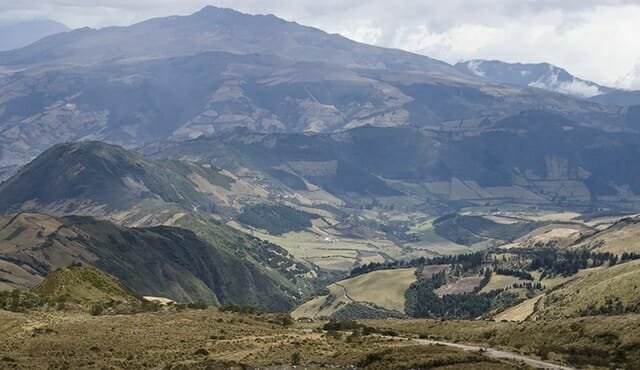
Beautiful scenery while slow travel along Highway of the Americas outside Cuenca Ecuador

Then we spotted mile marker #15 — plain as day. Unbelievable. We noticed the curb was painted in 20-meter increments: 15-200, 16-220, and so on. When we found the stake for mile marker #16, our confidence soared. We kept walking.

The scenery made it worthwhile. Views of cow and crop-dotted fields against a wall of mountains, as idyllic as they come. Near marker 16-380 we stopped at a small store. The woman knew immediately when Betsy said comida Mexicana. She pointed toward mile marker #17. Our pace quickened and soon enough, hungry from our efforts, we arrived at el Agave, mile marker #17-420.
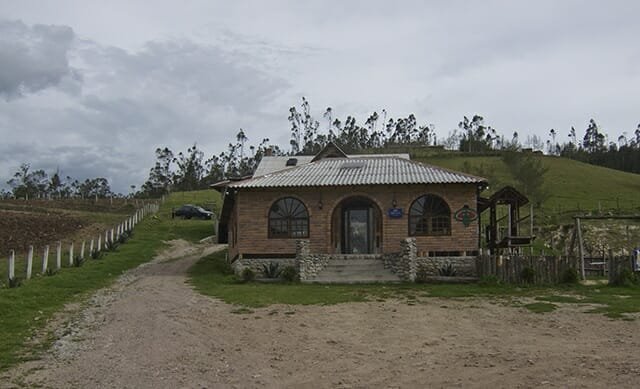
After three months of slow travel in Ecuador, we at my 59th birthday dinner at this Mexican restaurant outside Cuenca

We walked into the homey, rustic restaurant and sat at one of the large wood tables. Time for a cerveza and our first Mexican meal in a long time. It was 4 p.m. It had cost $4.50 in bus fare and taken four hours to go 30 km.
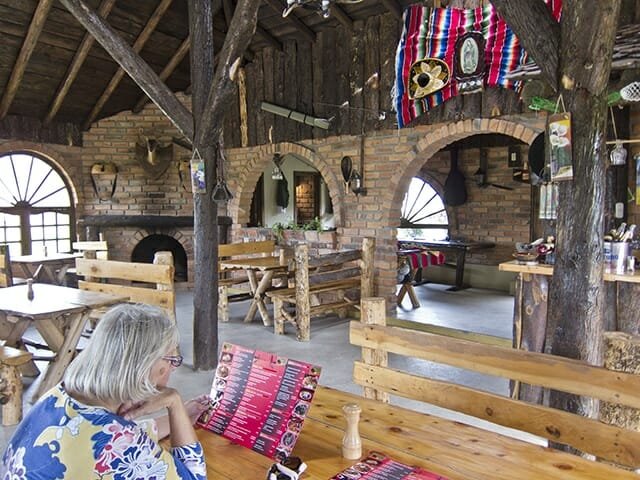
Inside of Mexican restaurant. Nice, simple decorations with simple wooden tables

The owner's young daughter approached and spoke in perfect English with a bright smile. She was in 11th grade, found the math in her Ecuadorian school more difficult than her previous school in New York State. The family had moved four years ago, and while she missed her friends, she liked living in Ecuador. She took our order — fajitas and a taco plate.

During the meal, her mother and father came to the table. He was Ecuadorian, she was Mexican. They liked their simple lifestyle and talked proudly about the new home they were building behind the restaurant. There were cows and a horse in the field, chickens in the yard, a garden ready to be planted. They seemed content. It was a perfect meal.

When it was time to leave, we were directed up the hill to a family member who made cheese, yogurt, and cheesecake. The store was simple inside. Our mission was two slices of birthday cheesecake.

We started back down the hill to flag the next bus to Cuenca. At marker #17-220, an older jeep-style truck pulled off the road. The man introduced himself as Leo, a member of the restaurant family. Somehow our story of walking so far for dinner had reached him. He offered us a ride to the next bus stop. Slightly skeptical — we hadn't met him in the restaurant — we got in, squeezing together on the front seat.

Leo spoke good English. He had lived in New York State, worked construction, bought and restored houses, and at the height of the housing boom had a crew working for him. He spoke of his wife and thirteen-year-old son still living in the U.S.
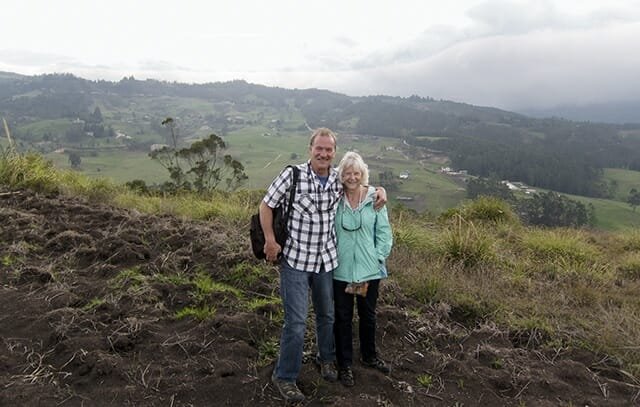
Betsy and Mark high in the mountains

We weren't far down the road when Leo asked if we'd like to ride into the mountains. We paused a second — was going up in the mountains in a new acquaintance's beat-up Jeep sane? The answer, on a birthday, was yes. For the next hour Leo crept up steep mountain roads through several small villages. There were beautiful vistas of the valley below. At one point we were looking down on an approaching cloud bank. Cuenca sits at 8,400 feet; Leo estimated we'd reached about 11,000. As we drove he honked or waved at everyone he passed, which seemed to be everyone. We came eventually to a small farmhouse his father owned, in the family for decades — corn and fava beans, his father now in his eighties, long since moved away. Leo asked if we'd like to see inside but darkness was closing in and we passed. Leo said, "Next time."

Coming back down the mountain he offered to drive us all the way to Cuenca. He enjoyed the conversation, he said, and appreciated the chance to practice his English. We talked about the community's fight against a Canadian gold mine expanding into the next valley, feared to contaminate the river and water supply. We talked about the contrast between Ecuador and the U.S. — families here still living in close proximity, the pace slower, the striving less intense. We thought about our own dispersed family, connected by Skype and email, months between visits.

Leo said he owned 80 dairy cows and worked odd construction jobs. Many of the large mountainside homes were owned by U.S. expats who provided some work for him.

Then he told us what had happened four years earlier, at the height of his business in New York. A state trooper stopped him and asked him to prove his citizenship. He had paid an attorney $10,000 to secure legal residency, but the attorney had stolen the money. Lacking papers, he was taken into custody and deported. He said he wasn't bitter. He thought the trooper may have exceeded his jurisdiction. But you could hear in it how much being forced from his family and his work had cost him.

It was dark as we re-entered Cuenca. Leo dropped us near our apartment. I had wanted to invite him up — have a birthday drink, keep talking. I didn't. That thought has stayed with me. I still wonder what makes us cautious where others are open, what we protect ourselves from by not asking a stranger in.

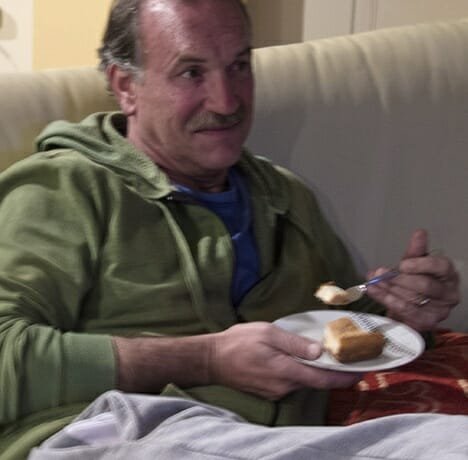
Mark enjoying birthday cheesecake at the end of the day

Thanksgiving 2012, Ecuador, Cuenca, Cajas, Guayaquil

Thanksgiving 2012, Ecuador, Cuenca, Cajas, Guayaquil

Ours was a nontraditional Thanksgiving. After three months of slow travel in Ecuador, we prepared for a full day of travel and exploration and completed it with a remarkable dinner. We were scurrying around by 6:30 a.m. in our Cuenca, Ecuador apartment, where we had lived for the past five weeks, as we finished packing for the next road. The plan was to take a cab to the bus station (Terminal Terrestre) at 10, then a four-hour bus ride to Guayaquil, spend the night and then fly to Panama the next afternoon.

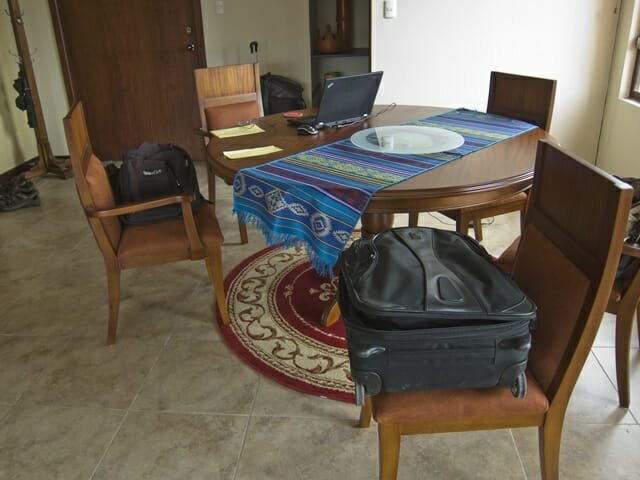
We spent five weeks in our Cuenca apartment, three months in Ecuador.

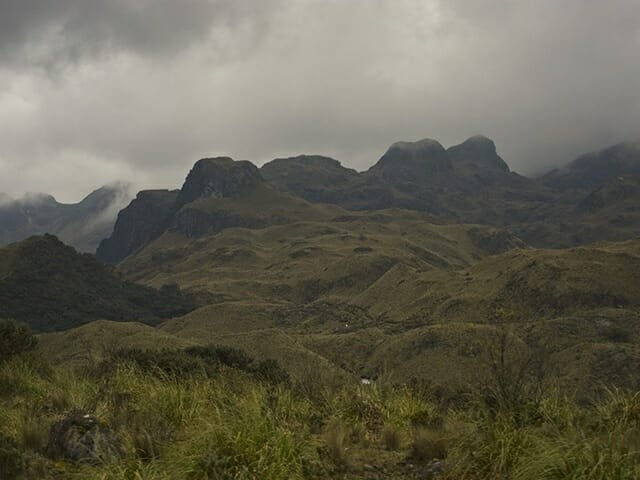
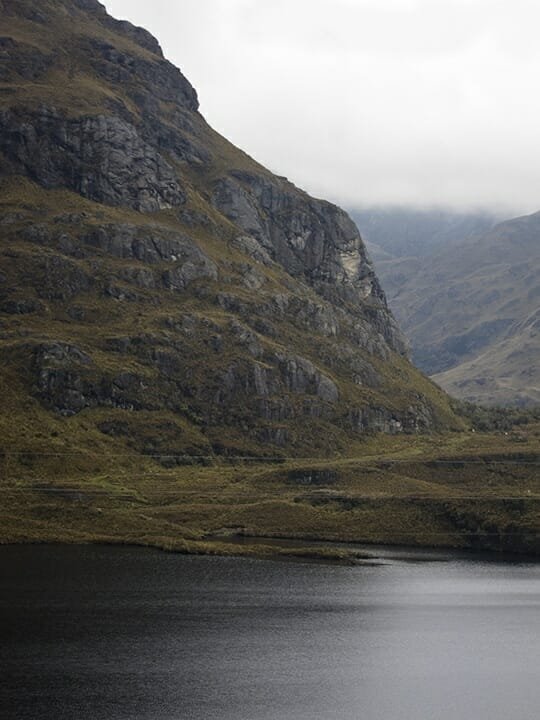
The cab arrived on time at 10 am. We were on the bus to Guayaquil by 10:30. About 30 km outside  Cuenca we entered Parque Nacional Cajas (Cajas National Park). The highest point of the park is 4,450 meters (14,600 feet), and the park is filled with jagged landscapes and deep valleys. The park's 200-some glacial lakes and lagoons provide about 60 percent of the drinking water for Cuenca. Mountainous views into deep valleys laced with small villages delighted us as we followed the switchbacks between and around the peaks.

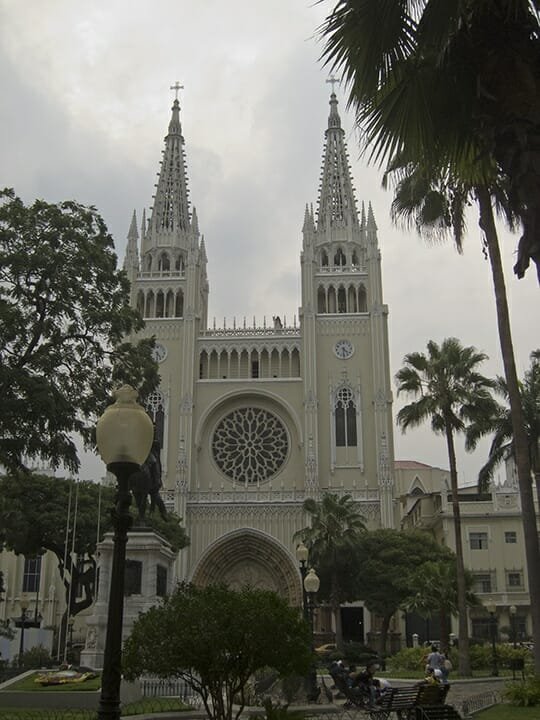
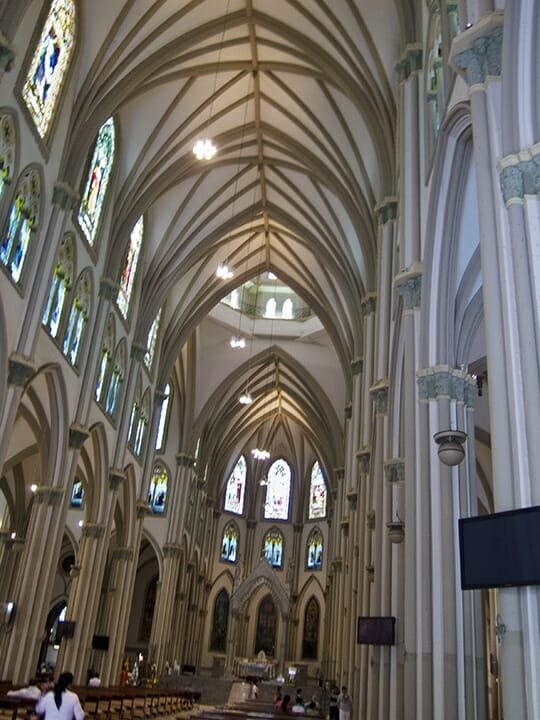
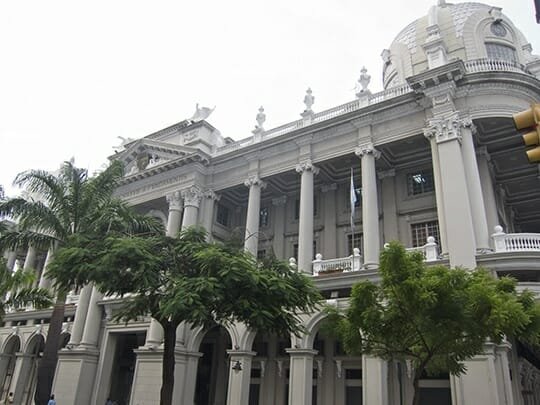
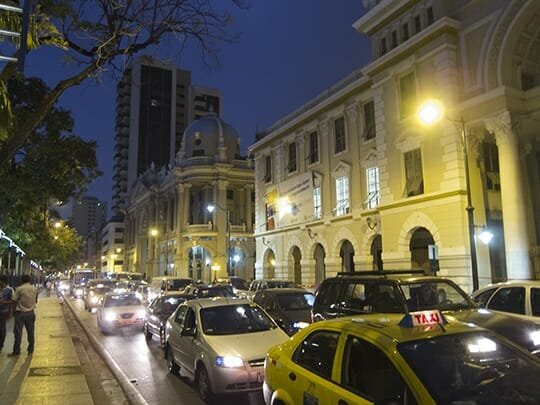
Finally, the road leveled out, tropical vegetation everywhere as we made our way to sea level outside Guayaquil pronounced: [ɡwaʝaˈkil]), the largest and most populous city in Ecuador, with around 3.5 million people, and the nation's main port. Guayaquil is located on the western bank of the Guayas River, which flows into the Pacific Ocean at the Gulf of Guayaquil. From the modern Guayaquil bus terminal, we grabbed a cab to our downtown hotel. It was mid-afternoon, and the outside temperature had gone from the Cuenca constant 70 degrees to close to 90. We pulled out the shorts and light shirts and struck out to explore the busy city heading toward the Guayas river. Along the way, we saw the beautiful Metropolitan Cathedral of Guayaquil...


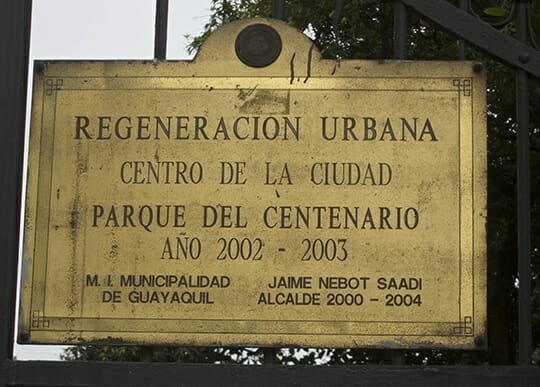
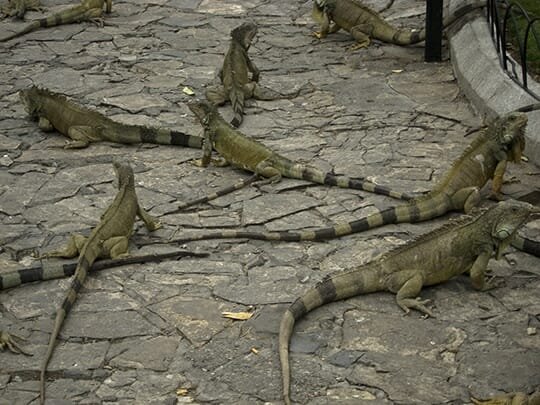
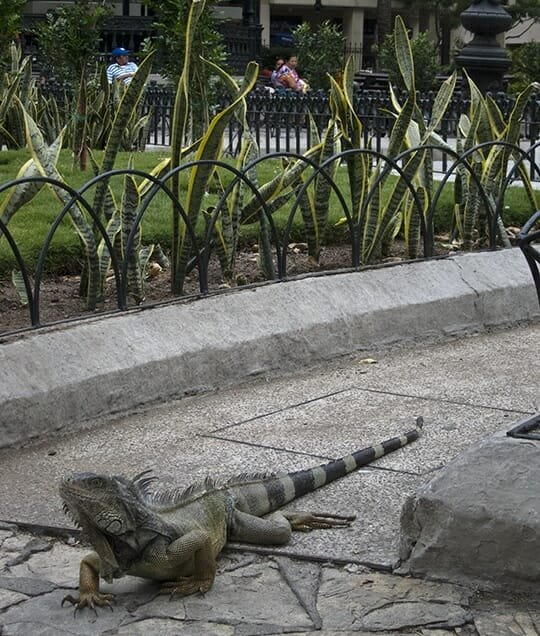
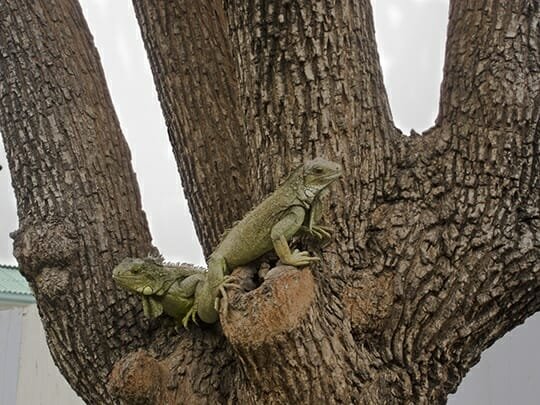
We wandered across the street to the park, a gathering place for adults and children filled with well manicured trees, flowers and tropical plants. About a city block wide, on this day the place was teeming. We noticed a crowd with cameras poised so we moved in for a closer look. It was a bit of a shock. Iguanas were walking around everywhere. People, children included, were surrounded. It was all a person could do to avoid stepping on their long tails. Some children were leery and needed parental reassuring, but for the most part it was zoo.


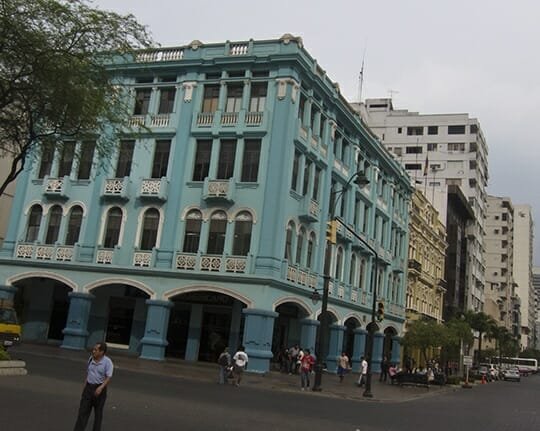
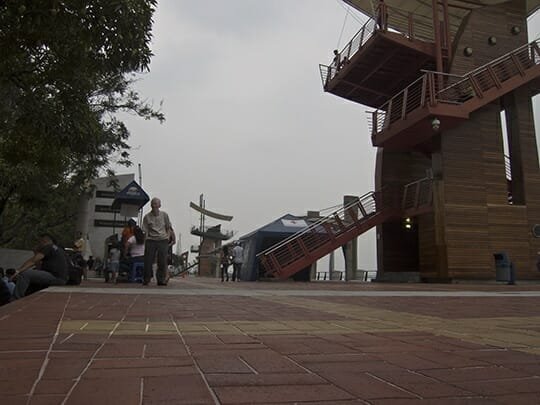
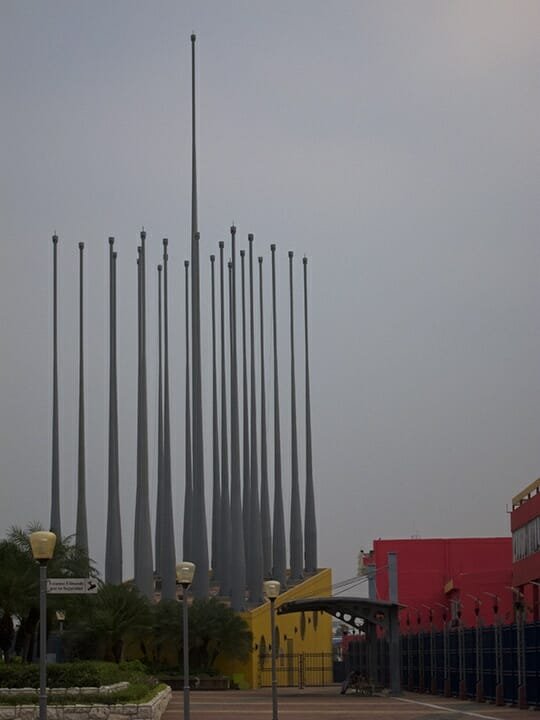
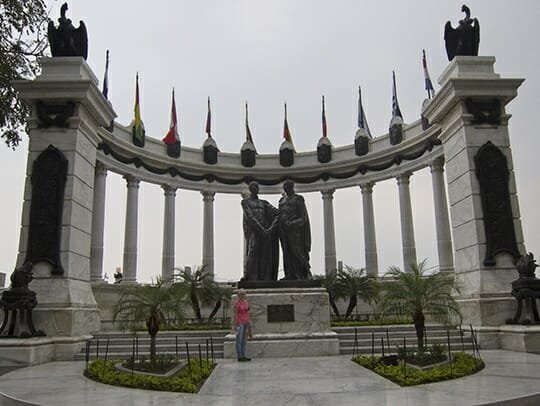
Okay, we didn't expect that and finally left the park mumbling about the Iguanas, the children's faces and reactions, and the comedy of it all. Having enjoyed some outstanding colonial architecture in Cuenca, we found Guayaquil impressive in size and scope with churches and historical buildings, but structures like this were more dispersed, it took some hunting to find them. A few blocks away we landed on the  Malecón 2000 (boardwalk), considered to be a model of urban renewal and declared a healthy public space by the Pan-American Organization of Health (POH) and the World Health Organization (WHO). We walked the 2.5 km boardwalk with views of several historical monuments, museums, gardens, fountains, shopping malls, restaurants, bars, and food courts.

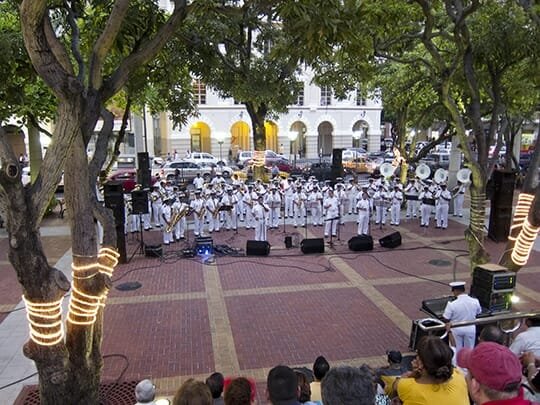
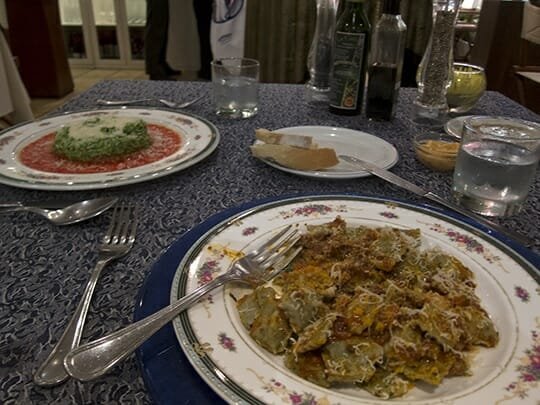
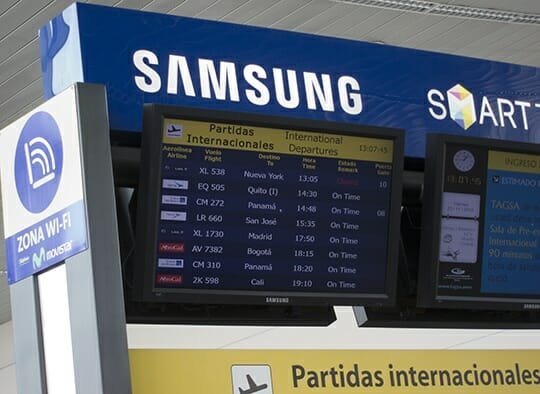
    We stumbled upon a free concert... The band had a big sound and the crowd enthusiastically supported them. But now it was getting dark and we were hungry. You can set your watch by sunrise and sunset in Ecuador, the days are 12 hours long all year long. By the time we hailed a taxi it was 7 p.m. It was a 30-minute ($4 dollar cab) ride across town to the Riveria restaurant, which had a reputation for great food. We stood outside looking at the menu, and the place was empty so we thought we had the wrong place. We balked at first and then decided to wade in. We were hardly seated when the crowd started to trickle in. By the time we finished ordering, the place was half full and by the end of our meal, there was a wait. We had a great Italian Thanksgiving meal. Luckily we didn't have an early flight. After this day we were thankful to stretch out in our hotel room, prepare some last minute itinerary stuff and relax, e.g. fall asleep. What a day! We arrived at the Guayquil airport the next day easily two hours ahead of our Copa flight to Panama. Our three months in Ecuador were quickly coming to a close and a new chapter a two-hour plane flight away.