by Mark | Oct 3, 2011 | Deep In It
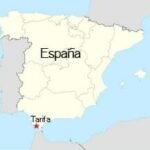
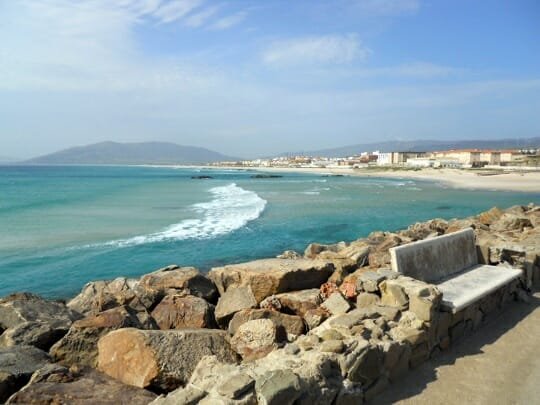
Tarifa offers a historical and beautiful setting with Morocco a short 10km across the Strait of Gibraltar, a gateway between the Atlantic and the Mediterranean. Beaches, natural beauty, climate, and location combine to make Tarifa worth seeking out.
The wind here is legendary. This is a mecca for all wind-related water sports attracting the best from around the world. While steeped in a long history, it has the feel of a California beach town but more international. The city is relatively small (20,000). We caught a picture-perfect day with the wind blowing in all its glory.
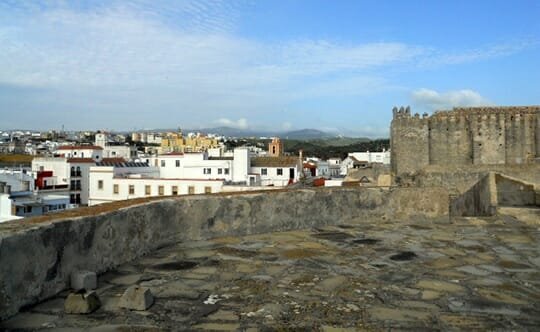
The best view of Tarifa can be had from the battlements of Castillo Guzmán el Bueno (castle of Guzman the good) who earned his moniker by refusing to hand over the castle in 1296 to the besieging forces of the Infante, Don Juan, and the Moors in exchange for the life of his son (good story).
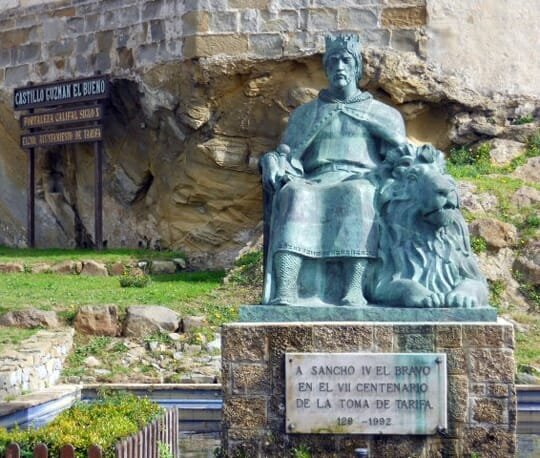
A statue of the hero stands in front of the castle:
Tarifa has a hippy element which may account for the nice selection of vegetarian restaurants. We ate at a combination yoga center and restaurant called Tarifa EcoCenter and met an interesting German woman who came to Tarifa to visit her boyfriend and stayed. The city has that kind of appeal.
Beyond the natural beauty and wonderful climate, Tarifa offers the annual African Film Festival, dedicated to African cinema.
For the naturalist, Tarifa serves as a key point of passage for migrating birds between Africa and Europe. For birdwatchers one of the most impressive sights over the Straits is when flocks of storks, sometimes numbering up to three thousand, cross en mass relying on thermals and updrafts which occur over narrower expanses of water.
It was tempting to take the shuttle to Africa…
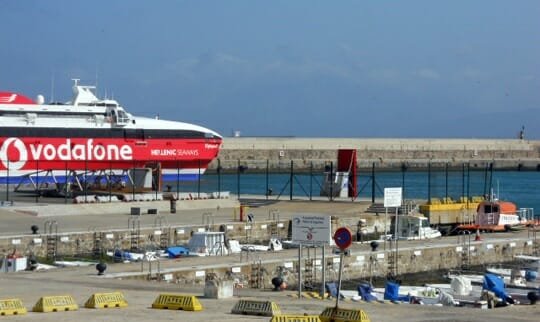
but with reservations in Malaga, we headed East along the Costa del Sol to arrive by nightfall.
by Mark | Oct 3, 2011 | Deep In It
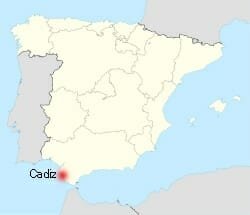
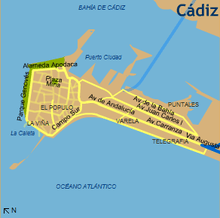
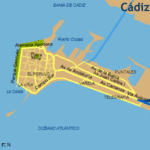
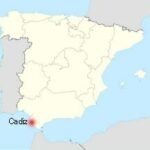 The map at left shows the relative location of Cádiz while on the map to the right you can see its unique position on a peninsula with the old city located at the end. Cádiz is said to be the oldest continuously inhabited city in Europe, founded in 1104 B.C.
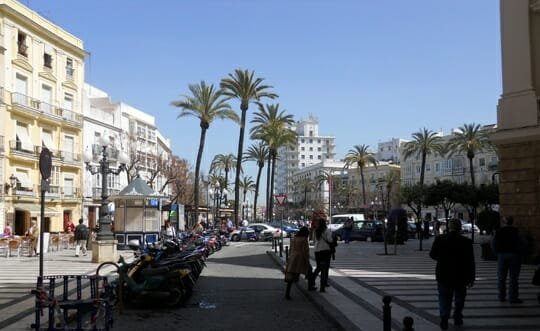
The old city (Casco Antiguo) within the remnants of the city walls consists of a labyrinth of narrow streets connecting large plazas. Fought over by the Phoenicians, Carthage, Hannibal, Rome, the Moors, and the Visigoths, Cádiz is awash in history.
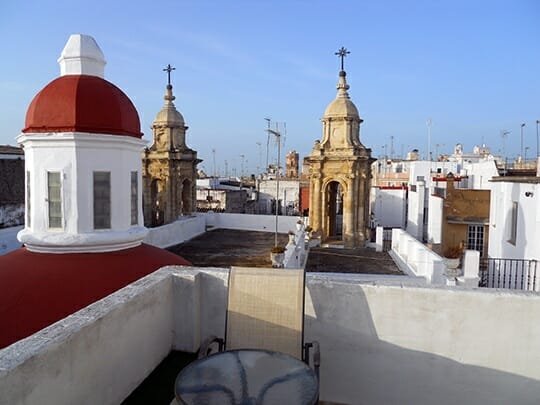
The view from our hotel rooftop evoked a sense of the Casco Antiguo.
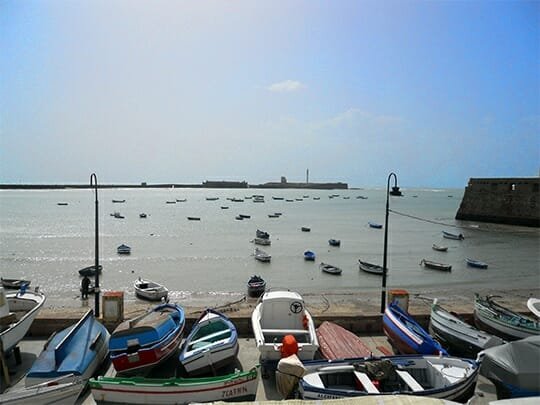
 The lure of the city was everywhere. Along the waterfront, boats perched on the sandy beach brought the fishing heritage of the city to life.
The old city is easy to walk, it is confined to an area 1200 by 800 meters yet filled with bustling plazas and parks.
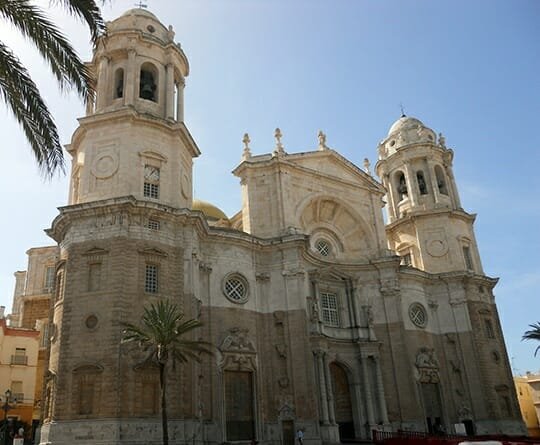
The Catedral de Cádiz is a stunning building…
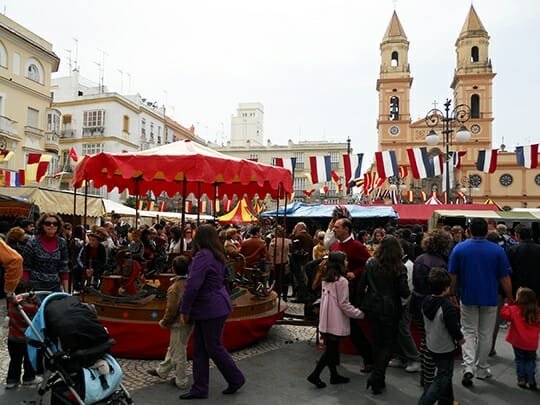
On a beautiful Sunday afternoon we walked this festival filled with booths of crafts, foods and collectibles in Plaza de San Antonio. The festival was packed with people sampling cheeses, dulces and local faire. The garlic pan (bread) with the local jamon (ham) with a side of on-the-spot-made potato chips cooked in olive oil was too hard to resist. Andalucia is an olive-producing center that prides itself on its product.
Our original plan was to rent an apartment here, spend a couple of months, study Spanish, and soak up the sun while immersing ourselves in the city. We had some apartment possibilities but could not quite land the right apartment. After a few days, we decided to move on.
We were ready to explore more of Andalusia so we rented a car and headed south toward Tarifa.
by Mark | Oct 3, 2011 | Deep In It
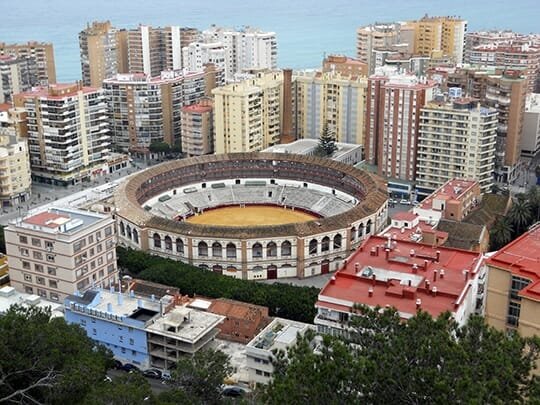
View of Bullring in Malaga, Spain
We arrived in Málaga (Spain) on Friday, March 19, 2010, at around 4pm (local time) after missing our scheduled connection in London the previous morning. Since British Airways made the connection too close and our plane was late leaving Miami, they paid for (2) hotel rooms plus (3) meals. It turned out to be a great mistake.
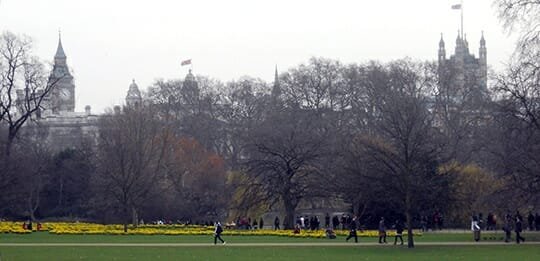
We found the London hotel, laid down our bags, put our post red-eye game face on, and took the subway into London around 2pm for a free of day of sightseeing. We were able to easily walk to Buckingham Palace, Big Ben, Parliament, Hyde Park, Piccadilly Circus, Westminster, etc., then a bite to eat. With a plane for Spain to catch early the next day,we were back at the hotel by 11. We measured the last 24 hours since leaving Miami as full.

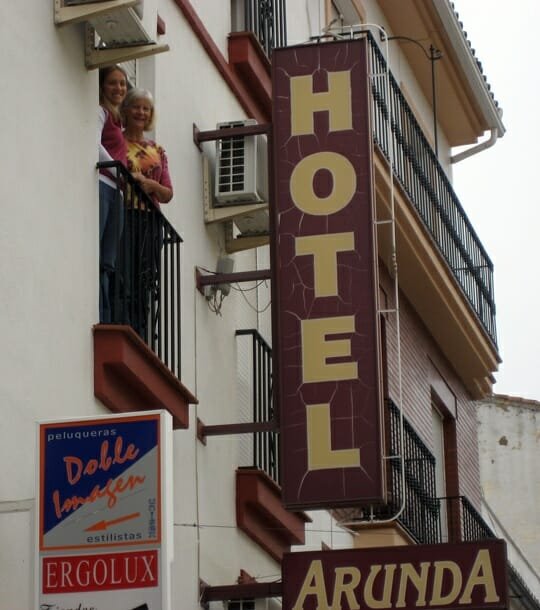
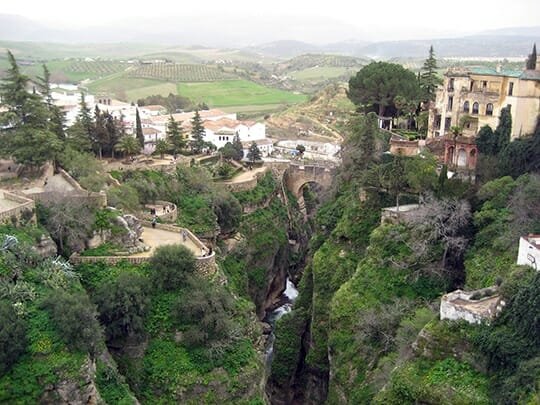
The next day we arrived in Málaga, got in our rented car and drove about two hours to Ronda, where we stayed the night at the Arunda Hotel in the heart of the city, nothing fancy but reasonable and clean. Ronda is a beautiful city in the mountains about 100 kilometres (62 mi) northwest of Málaga. It was a short visit in this city of about 35,00 people but we all fell in love with it. It seems we are not alone, American artists Ernest Hemingway and Orson Welles spent many summers as part-time residents of Ronda’s old town quarter called La Ciudad.
The Guadalevin River runs through the city, dividing it in two and carving out the steep canyon, above which the city perches.
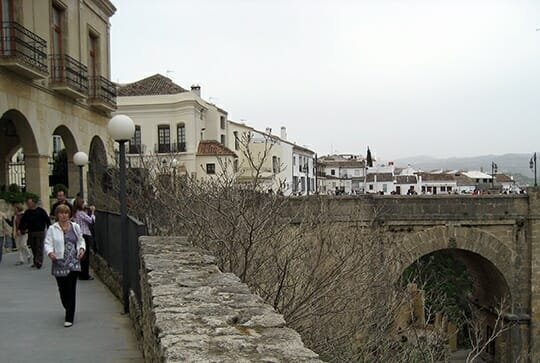
We toured the city on foot the next morning (stretching the pins as the Brits say) and then drove to Cadiz about two hours away. The weather was perfect, around 22 degrees Celsius.
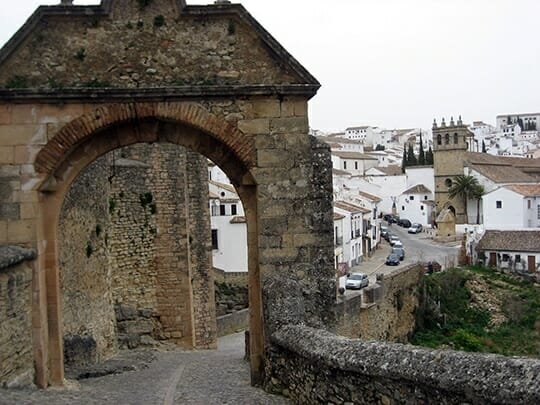
From Ronda it was a short drive to Cádiz where we planned to rent an apartment, explore, soak up some sun, and learn Spanish.

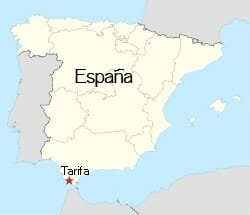 Tarifa offers a historical and beautiful setting with Morocco a short 10km across the Strait of Gibraltar, a gateway between the Atlantic and the Mediterranean. Beaches, natural beauty, climate, and location combine to make Tarifa worth seeking out.