Montgomery, Alabama
On the next road from Washington, D.C., to New Orleans — leading through Montgomery, Alabama — we relived the history that had brought America a step closer to a more perfect union. A short stop, but an indelible one, in the birthplace of the Civil Rights Movement.
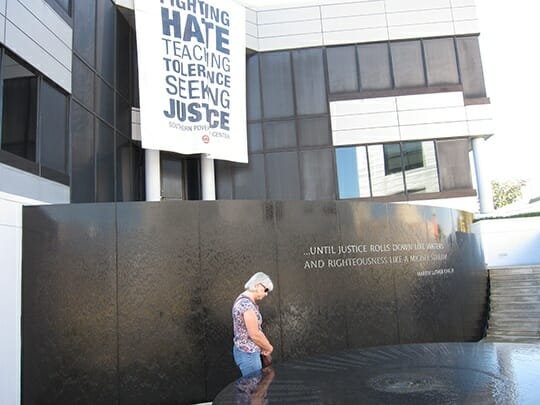
Civil Rights Memorial located at the Southern Poverty Law Center
We started at the Civil Rights Memorial at the Southern Poverty Law Center, within walking distance of many of the era's landmarks. The memorial was designed by Maya Lin, who also designed the Vietnam Veterans Memorial in Washington. She was 21 when her Vietnam Memorial entry was chosen from 1,421 submissions in a competition open to all Americans. At 28, she was asked to design this one.
The water-washed surface of the table is inscribed with the names of 40 people who died in the struggle for civil rights between 1955 and 1968, as well as landmark events of the period. The water motif was inspired by King's paraphrase of Amos 5:24: "We will not be satisfied until justice rolls down like waters and righteousness like a mighty stream." Inside the memorial, the displays tell the stories of those 40 and speak to injustices throughout the world.
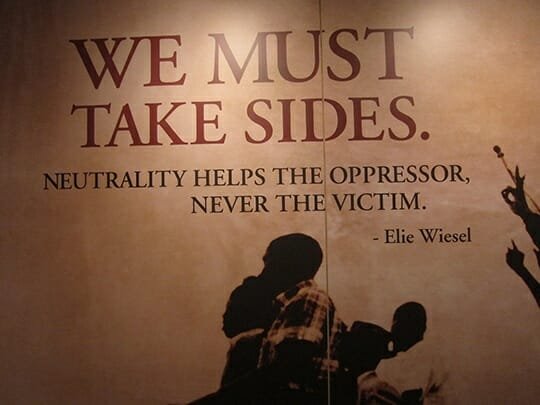
March 25, 1965 · Selma Highway, Alabama
Viola Gregg Liuzzo, a housewife and mother from Detroit, drove alone to Alabama to help with the Selma march after seeing televised reports of the attack at the Edmund Pettus Bridge. She was driving marchers back to Selma from Montgomery when she was shot and killed by a Klansman in a passing car.
Viola's story runs deeper. Among the murderers in the car was an FBI informant, Gary Rowe, who was indicted in 1978 for his involvement in the killing. The first trial ended in a hung jury; the second in acquittal. The FBI under J. Edgar Hoover played a large role in attacking and undermining the Civil Rights Movement — and King in particular — as documented in the Final Report of the Select Committee to Study Governmental Operations. Some believe Hoover was instrumental in King's assassination.
The events of Bloody Sunday — the culmination of the three Selma to Montgomery marches — were broadcast on national television: the attack dogs, the beatings, the fire hoses. The violence was directed by Theophilus Eugene "Bull" Connor, who came to symbolize the murders, hangings, and sheer brutality brought to bear against those seeking basic civil liberties and social justice.
The national attention forced Americans to confront the legal and moral questions, culminating in the Civil Rights Act of 1964 and, a year later, the Voting Rights Act of 1965. Difficult as it is to accept: it took 100 years after the end of the Civil War to encode basic civil rights that had been denied to Black Americans across much of the South.
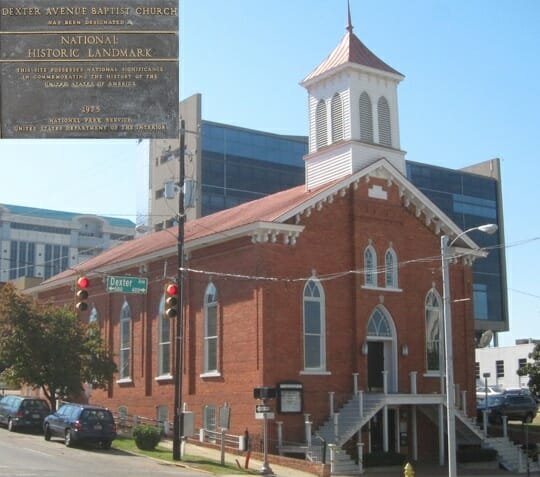
Leaving the memorial, we walked to Dexter Avenue Baptist Church, where Dr. Martin Luther King pastored from 1954 to 1960.
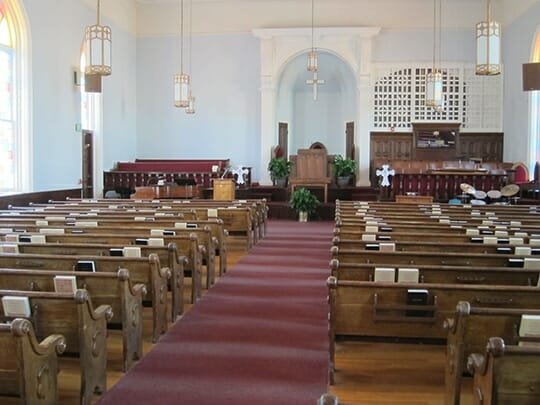
Many Black churches were burned and bombed during the movement — among them the 16th Street Baptist Church in Birmingham, where four girls were killed on September 15, 1963. Dexter Avenue was spared. The pews are handmade and date to the 19th century.
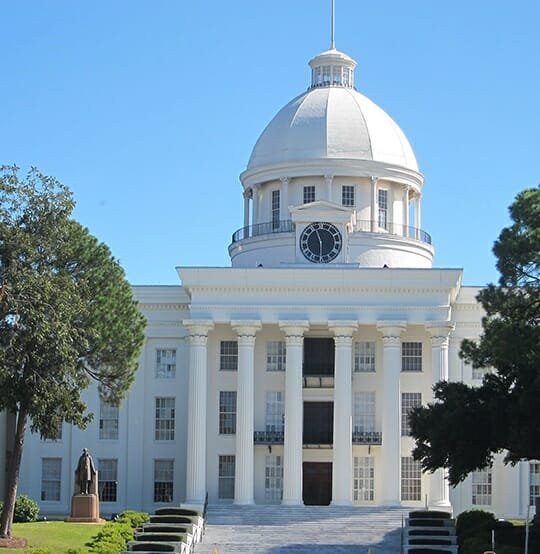
From King's office window, he had a direct view of the Alabama State Capitol, which had served as the first political capital of the Confederate States of America in 1861, before the seat moved to Richmond, Virginia. The Provisional Constitution of the Confederacy was drawn up there on February 4, 1861; the Permanent Constitution adopted on March 11. Over a hundred years later, the third Selma to Montgomery march ended on its front steps.
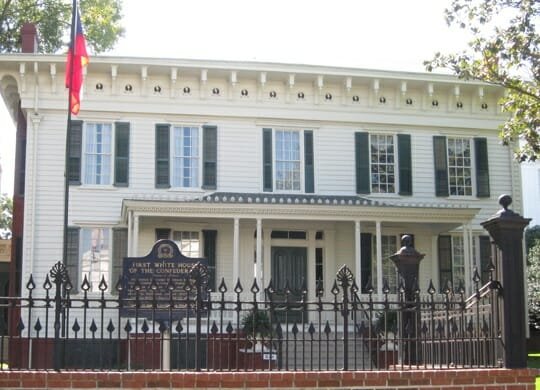
Montgomery also housed the first White House of the Confederacy, where Jefferson Davis resided as its newly elected president.
With time running short, we missed the Rosa Parks Museum — dedicated to the woman who refused to give up her seat, sparking the Montgomery Bus Boycott. Parks received the Presidential Medal of Freedom, the Congressional Gold Medal, and a posthumous statue in the Capitol's National Statuary Hall. At her death in 2005, she was granted the honor of lying in state at the Capitol Rotunda.
We left Montgomery too soon. Driving on the next road, we talked for hours about what we had seen and what any of us could do in the search for social justice. The work of the Southern Poverty Law Center — dedicated to fighting hate and bigotry and to seeking justice for the most vulnerable — is integral to that effort.
Farther down the next road, the conversation turned toward economic justice. It was 2011; the Occupy Wall Street movement was spreading across the country and around the world, pressing questions about poverty, health care, hunger, and gross inequality. It felt like the central moral question of the moment.
The march to a more perfect union never stops. But after walking through that history in Montgomery, the pace felt urgently, painfully slow.
Photo of Walden Pond by Kelly (quote inserted)