by Mark | Nov 22, 2011 | Pulled Back
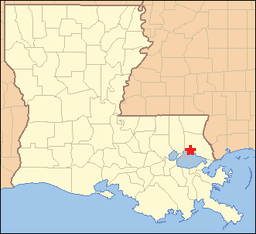
We’ll need a map for this one!
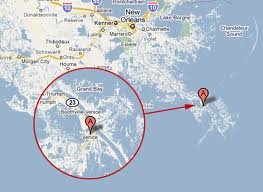
At the end of the road
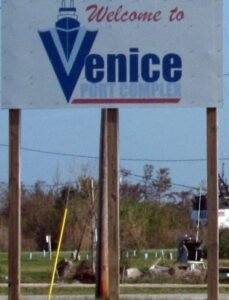
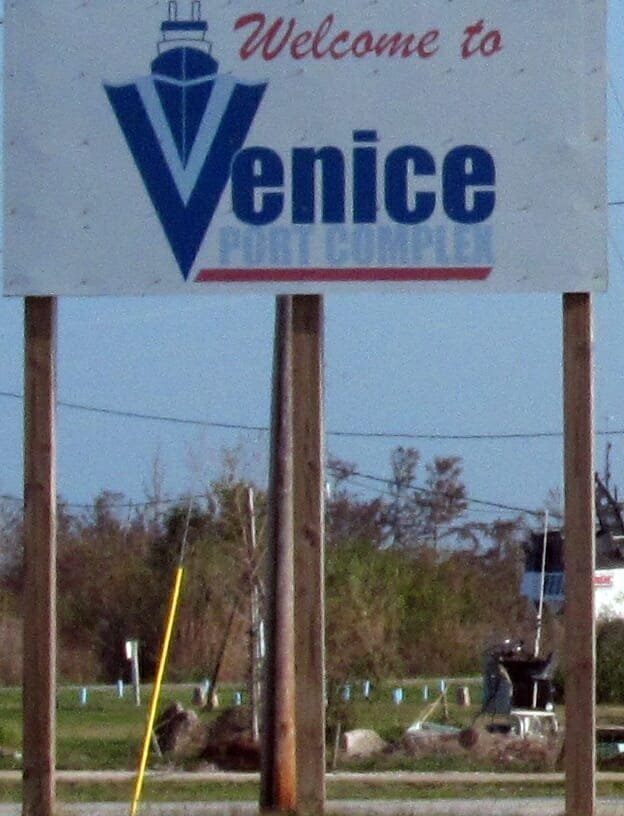
Far from the French Quarter, where the road south ends, we found Venice, Louisiana, and one of those unexpected experiences with great food and conversation.
Traveling south along LA -23 the scenery was less than we expected given the narrow strip of land with water on both sides. But as we discovered, a levy on both sides to hold back the inevitable storm surge completely blocked our view. There was farming along the way with lots of citrus and some cattle, along with visible devastation from Katrina which had left this area buried under several feet of water.
We were rewarded for the relatively mundane drive as we approached the end of the highway and the kind of views that we expected when we began.
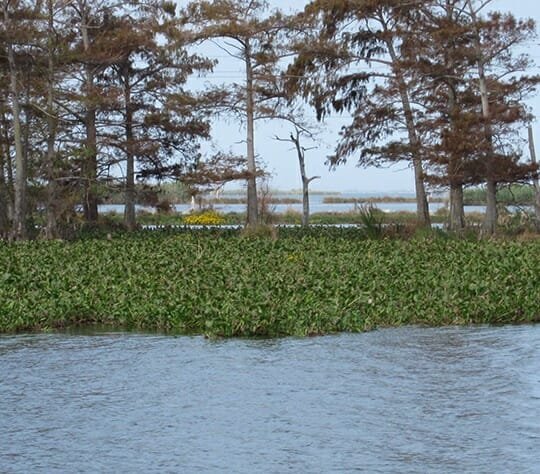
These scenes were right out of our imagination
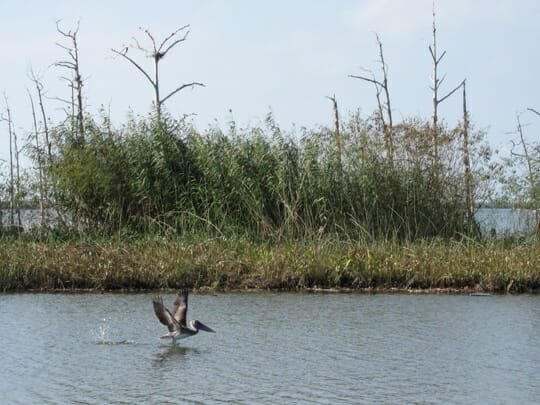
In flight
The area seemed fairly deserted and we were not sure where to go from here and then along came a mail truck. We chatted a moment with the driver and asked where to get a bite to eat. He directed us to the CrawGators Bar & Grill down the road a piece at the Venice Marina.
Note to self: the mailman is a good source for excellent restaurants.
While nothing promising could be seen in any direction at this point, we were in store for a treat. We found our way to the restaurant perched about 20 feet above ground and spotted the outdoor seating with great views of the marina, a perfect setting on this warm, sunny day.
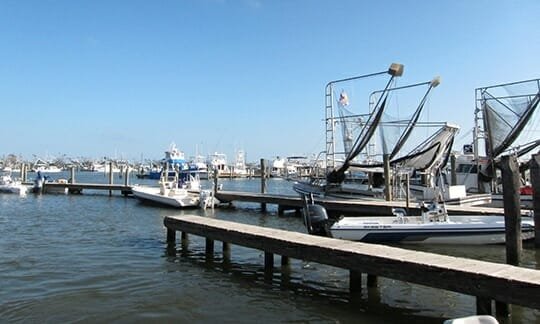
While the restaurant was quiet with only a few people watching the LSU v Ole Miss game inside, outside there must have been well over a hundred cars/trucks with empty boat trailers indicating the fish were biting.
We took a table on the deck and as we settled in, the couple two tables down gave us a friendly hello, where are you from greeting. Anxious for some local conversation, we started what became a long one that covered kids, food, fishing, football and politics.
Come to find out the woman, Deanna, was the mother of the restaurant owners. The man, Bob, went to school with her in Bunkie, Louisiana, about 100 miles northwest. An interesting note, according to them, Bunkie is the home of Cajun food and that New Orleans stole the food and the story. It seemed enough for one of them to derisively say, in New Orleans “they put tomatoes in everything.”
In this area of the country, the love of food, flavorful food, cannot be underestimated. Bob told the story of how he visited Amish country with some friends on a business trip and looked forward to the much-touted food. His first bites were a huge disappointment and he wondered if he could finish the bland food. For a man who had grown up on Cajun and liberally spiced food, the idea of salt and pepper being the main seasonings made him wonder how this food had such a following. Deanna rhetorically asked how anyone could cook without red pepper.
Looking at the menu, we asked for suggestions and Bob right away said the seafood stuffed baked potato was good and the onion rings, and… I waved my hand to stop him there. Who could pass on a house specialty like a seafood stuffed potato?
Over lunch, the conversation swung from Katrina, this area had been 35 feet under water, to fishing which is excellent in this, one of the top destinations for yellow-fin tuna in the world, around to unions, FEMA, oil spills, environmentalists and healthcare. Suffice it to say this is a red state and their views on many issues were 180 degrees from mine, so it was a challenge to smile and appreciate the insights of people who had lived in the area their entire lives.
To be honest it also helped me rein in my opposing political opinions in the face of union bashing and the like that Deanna kept plying us with food samples. First it was the chicken and sausage gumbo, her personal recipe, then seeing the look of appreciation for that, she brought out the bread pudding, another personal recipe. I almost told her I was a liberal just to make her stop! I couldn’t eat another bite. Deanna repeated more then once with a wink, “First we feed you, then we talk to you.”
We said our goodbyes to these warm and generous people, along with sentiments of how much we enjoyed the food and conversation and made our way back up the LA-23 to New Orleans with fond memories of Venice, Louisiana.
Mark Blondin, the next road
by Mark | Nov 21, 2011 | Deep In It
3/25/2010
“How lazily the sun goes down in Granada, it hides beneath the water, it conceals in the Alhambra!”
Ernest Hemingway, American novelist.
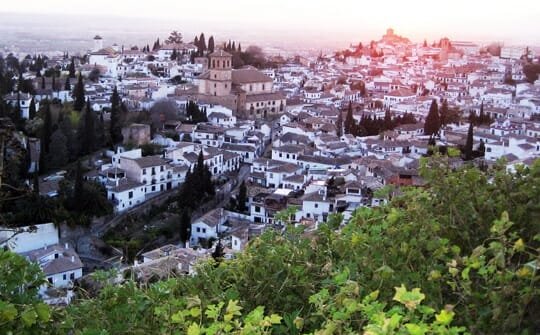
High above Granada in Sacromonte
There would be much to see and do in this historic and beautiful city in the coming weeks. But now I share one of my favorite quotes about Granada, “Give him charity, girl, as there is nothing worse in life than being blind in Granada.” — poet Francisco Alarcón.
Our first order of business in Granada was to secure a room at Hostal Zurista in Plaza Trinidad, then park the rental car and begin exploring. This beautiful city was to be our home for the next month.
The rest of the day was a combination of sightseeing and apartment hunting. The next week would kick off Semana Santa, one of the largest celebrations in Spain. Granada’s Semana Santa is a huge tourist draw and made our search for the perfect apartment more difficult given the influx of tourists from around the world to witness the amazing celebration to come.
That evening while walking the wondrous narrow streets we wandered into a real estate company, chatted with the owner, a man of 70 (setenta años) who lived in Granada his entire life. The conversation was difficult at best due to our lack of Spanish, but we were able to schedule a meeting for 10 a.m. the next morning to look at a couple of apartments.
Quite the gentleman, Esteban was dressed in a suit with a fedora when we met promptly at 10; he removed his fedora and greeted us with a cordial buenos días.
Stacy and Esteban were able to have a conversation as we walked about a mile under beautiful sunny skies along narrow cobblestone streets (calles). The weather was perfect with a temperature of about 21 degrees celsius (70 degrees) and people were out in throngs enjoying it. Our first full day in Granada.
Our language challenge became more noticeable here, in that the Spanish spoken is very fast with a heavy accent; it is muy deficil (very difficult) to understand. We constantly say, hable más despacio por favor (speak more slowly please) so we can try to understand.
We looked at two apartments, one was very nice, great location and modern, the drawback was that it had only one bedroom (dormitorio) and a futon in another room which was less than ideal. The second apartment was less modern and still had the same one bedroom problem. After walking a mile or so, and then a few blocks to the second apartment, we walked up about four flights of narrow stairs. Esteban was winded but not terribly so. Not many at 70 that I know, and some much younger, could have made that walk and climbed those stairs and have the same said. A lifetime of walking.
On the way back to Plaza Trinidad, we passed the local market which has 40-50 stalls selling meats, fruits and vegetables. Esteban seemed to know everyone. When we reached our hostal, Esteban gave us his card and then left without pressuring us.
We regrouped, ate some lunch and then set out to a second real estate company (imobiliária). We rented the first apartment they showed us in a great location, spacious, with two bedrooms. We were a bit hesitant to sign a contract for the apartment written in Spanish, but luckily the agent knew about Google Translate and was able to print it out in English. We managed this feat with all of our language skills stretched to the maximum, finalizing with great relief.
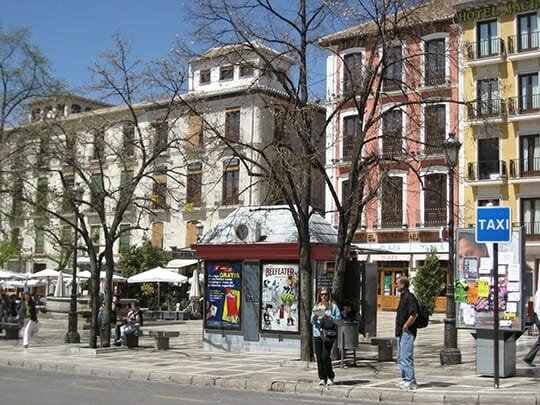
The beautiful Plaza Nueva was steps outside our apartment
We completed that work around 15:00 (3 p.m.) and returned to our hostal with two goals in mind: to visit the market to stock the apartment refrigerator and haul part of our luggage to make the next day’s move easier. Unfortunately, the market was just closing for siesta (had to learn that schedule) so we went to the apartment and dropped the luggage and put our feet up. We oriented ourselves, found the silverware, plates, ironing board, towels, etc. We had been given new sheets and bath towels as part of the rental.
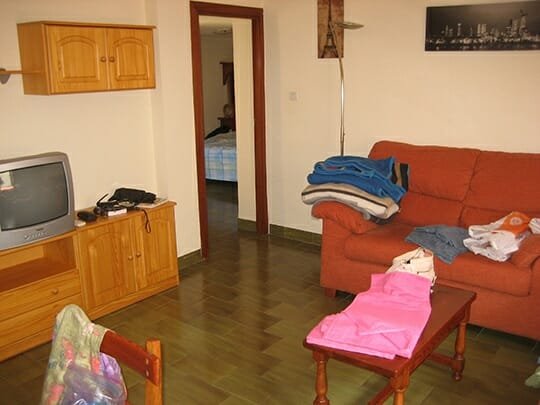
Our new apartment
The week-long holiday of Semana Santa commences this Saturday leading up to Easter. It should be spectacular and we have ringside seats in Plaza Nueva!
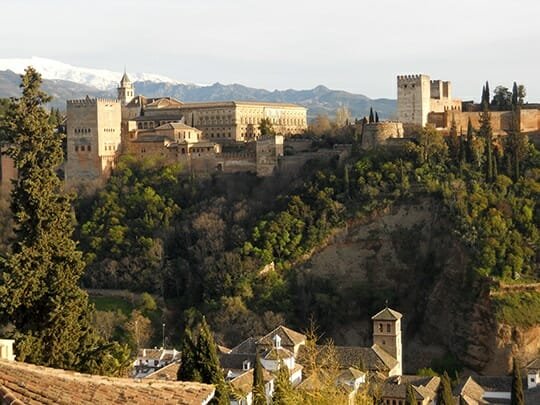
The Alhambra against the majestic Sierra Nevada mountains
“The most beautiful sunset in the world is in Granada.”
Bill Clinton, American ex-president.
Mark Blondin, the next road …
by Mark | Nov 14, 2011 | Deep In It
3/24/2010
Our plane landed in Málaga, Spain on March 19, since then we have traveled to Ronda, Cadiz, Tarifa, and Gibraltar and now back to our beginning. Málaga is home to roughly a half-million people, about 100 km (62 mi) east of the Strait of Gibraltar and about 130 km (80 mi) north of Africa.
Note to self: do not enter large foreign city after dark looking for your hostel while driving a rented car and without a GPS device.
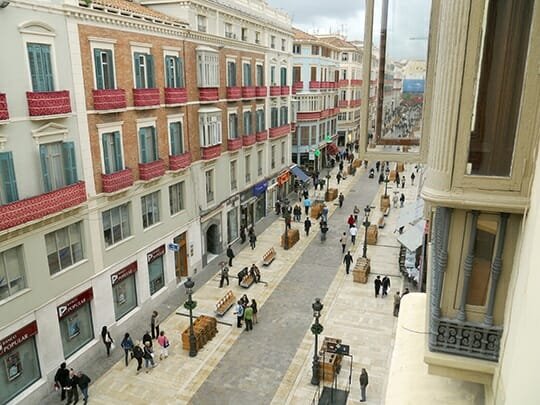
Street View from our Hostel Window
This time our hostel was well camouflaged along this busy walkway with a small sign of identification. After driving around and around honing in on this location, we parked along a dark and narrow street to proceed on foot. After entering the large wooden doors we hiked up a flight of stairs to check in. This hostel came highly recommended and lived up to its billing but it ain’t easy to find. The next morning we took the above photo from our room. I can remember only one hostel more difficult to find and that one was buried along the winding streets of Seville, Spain.
A bit about the city… Málaga’s history spans about 2,800 years, making it one of the oldest cities in the world. Founded by the Phoenicians around 770 BC, it was ruled by the Romans from 218 BC. After the fall of the empire it was under Islamic Arab domination until 1487 when Spain finally seized control. With the fall of Málaga, Granada became the only Moorish-controlled city on the Iberian peninsula after 800 years of rule. The archaeological remains and monuments from the Phoenician, Roman, Arabic and Christian eras make the historic center of the city an open museum.
Today, Málaga, while definitely a major economic center, has generated a growth in tourism served by Malaga Costa Del Sol Airport, one of the first in Spain, the fourth busiest and the oldest still in operation. The Port of Málaga is the city’s seaport, operating continuously at least since 600 BC. Rail service from the María Zambrano station connects Madrid and Barcelona with the new high-speed line making the trip to Madrid in considerably less than three hours. All of which, along with the great weather with lots of sunshine and Southern Spain beaches, makes Málaga a tourist destination but also a home to a sizable expatriate population of Brits and Germans.
For our visit, we targeted the birthplace of Pablo Picasso and the Museo Picasso Málaga, and the Gibralfaro castle which is next to the Alcazaba, the old Muslim palace which offered panoramic views of the city for our brief time in Málaga.
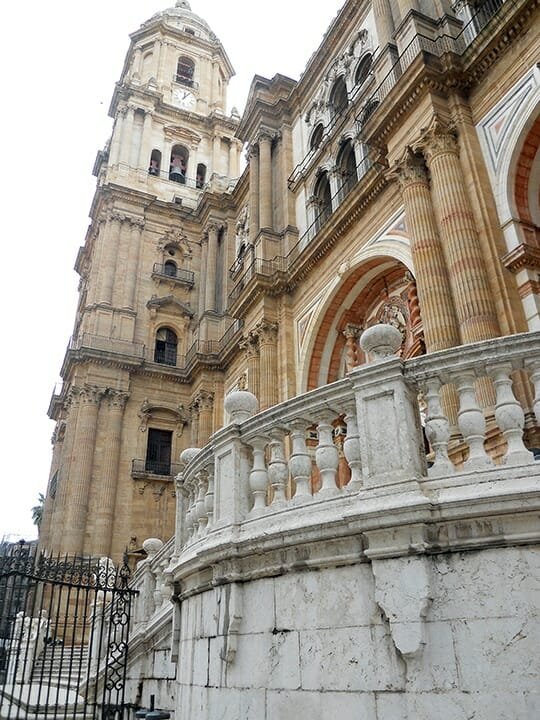
Cathedral of Málaga
The Cathedral of Málaga was the first major cathedral we visited after arriving in Spain. This Renaissance-style cathedral was constructed between 1528 and 1782. Two hundred and fifty years is incredible. The size and scope defies comprehension.
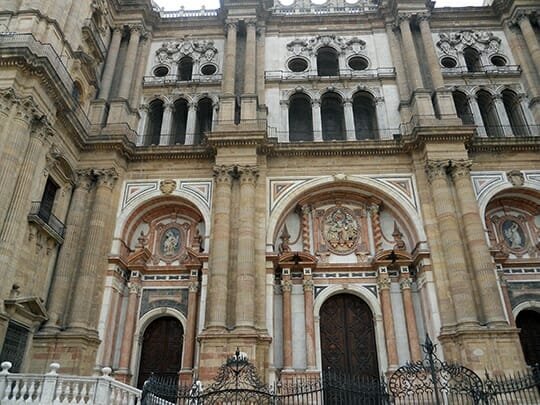 The inside is an awesome experience as one gazes at the enormity, the detail, and craftsmanship.
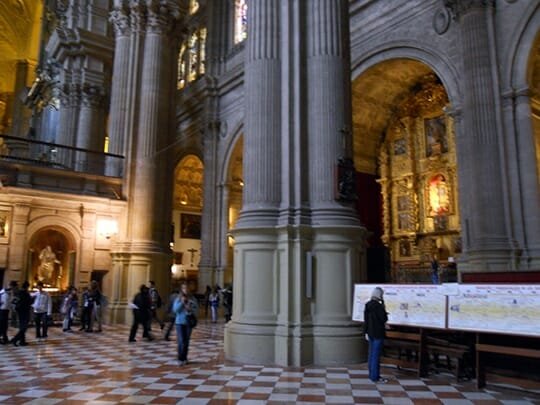
Inside the Cathedral of Málaga
The north tower rises 84 meters and is the second-highest cathedral in Andalusia, behind the Giralda of Seville. The south tower is unfinished. There are disputes on where the funds disappeared to, but because it is unfinished, the Cathedral has been nicknamed “La Manquita,” or in English, “The One-Armed Lady.”
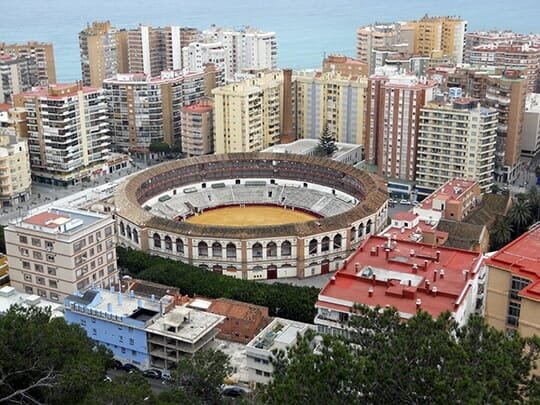
Having enjoyed visiting the birthplace of Picasso and the relatively new museo we took off for the walk up the hill to the Gibralfaro Castle with huge views over the city, including the Plaza de Toros de Ronda, one of the oldest operating bullrings in Spain.
The next road leads to Granada, Spain, where we will rent an apartment, experience Semana Santa, and immerse ourselves in the city for the next two months.
Mark Blondin, the next road …
by Mark | Nov 6, 2011 | Deep In It
3/23/2010
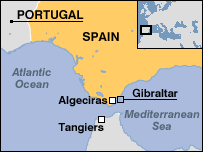
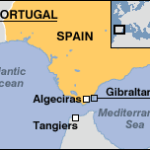
The next road from Tarifa, Spain, led to Gibraltar, which is more famously referred to as the Rock of Gibraltar. Did you know it is under British control? One minute you are driving along in Spain and the next, passing through British customs.
The history is long and storied and territorial control not a settled issue in Spain’s view. Statistically speaking, the Rock is 426 m (1,398 ft) high. The sovereignty of Gibraltar was transferred from Spain to Great Britain by the Treaty of Utrecht in 1713 after the War of the Spanish Succession. Most of the Rock’s upper area is covered by a nature reserve, which is home to around 300 Barbary apes (more on those later).
Atop the Rock is the Moorish Castle, a relic of the Moorish occupation of Gibraltar, which lasted for 710 years. It was built in the year A.D. 711, when the Berber chieftain Tariq ibn-Ziyad first landed on the Rock.
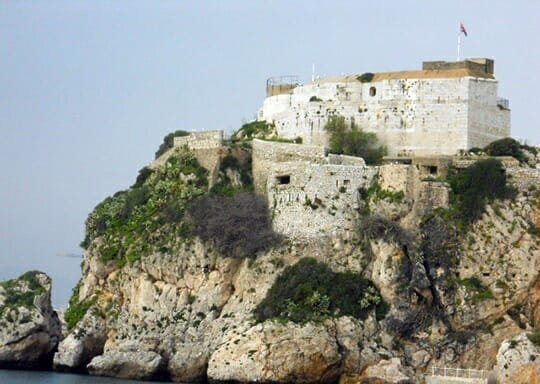
Moorish Castle, a relic of the Moorish occupation of Gibraltar, which lasted for 710 years
A unique feature of the Rock is its system of underground passages, known as the Galleries or the Great Siege Tunnels. The first of these was dug toward the end of the four years’ siege which lasted from 1779-1783. Having withstood long sieges, it seemed there was nothing that could destroy the Rock. This history has inspired the saying “solid as the Rock of Gibraltar.”
Our main goal was to see the Barbary macaque commonly referred to the Barbary ape because it lacks a tail. A colony of approximately 300 reside in caves near the top of the Rock, the only wild primates in Europe, most likely introduced from Africa. With dusk approaching we drove hurriedly along the steep and narrow road that leads to the top of the Rock.
You have to know that the road up the Rock is very narrow and curvy with only enough room for one car, and the Rock is very sheer. It is straight down 1,ooo feet to the ocean. The view was amazing and complaints of driving dangerously fast endless. But dusk was approaching.
We spotted our first ape about two-thirds up the Rock.
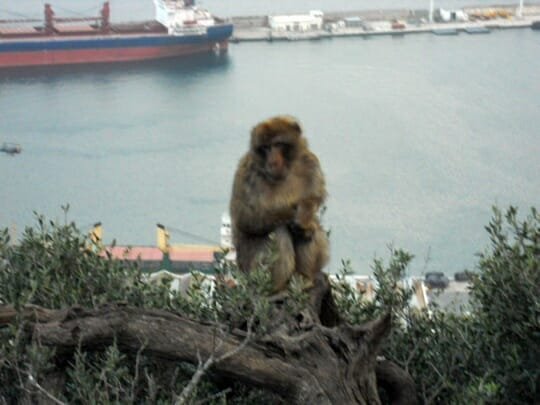
One of approximately 300 Barbary Apes on the Rock
Then they were everywhere.
Barbary apes are cute as can be, but they are known for their sharp teeth and bad temper so one is cautious, which helps to explain the blurry pictures. Stacy and I got out of the car and warily approached the apes.
Unfortunately, I inadvertently forgot to roll up my window. Added to that problem was that the car was parked very close to the sheer wall, which made getting out of the passenger side impossible. Sure enough, one of the apes decided to climb onto the car window and peer in. Betsy was trapped in the back seat.
Lots of screaming and yelling ensued, which fazed the ape not one iota, he barely paused then leaped onto the front seat to face Betsy. Breathing heavily with primordial lust, he grabbed the fruit salad from her hands, turned and scrambled out of the car window and ate the fruit—an expensive assortment she had bought in Tarifa. There he is with his ill-gotten treasure.
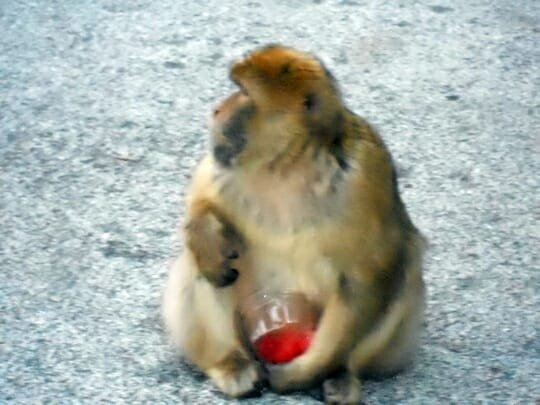
We were laughing so hard we could have fallen off the rock. We quickly noticed that Betsy was not laughing as much as she was recovering from her intimate encounter with the ape. He stole her fruit!
There was some talk that I was not “man” enough to fight off the ape or that I did not sacrifice myself to save my wife, but I did try to “shoo” it away. In my defense, I was in an awkward position in that the ape sat on the window sill for maybe two seconds, sizing up his prey before entering. My only recourse was to grab it by the nape of the neck to pull it backward. In that moment in time, attacking the ape did not seem like a wise course of action, especially given I was aware of their well-known temper issues (and sharp teeth). I think all was forgiven once Betsy escaped unharmed.
Our visit to Gibraltar was short but intense. Continuing to retell of the wild ape attack, we drove on and arrived in Malaga, Spain, late that evening. It was dark and busy, a big city of 500,000 people. Our hostel was not easily found and parking more difficult, but once we settled in, it was in a great location. The next day, we went to the Cathedral which is beyond words (200 years to build), the Castle and the home of Picasso.
One last view of The Rock…
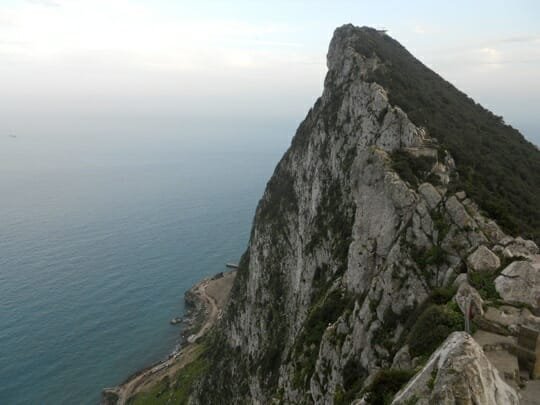
Majestic Rock of Gibraltar
by Mark | Nov 6, 2011 | Pulled Back
Some days you leave the house for a seemingly normal outing and then WHAM! life confronts you with the profound and wonderful where you least expect it. That’s what happened to us yesterday.
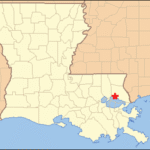
We left our temporary bayou home around 9:30 a.m. and drove to the pretty and historic town of Mandeville, LA. Where do I start… first we need a map.
The town of Mandeville was laid out in 1834 by developer Bernard Xavier de Marigny de Mandeville. It soon became a popular summer destination for well-to-do New Orleanians wishing to escape the city’s heat.
In the mid-19th century, regular daily steamboat traffic between New Orleans and Mandeville began. Bands would play music on the ships crossing the lake. Mandeville became one of the first places where the new “jazz” music was heard outside of New Orleans. Bunk Johnson, Buddy Petit, Papa Celestin, George Lewis, Kid Ory, Edmond Hall, Chester Zardis, and many other early jazz artists regularly played in Mandeville.
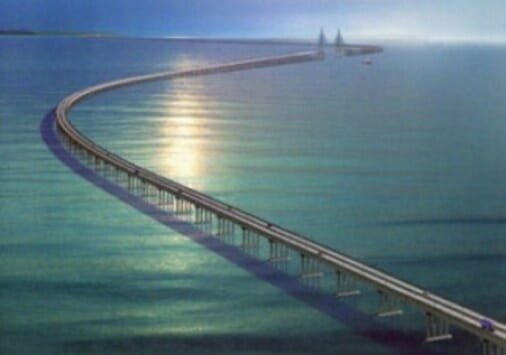
Okay, you have the setting. But let me add some perspective on the size of Lake Pontchartrain. The Lake Pontchartrain Causeway consists of two parallel bridges crossing Lake Pontchartrain. Since 1969 it has been listed by Guinness World Records as the longest continuous bridge over water in the world.
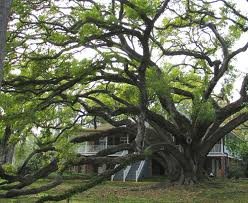
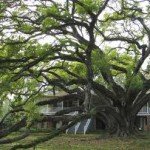 One more point of interest: the Seven Sisters Oak, located in Mandeville, is the largest certified southern live oak tree. It is estimated to be up to 1,500 years old with a trunk that measures 38 feet (11.6 meters). This oak is also the National Champion on the National Register of Big Trees and the Champion Oak of Louisiana according to the Louisiana Forestry Association. The Seven Sisters survived a near direct hit from Hurricane Katrina in August 2005.
Our plan for the day was pretty simple. We bought a Living Social coupon for Mande’s restaurant in Mandeville and from there we were headed across the Causeway to New Orleans to hang out at the park along the Mississippi and then get groceries and from there, who knows…
Breakfast at Mande’s in Mandeville. Wow! Best breakfast ever! Anyone can do eggs. Who wants to debate omelettes? Sure, some want to compare bacon or sausage. Boring!
Here is the review of Mande’s restaurant on Yelp. Notice the mention of “best eggs Sardou EVER.” Eggs Sardou is a rich combination of poached eggs on English muffins with a slice of tomato, smothered in a spicy artichoke and creamed spinach Hollandaise sauce. Unless you can conceive of such a creation, it is time to close your restaurant. Ham and eggs… get out a here.
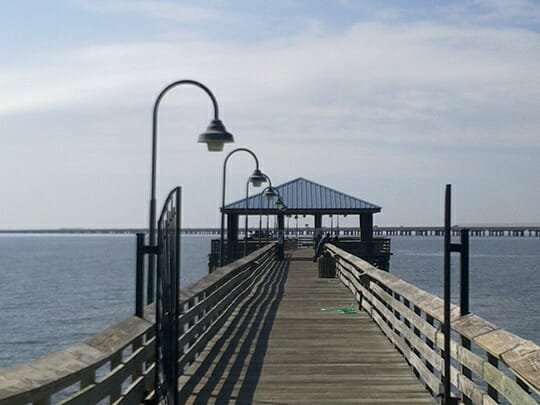
After that epicurean delight, we made our way to the lake and parked at a long pier with a majestic view. It was a clear, sunny day, the temperature around 70 degrees. The walk out on the pier was simply lovely.
We passed a handful of fishermen as we made our way along the pier remarking on the different birds, the warmth of the sun, and the beauty of the lake. The next few moments caught us in one of life’s unpredictable wonders. As we approached the end of the pier, a man casting a line into the lake stopped us and said we might not want to walk to the end.
We were speechless as he explained that a fellow fisherman had apparently died in his chair while fishing. During the course of some general fisherman banter, the man did not respond and it was then discovered that he was not breathing.
The man died, in this quiet, peaceful and beautiful setting doing what he loved. Trying to grasp how perfect his passing was, our thoughts gave way to the world around us.
Soon after, the EMT’s and police arrived. There were questions like who was he, what about his family, when did he die, how long had he been fishing, was he alone. But none of that seemed to matter. It was perfect.
You hear from people that they want to die this way or that. They imagine how their life will end, yet very few realize their moment. This man did.
We never made it to the end of the pier. It was enough. This ending was perfect.

 We’ll need a map for this one!