One consistent travel recommendation we have received from seasoned travelers, expats and locals since arriving in San Miguel is, “you must go to Mexico City.” The advice so glowing and the directive so clear, we began planning a road trip that seemed set up for a letdown. Now, after four days in that amazing city, we can easily say, “Put Mexico City on your must-see list.”
Research done and plans made, we purchased ETN luxury bus tickets online for April 15. That Sunday morning we took a short taxi ride (30 pesos/$2.50) to the San Miguel bus terminal for the 3.5-hour bus ride to Mexico City (DF).
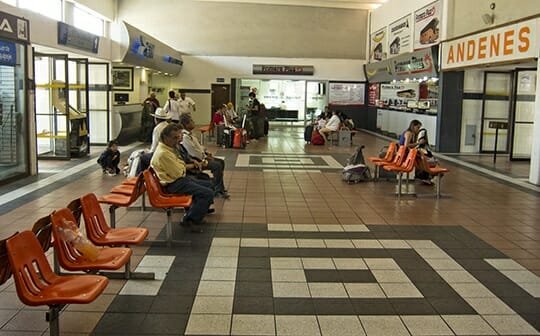
The San Miguel Bus Terminal, Sunday April 15
If you have not heard this before, buses are the primary mode of travel in Mexico. They are efficient, reasonable, and in our case luxurious, with reclining seats and extended leg room such as we would like to have for air travel. Bus travel couldn’t be any simpler or more carefree.
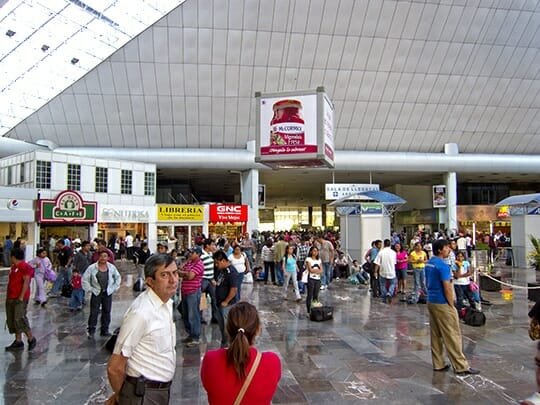
A movie, some tourist reading and a short nap later, we arrived at the Mexico City bus station (this terminal dwarfs many airports). The pace changed as if a switch had been toggled to big city. Over 20 million people live in Mexico City (altitude 7,350 feet) making it the fifth-largest city in the world. Goodbye laid-back San Miguel, hello major world capital.
We had choices for transportation to our hotel. The metro subway station sits outside the terminal and costs 3 pesos (calculate 13:1). Cabs in DF are even cheaper than in San Miguel so it is tempting to grab a cab to move about this big city. A 30-minute cab ride to our hotel was about $6.
We checked into the Hotel Bristol around 3:30, quickly unpacked and then headed for the Zócalo in the historical center. It was a beautiful afternoon, the last day of the two-week Easter/Spring vacation here in Mexico, and the city was packed with people.
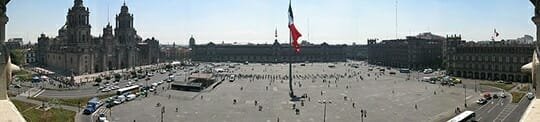
We stepped out of the cab and walked across to Mexico City’s main square, the Plaza de la Constitución (El Zócalo), which is the nexus for government, religion and culture.
The National Palace, (Palacio Nacional in Spanish) was in front of us and the cathedral to our left as we stood at the social nerve centerof the city.
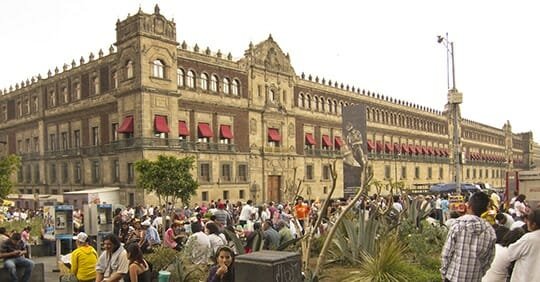
National Palace (Palacio Nacional in Spanish)
The site of the Palacio Nacional dates to the Aztec empire (15th century). It is the seat of the federal executive in Mexico and measures over 200 meters long (over two football fields). It is home to offices of both the Federal Treasury and the National Archives.
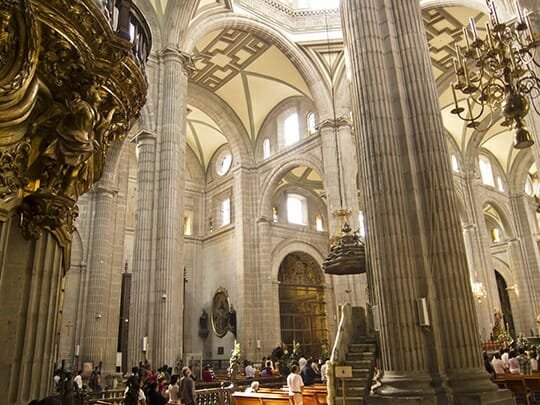
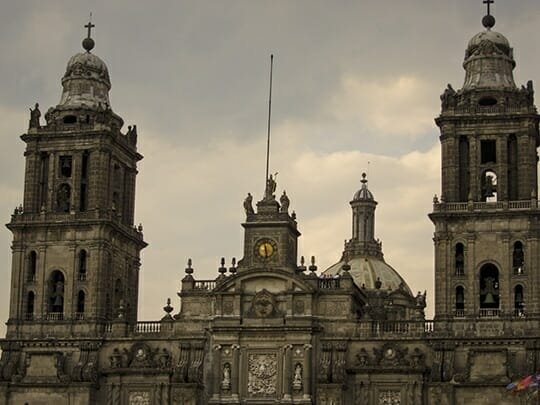
The Metropolitan Cathedral of the Assumption of Mary (Catedral Metropolitana de la Asunción de María) dominates the Zócalo. It was built between 1573 and 1813; Spanish architect Claudio de Arciniega planned the construction, so the similarities to cathedrals in Spain are striking.
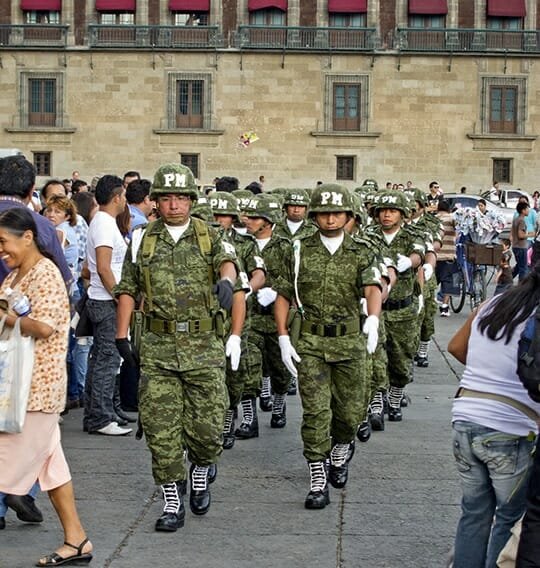
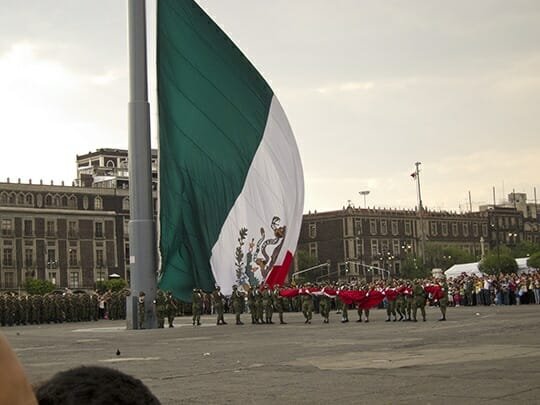
As we exited the cathedral, a crowd was forming around the Zócalo. A military detail exited the Palacio in full dress uniform. Horns trumpeted as they marched toward the massive national flag.
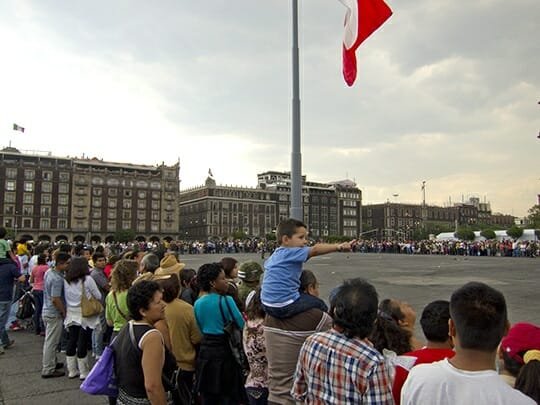
A large and appreciative crowd gathered for the daily event…
To give some perspective on the size of the national flag, you can see it takes many men to control it.
The music and pageantry set the tone…
In the next few days we visited the Teotihuacan pyramids, several museums, walked the streets, and learned more about this great city and historical country, enjoying our first — and not last — taste of Mexico City.
Interesting Facts:
The city rests primarily on what was Lake Texcoco, which has created a serious sinking problem of up to nine meters in some places. Many buildings lean severely and the Mexican government uses technology similar to Italy and other countries to correct the problem.
According to a study conducted by PricewaterhouseCoopers, Mexico City had a GDP of $390 billion, ranking as the eighth-richest city in the world after the greater areas of Tokyo, New York, Los Angeles, Chicago, Paris, London and Osaka/Kobe.
The metro is one of the busiest in the world, transporting approximately 4.5 million people every day, surpassed only by subway lines in Moscow (7.5 million), Tokyo (5.9 million), and New York City (5.1 million).
Mexico City is one of the most important cultural centers in the world, boasting more museums than any other city. It also comes third in the number of theaters in the world, just after London and New York.
Jack Kerouac, the noted American author, spent extended periods of time in the city and wrote his masterpiece volume of poetry, Mexico City Blues, here.
Mexico City was traditionally known as La Ciudad de los Palacios (the City of the Palaces), a nickname attributed to Baron Alexander von Humboldt when he visited the city in the 19th century and sent a letter back to Europe saying Mexico City could rival any major city in Europe.
Mexico City’s twin city in the United States is Chicago.
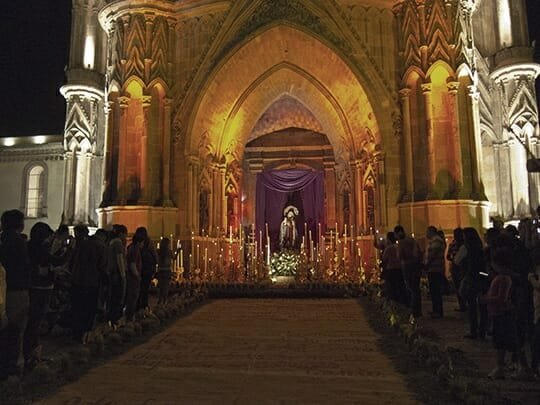
In 2010 and again this year we found ourselves in Catholic-dominated countries with strong Holy Week traditions dating back centuries. Although personally not religious, one can’t help but be amazed at the traditions and devotion of those who are committed believers. Here in San Miguel those traditions and the devotion were on display for Semana Santa.
Semana Santa
In 2010 we enjoyed a world famous celebration of Semana Santa in Granada, Spain. The crowds there were magnitudes larger, the pageantry enormously impressive and the scale and scope of the celebration breathtaking. Semana Santa in San Miguel is beautiful, impressive in its devotion, and has a solemn meaningful feeling created by the devout Catholics who migrate here. We are told Catholics from all over the country come to San Miguel for Semana Santa because this city preserves the historic traditions. Let’s take a look at those…
Holy Week (Latin: Hebdomas Sancta or Hebdomas Maior, “Greater Week” in Christianity) is the last week of Lent and the week before Easter. The week begins with Palm Sunday (Passion Sunday), we all know that one. Not so familiar, Holy Monday (or Fig Monday), Holy Tuesday and Holy Wednesday (sometimes called Spy Wednesday). This quickly gets complicated for many of us. Toward the end of the week things heat up, there is Maundy (Holy) Thursday and of course Good Friday. On Holy Saturday the celebration of Easter begins after sundown. Easter Vigil is the longest and most solemn of the Catholic Church’s Masses, lasting up to three or four hours.
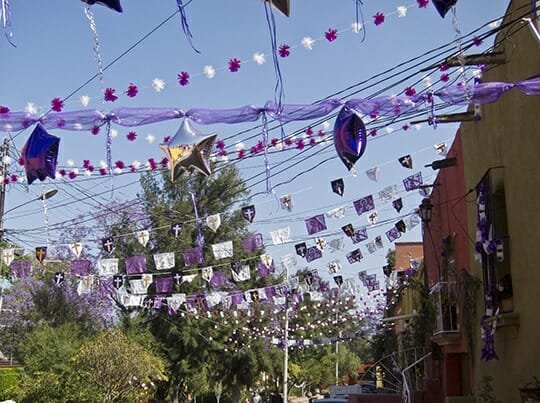
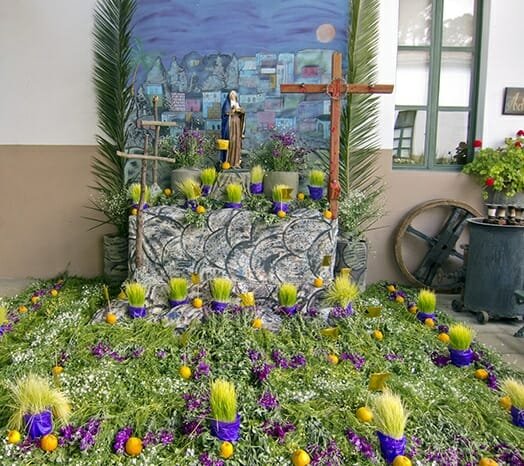
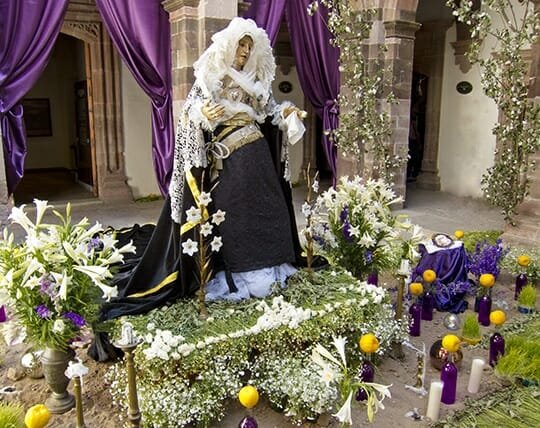
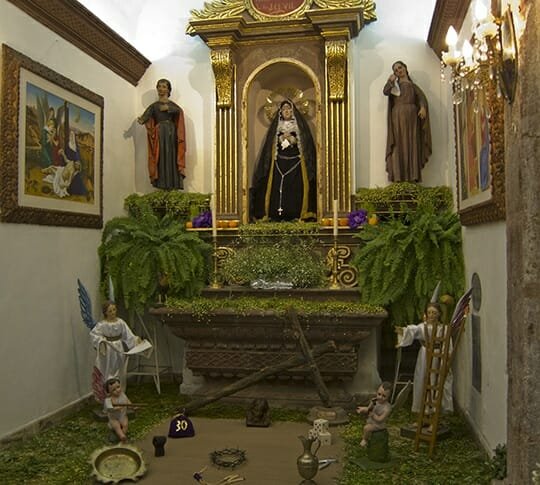
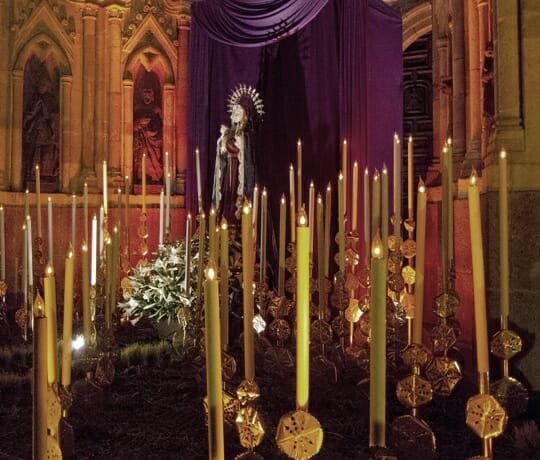
The San Miguel celebration started on Friday March 30, on that day, Our Lady of Sorrows, San Miguel is adorned in purple, white and green. Homes, businesses and public spaces decorate altars that are on display late into the night. The display hosts offer visitors fruit drinks or ice cream.
Neighborhood decorated in purple and white
Here are a two altar displays using grasses, flowers and oranges for Our Lady of Sorrows celebration…
Typical Our Lady of Sorrow display
A Favorite
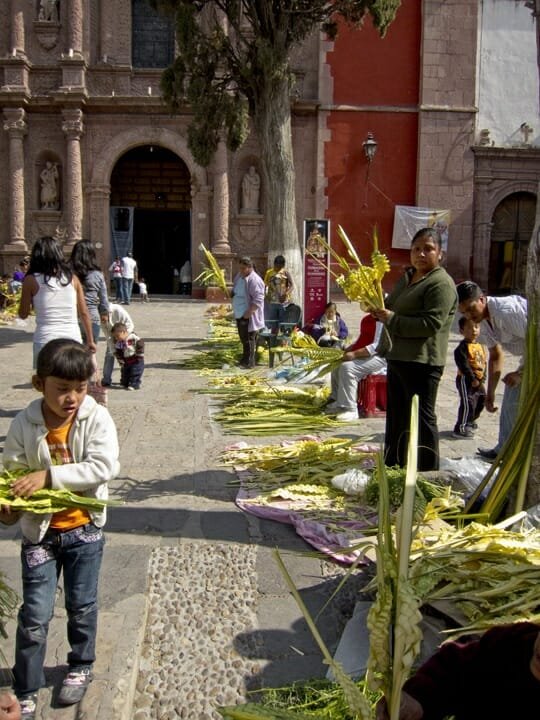
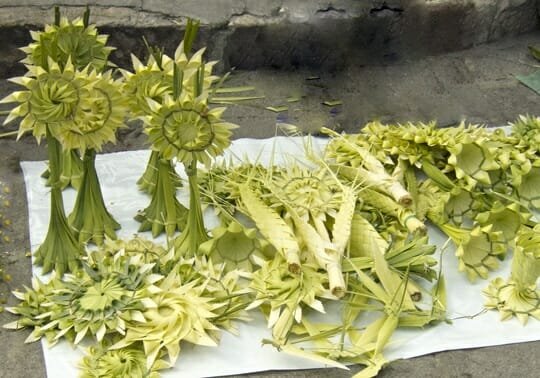
The story unfolds beginning with Palm Sunday, with two processions representing Christ’s entry into Jerusalem, where he is greeted by palm waving residents. Seemingly everyone in the city was waving palm fronds. It was the palm weaving that caught my eye…
Palm Sunday
The artistry of palm weaving was on display everywhere.
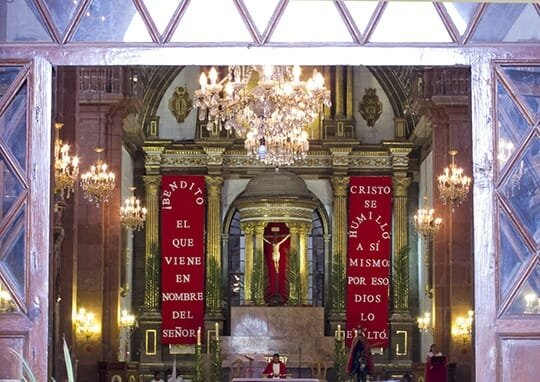
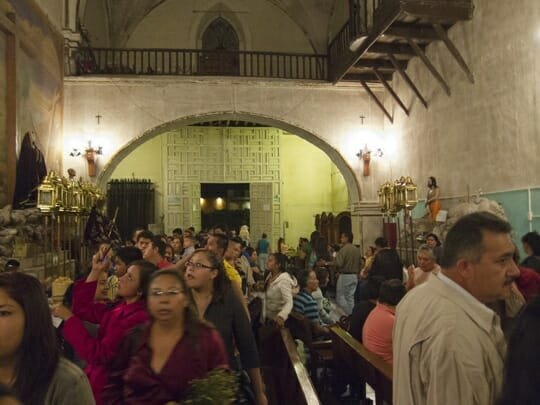
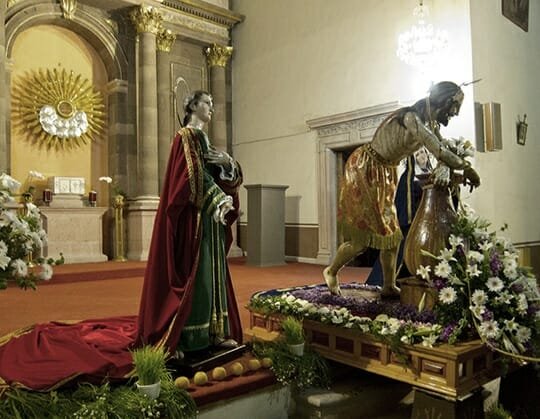
For us the next big event was Jueves Santo, when all the churches in town set up altars representing Christ in different passages. We visited ten of the 14 churches, joining throngs of people waiting in long lines to walk through the church and see the displays.
These traditions go back hundreds of years. It seemed like the entire city turned out.
And each scene was different.
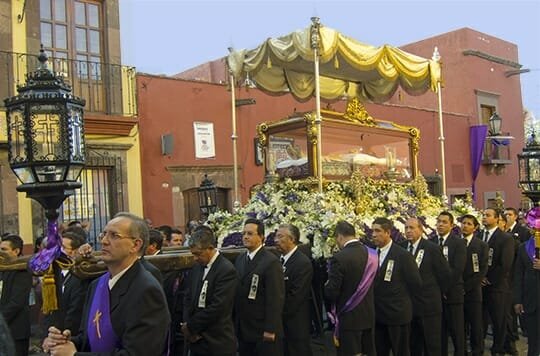
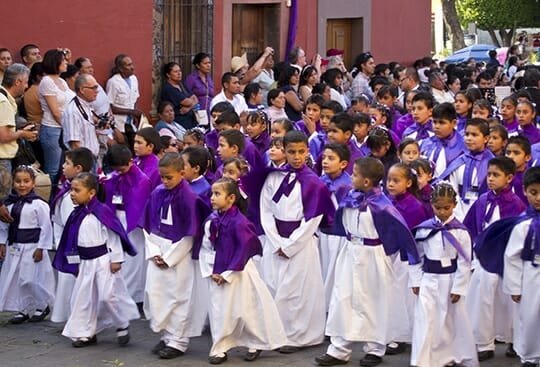
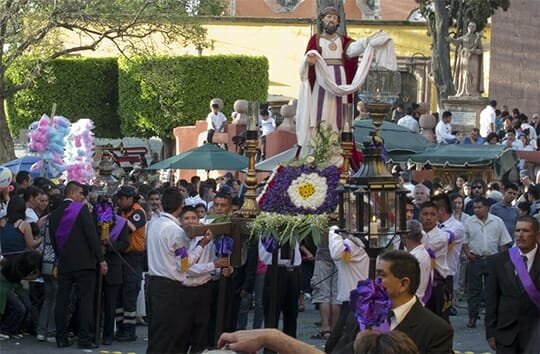
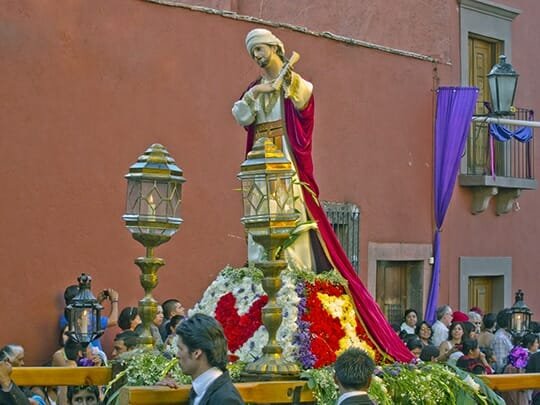
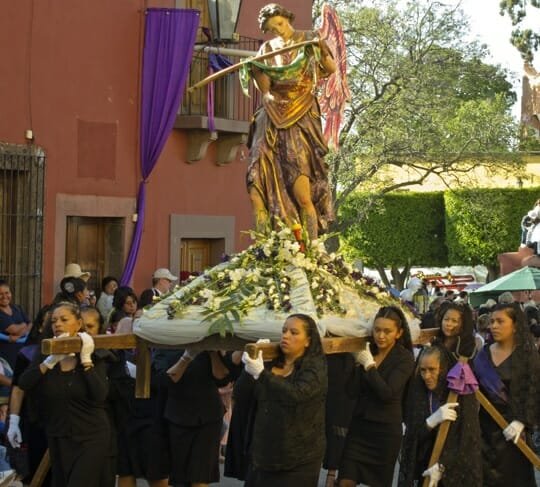
On Viernes Santo or Good Friday there were two processions; the one in the late afternoon was billed as the climax of the celebration with Roman soldiers, angels, an 18th century life-size figure of the Virgin of solitude and a statue of the body of Jesus. It was said that about 2,000 San Miguel residents participated. Here are some shots from the procession.
Roman soldiers
The Children
The Scene
Woman Marchers
Towards the End
Semana Santa in San Miguel has been honored for centuries. The city swelled with people from all over Mexico. Around noon on Easter things lightened up with Quema de los Judas which was a hilarious event. Holy Week is over, the streets have been cleared and cleaned. Spring is in full bloom.
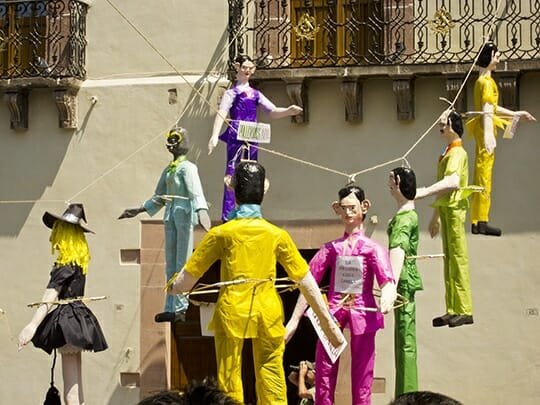
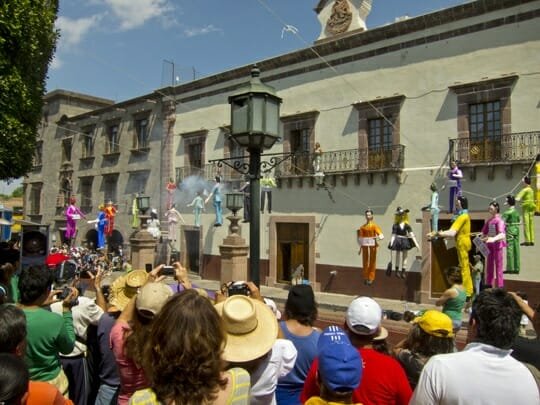
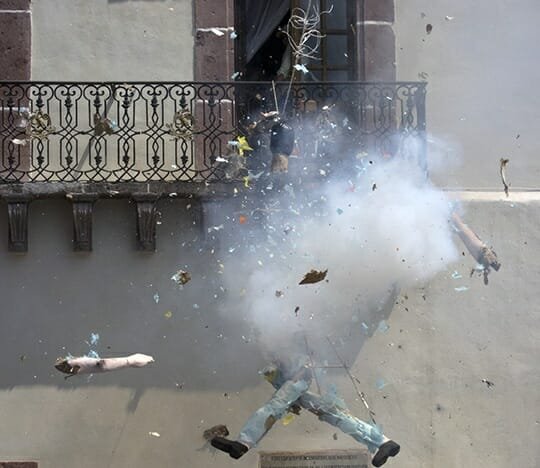
The large crowd gathered after church; lent is over, spring is here, it is time for some fun. Young and old gathered for Quema de los Judas (Destruction of Judases), the destruction of the papier-mâché Judases at the Plaza Principal in San Miguel de Allende. These life-sized figures are filled with candy and treats for the children. Let the destruction begin.
This doesn’t need much introduction. First some photos and then two videos. It is true across cultures, sight humor gets us all.
Here is the lineup
The scene is set. One after another met their fate.
The next scene is graphic in a crowd pleasing, silly sort of way.
One after another, the sequence was the same: a firecracker to start the figure spinning a second to accent the coming of the third and its violent opening of the papier-mâché Judases, quickly followed by the crowd’s laughter and cheers of appreciation. I am not sure this is politically correct today, but the crowd loved the time-honored event.
Here are a couple of videos to give a flavor of the event…
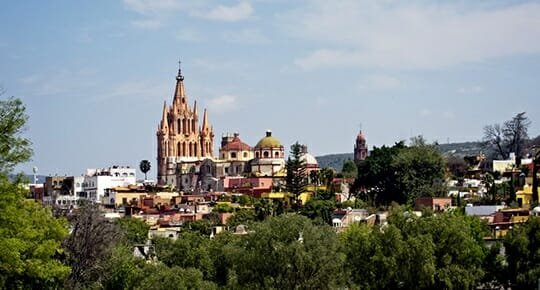
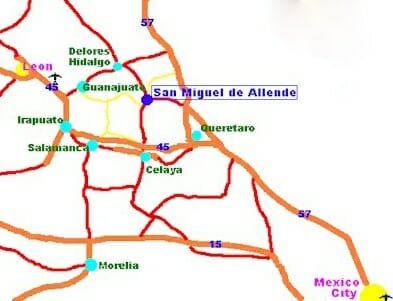
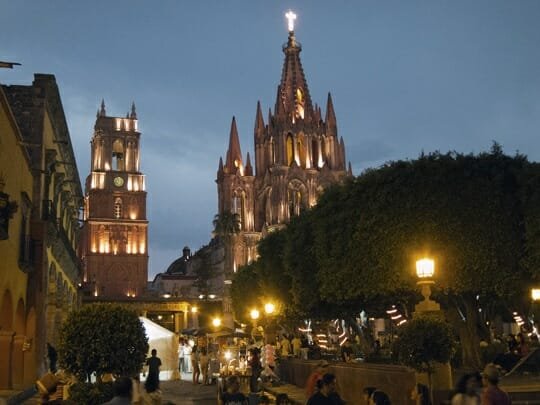
Located about 274 km (170 mi) NW of Mexico City at an elevation of 6,500 feet, San Miguel de Allende (SMA) has an excellent climate, warm and friendly people, a rich heritage and designation as a UNESCO World Heritage Site. The city has a population of around 140,000 (mas o menos), about 10,000 of which are expatriates, mostly from Canada and the United States.
The surrounding area is agriculturally rich while SMA’s historic and economic legacy is the nearby silver mines which in the 16th century drove the growth of this city into a major center.
This is the birthplace of Ignacio Jose de Allende (January 21, 1769 – June 26, 1811) a national hero of Mexico, which accounts for San Miguel adding de Allende to the town’s name in his honor. Allende, a captain of the Spanish Army in Mexico, came to sympathize with the Mexican independence movement, and his subsequent fight for independence eventually cost him his life at the hands of the Spanish colonial leaders.
Skipping ahead to the modern period, in the late 1930s, SMA attracted some prominent artists and writers including Stirling Dickenson, an American who came here in 1938. In the 1940s, Dickenson established the Instituto Allende. Another art and cultural school established around the same time is the Escuela de Bellas Artes. Both schools would find success after the Second World War as U.S. veterans studying under the G.I. Bill were permitted to study abroad and some chose these schools to study art.
Today SMA is colonial Mexico at its best with cobbled streets, arts and native crafts, an array of restaurants, music and much more.
Condé Nast Traveler magazine in its recent annual poll asked readers to select their top 50 destinations in the world, and once again, San Miguel de Allende was on the list.