Slow Travel #59, A Birthday to Remember
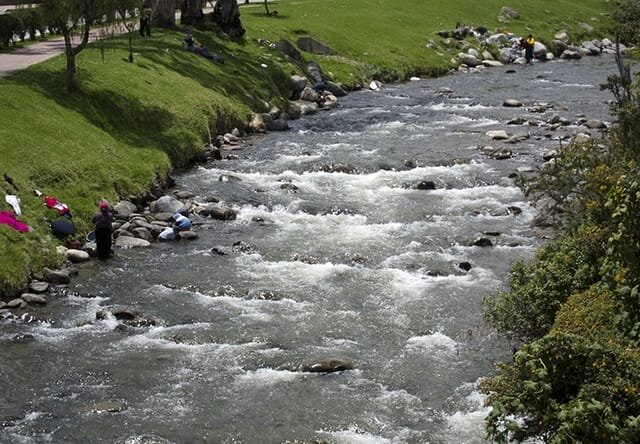
On November 17, 2012, I turned 59. It was a beautiful morning in Cuenca, Ecuador. We had a simple breakfast, then around ten took the 25-cent bus ride to el Centro. The city was bustling as we walked through the flower market, along the cathedral and down to the Tomebamba River.
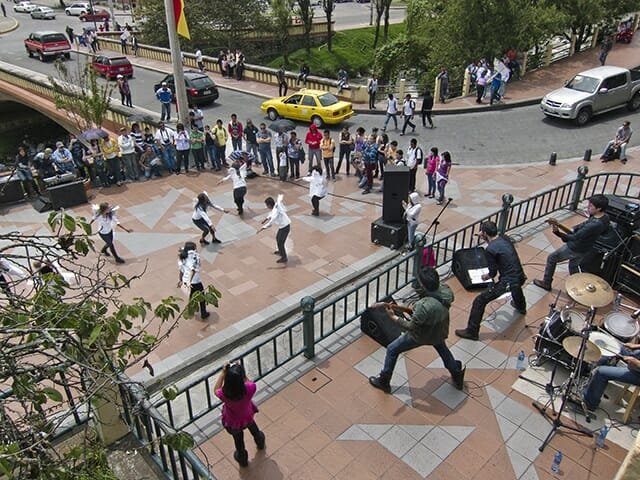
We made our way to the Broken Bridge, where we enjoyed the music, bought some snack foods and sat by the river.
It was a decision point: a movie and dinner at Joe's Secret Garden, rated the number one restaurant in Cuenca, or a bus excursion to el Agave, a Mexican restaurant located about 30 km south of town that we had heard about in Spanish class.
Mexican food won out, so we hailed a cab to the always busy Terminal Terrestre. We were looking for the Girón, Yunquilla, or Tarqui bus — all headed south on the Pan American Highway. According to our Spanish teacher, one of them would take us to mile marker #17 and el Agave. We exited the terminal, dropped ten cents in the turnstile and walked among the thirty or so buses searching for the outgoing ones. The Girón bus was obscure but we found it.
The man handling ticketing was at the bus door, where we got into a discussion about mile marker #17, trying to establish that we wanted to be dropped off there. Our Spanish failed us — we tried everything including drawing a picture of a sign with #17 on it. Nothing. All three of us grew frustrated, but we got on the bus anyway because we were certain it was going in the right direction.
We knew the restaurant was near Tarqui, a small village south of Cuenca. As we sensed we were getting close, the ticket man came up and said in rather clear Spanish to get off at the next stop. We weren't sure we were in Tarqui but hoped our Spanish would be understood by someone else. We paid our $3 and slipped off the bus.
We asked at an outdoor restaurant near the bus stop, and the woman seemed to recognize comida Mexicana and pointed up the road. Her son, a young man in his twenties, was working hard to strike up a conversation. As I worked my best Spanish on the woman, I turned around to find he had encouraged Betsy to dance. The radio blared and a small crowd clapped. It was time to move on. We had confirmed we were in Tarqui; still no one knew about the mile markers. We started walking.
It wasn't long before we flagged down the next bus. Similar translation issues for the next couple of kilometers, though this driver seemed to know the restaurant. He was turning at the next intersection and directed us off the bus, pointing up the road. We got off and started walking again.
Then we spotted mile marker #15 — plain as day. Unbelievable. We noticed the curb was painted in 20-meter increments: 15-200, 16-220, and so on. When we found the stake for mile marker #16, our confidence soared. We kept walking.
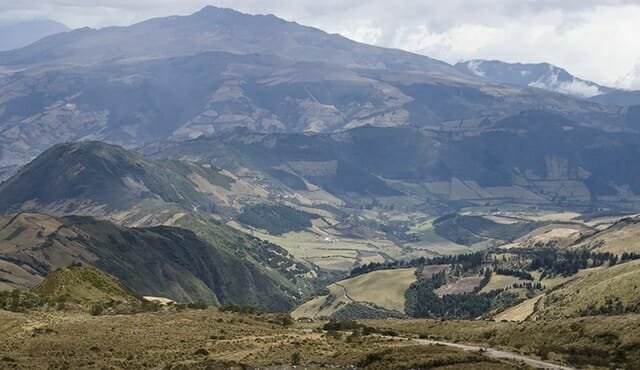
The scenery made it worthwhile. Views of cow and crop-dotted fields against a wall of mountains, as idyllic as they come. Near marker 16-380 we stopped at a small store. The woman knew immediately when Betsy said comida Mexicana. She pointed toward mile marker #17. Our pace quickened and soon enough, hungry from our efforts, we arrived at el Agave, mile marker #17-420.
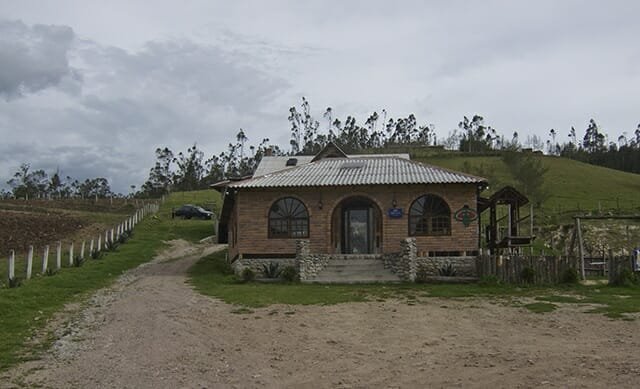
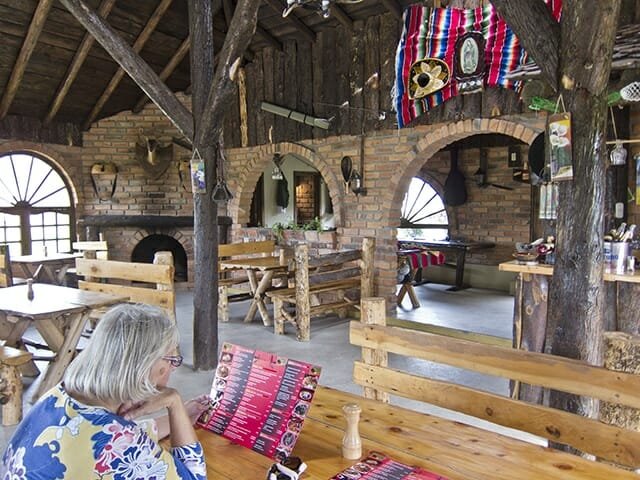
We walked into the homey, rustic restaurant and sat at one of the large wood tables. Time for a cerveza and our first Mexican meal in a long time. It was 4 p.m. It had cost $4.50 in bus fare and taken four hours to go 30 km.
The owner's young daughter approached and spoke in perfect English with a bright smile. She was in 11th grade, found the math in her Ecuadorian school more difficult than her previous school in New York State. The family had moved four years ago, and while she missed her friends, she liked living in Ecuador. She took our order — fajitas and a taco plate.
During the meal, her mother and father came to the table. He was Ecuadorian, she was Mexican. They liked their simple lifestyle and talked proudly about the new home they were building behind the restaurant. There were cows and a horse in the field, chickens in the yard, a garden ready to be planted. They seemed content. It was a perfect meal.
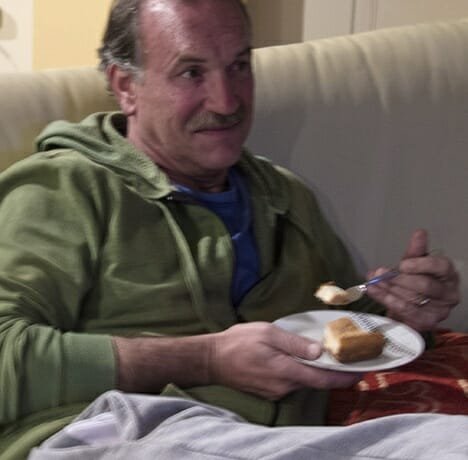
When it was time to leave, we were directed up the hill to a family member who made cheese, yogurt, and cheesecake. The store was simple inside. Our mission was two slices of birthday cheesecake.
We started back down the hill to flag the next bus to Cuenca. At marker #17-220, an older jeep-style truck pulled off the road. The man introduced himself as Leo, a member of the restaurant family. Somehow our story of walking so far for dinner had reached him. He offered us a ride to the next bus stop. Slightly skeptical — we hadn't met him in the restaurant — we got in, squeezing together on the front seat.
Leo spoke good English. He had lived in New York State, worked construction, bought and restored houses, and at the height of the housing boom had a crew working for him. He spoke of his wife and thirteen-year-old son still living in the U.S.
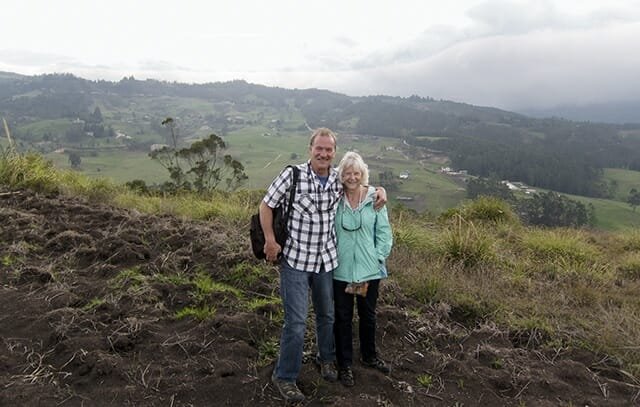
We weren't far down the road when Leo asked if we'd like to ride into the mountains. We paused a second — was going up in the mountains in a new acquaintance's beat-up Jeep sane? The answer, on a birthday, was yes. For the next hour Leo crept up steep mountain roads through several small villages. There were beautiful vistas of the valley below. At one point we were looking down on an approaching cloud bank. Cuenca sits at 8,400 feet; Leo estimated we'd reached about 11,000. As we drove he honked or waved at everyone he passed, which seemed to be everyone. We came eventually to a small farmhouse his father owned, in the family for decades — corn and fava beans, his father now in his eighties, long since moved away. Leo asked if we'd like to see inside but darkness was closing in and we passed. Leo said, "Next time."
Coming back down the mountain he offered to drive us all the way to Cuenca. He enjoyed the conversation, he said, and appreciated the chance to practice his English. We talked about the community's fight against a Canadian gold mine expanding into the next valley, feared to contaminate the river and water supply. We talked about the contrast between Ecuador and the U.S. — families here still living in close proximity, the pace slower, the striving less intense. We thought about our own dispersed family, connected by Skype and email, months between visits.
Leo said he owned 80 dairy cows and worked odd construction jobs. Many of the large mountainside homes were owned by U.S. expats who provided some work for him.
Then he told us what had happened four years earlier, at the height of his business in New York. A state trooper stopped him and asked him to prove his citizenship. He had paid an attorney $10,000 to secure legal residency, but the attorney had stolen the money. Lacking papers, he was taken into custody and deported. He said he wasn't bitter. He thought the trooper may have exceeded his jurisdiction. But you could hear in it how much being forced from his family and his work had cost him.
It was dark as we re-entered Cuenca. Leo dropped us near our apartment. I had wanted to invite him up — have a birthday drink, keep talking. I didn't. That thought has stayed with me. I still wonder what makes us cautious where others are open.