Slow Travel Finds Sardines on the Beach in Crucita
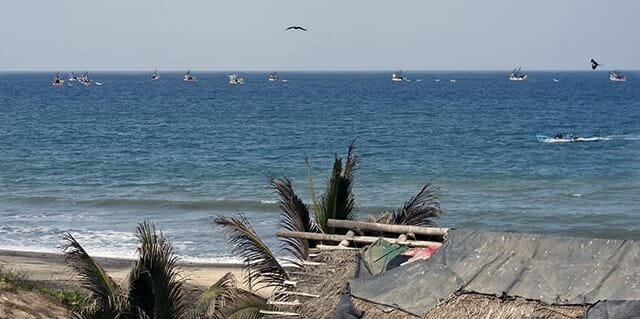
Early October, another beautiful morning at our tranquil Ecuadorian beach house. But our view of the consistently blue Pacific had changed. Large barcos lined the horizon while small fishing boats dashed out, docked, and returned overloaded with mounds of shiny sardines. We had been warned that our "California beach of the 1950s" would become a commercial fish-cleaning zone — but it happened fast, it was complete, and we were shocked.
During our three-month slow travel in Ecuador, we rented a beach house in Crucita for five weeks. It wasn't long before we found ourselves at the center of an intense local dispute pitting the sardine industry against advocates fighting to end the practice of processing fish on the beach. The shacks serve as pre-packaging plants for the giant canneries in Manta across the bay.
Crucita has a beautiful shallow bay. During the ten months of sardine fishing, the large barcos that follow the Humboldt Current just off the Ecuadorian coast use the bay for safety and to station themselves. We counted up to fourteen one day.
The sardines are fished at night; it's best when moonlight exposes the shallow-swimming, silvery schools to the nets. The Humboldt also teems with larger fish — Manta, whose lights can be seen at night across the bay, is the tuna capital of the world.
The central fight revolves around a historical and supposedly illegal practice: cleaning and chopping the sardines on the beach. At daylight, locally owned small boats go out to the barcos, collect the catch, and bring it to shore.
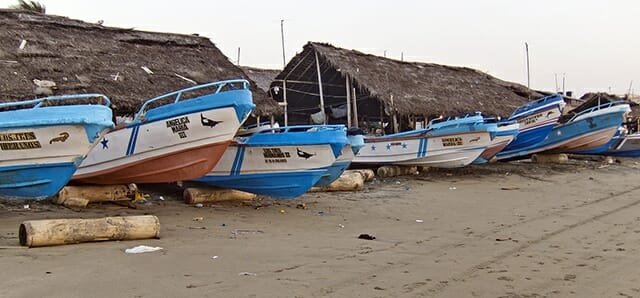 The open-air, thatched-roof, wooden-pole shacks are roughly 40 feet long and 30 feet wide. Inside, several tables — each about five feet wide, with wood planks running the full 30-foot width — serve as work surfaces. There are 30 to 40 sheds in all. Each shack can have dozens of people working on both sides. One of those chop shacks was directly in front of our house.
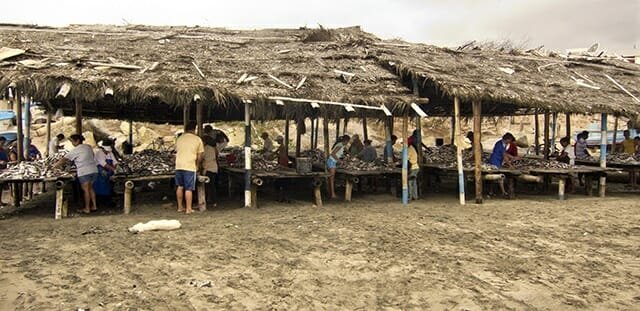
Crucita is one of the last fishing villages that allows chop shacks on the beach, so sardines are also trucked in from nearby fishing villages. The cleaned fish are then trucked to the major canneries in Manta, about 40 miles away. Those facilities include U.S. companies like Bumble Bee and Chicken of the Sea, though those two process tuna; other canneries specialize in sardines.
The fight to end this practice has escalated. The local government council allows it to continue, and the canneries benefit by receiving cheaply cleaned fish. The chop-and-clean shacks are a cash business. That helps explain why they remain.
The workers on the beach aren't paid the wages they'd earn in a processing plant, nor do they receive the social security benefits they're legally entitled to. At high tide, the crews stand in water. Children are working. Add the unsanitary conditions and lack of refrigeration, and those nutritionally rich sardines we buy don't sound so appetizing.
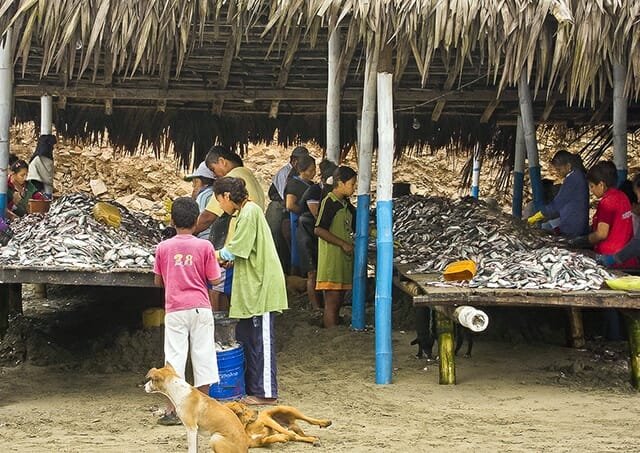
The advocates believe the practice is illegal under Ecuadorian law and that the child labor has to end. They believe most of the workers are on their side — they would benefit from moving the operation off the beach to legitimate sites with better pay and conditions. But there is also a strict hierarchy among the sardine crews that tightly enforces the status quo.
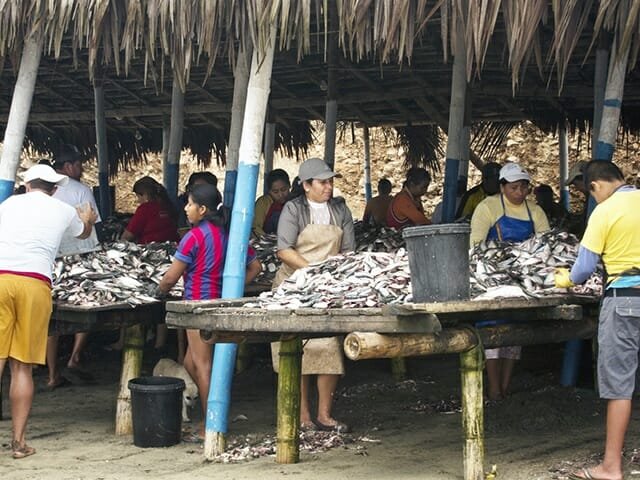
Shortly after the season resumed in October, we watched the beach transform into a bloody mess of fish guts flowing to the ocean, truck oil staining the sand. The chop-and-clean shacks had been documented extensively. They remained in active operation.
Whether President Correa was aware of the beach pre-processing operations was unclear. The advocates were working hard to reach local and regional officials and the newspapers, operating on the assumption that exposing the practice on a beautiful Ecuadorian beach would force public outrage and change.
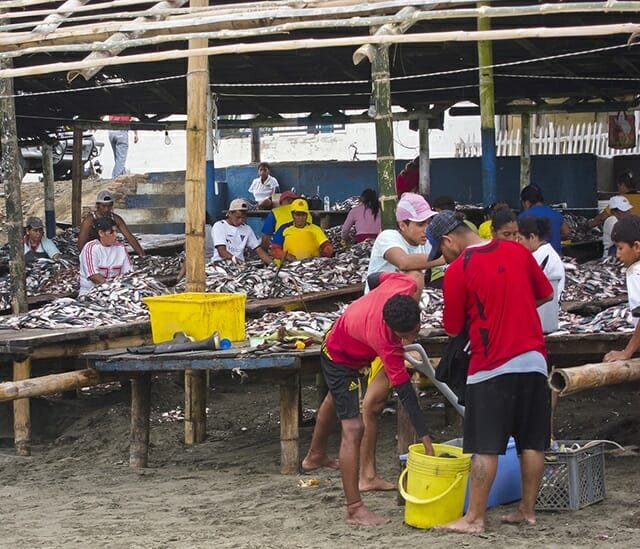
Ecuador was changing fast. Correa carried 60–70% approval ratings and was fighting entrenched interests on multiple fronts — but local councils are powerful, and new laws can get choked before they breathe. The lack of action here may have been a case of choosing one's battles.
The development was remarkable to witness: roads built everywhere, mandatory schooling implemented alongside child labor laws, a minimum wage, and social security. Before Correa, Ecuador had changed governments so often there was no stability. Now the country was in the grip of massive social, political, and economic change. Correa, worth noting, held a PhD in economics from an American university.
The organization responsible for fishing regulations is CEIPA. They were, or should have been, aware of the chop shacks after this article. Yet the shacks remained.
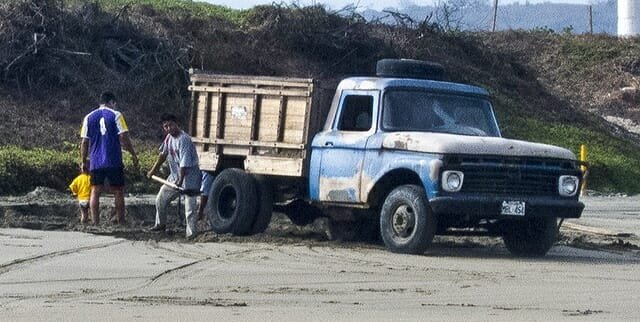
On my runs along the beach I kept passing a truck where three or four men vigorously loaded it with sand, then watched it drive toward town. They were selling the sand for mixing concrete for local construction projects.
This story unfolded in bits and pieces during our stay, each new detail adding to the image — across the bay, where the canneries were, Bumblebee, Chicken of the Sea, the boardrooms had a nice view.