Busy Thursday in Buenos Aires

Busy Thursday in Buenos Aires

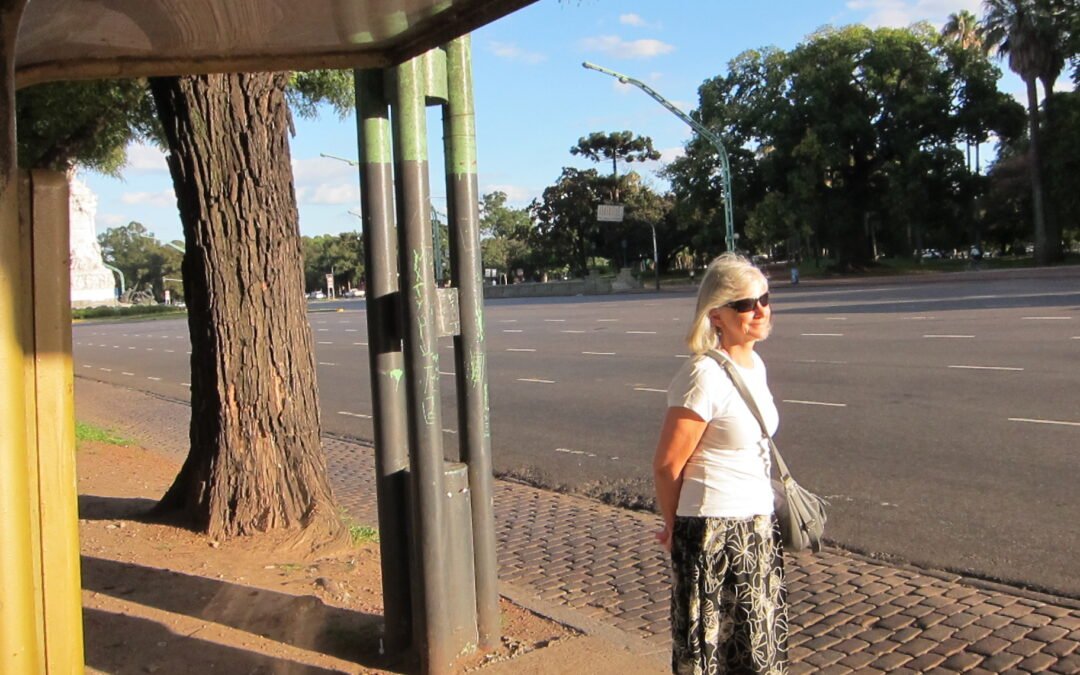
The plot thickens as we enter our third week in Buenos Aires. Up bright and early, by 7:30 am we were out of the house making our way to the bus stop for the #130 bus to take us to Puerto Madero, the newest part of the city very near San Telmo where we rented our first apartment.
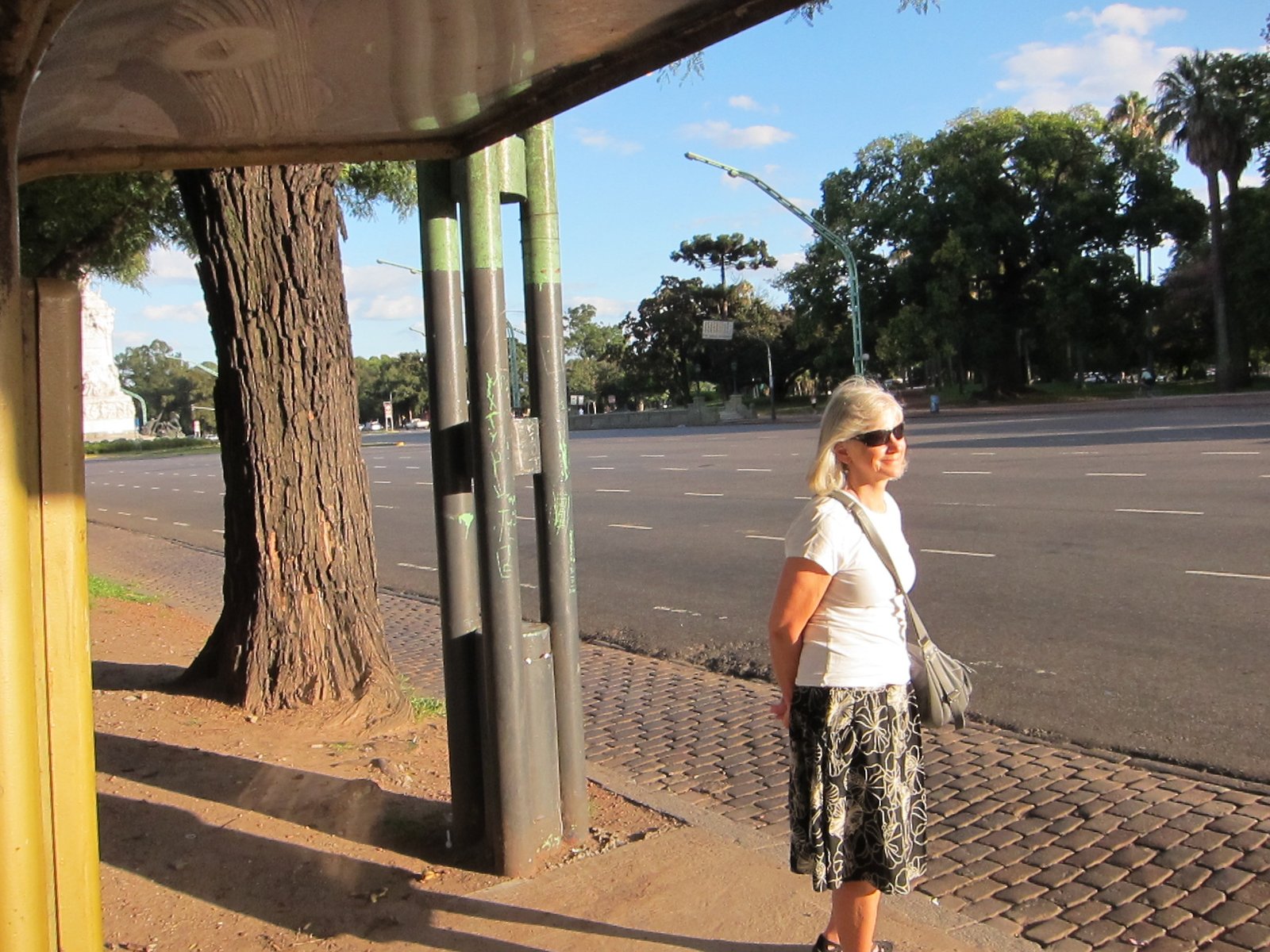
Today Betsy started a new job teaching English for a Brazilian technology company called Politec with offices in the U.S., Japan, Chile, and here. She had two classes, the first starting at 8:30 am with two advanced students and the second quickly following at 9:30 with an intermediate student. While the pay isn't great, the opportunity to mingle with residents of the city while applying her notable English skills is pretty cool. Betsy could become famous here once word of her English skills spreads. Plus as we stood at the bus stop on this bright, sunny Thursday morning, it was a pinch-me moment. Are we really doing this?
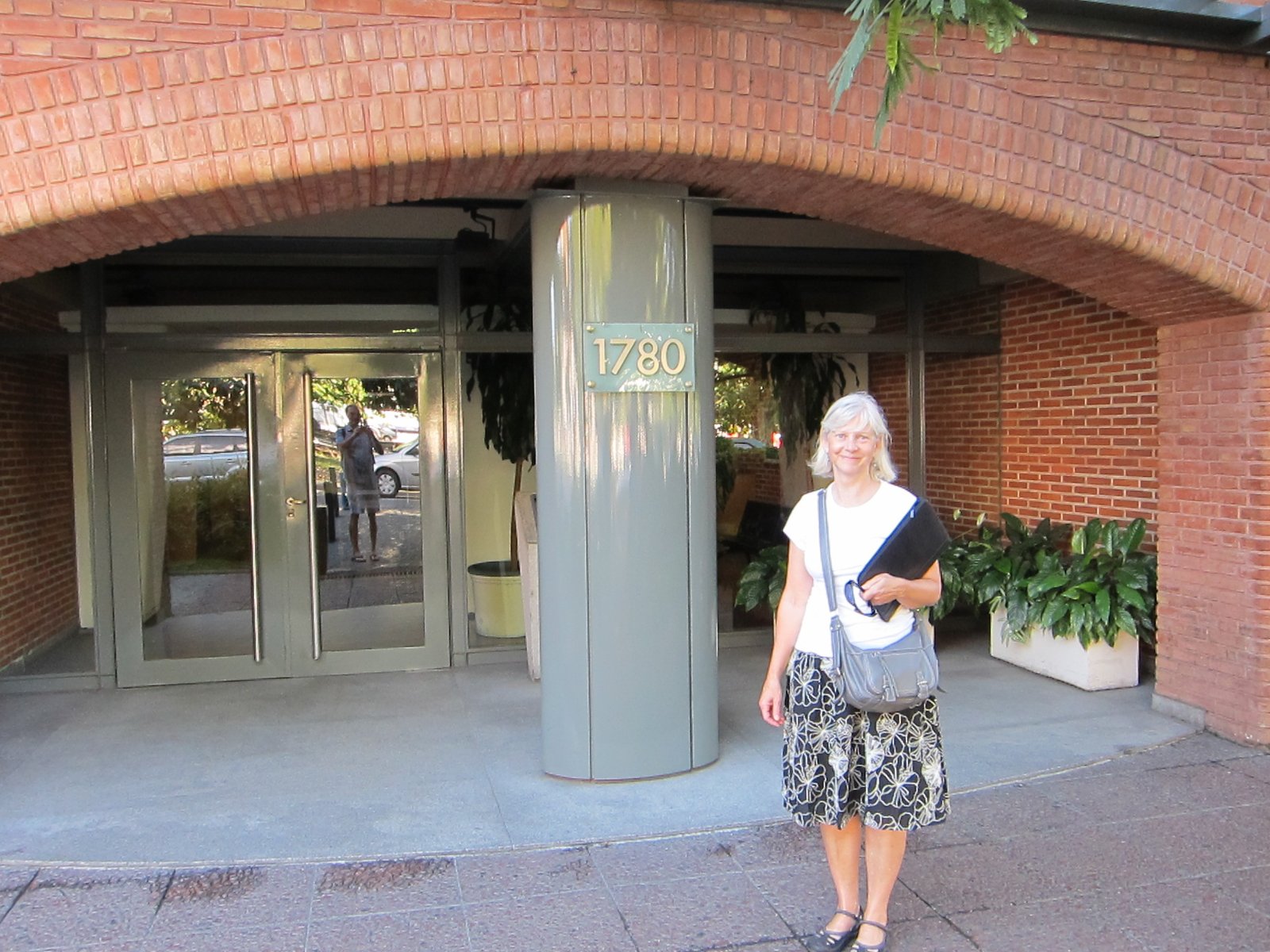
Since I have a responsibility not to pollute the English language here in Buenos Aires, it fell upon me to take a hike, so off I went to explore. It was a beautiful morning in Puerto Madero.
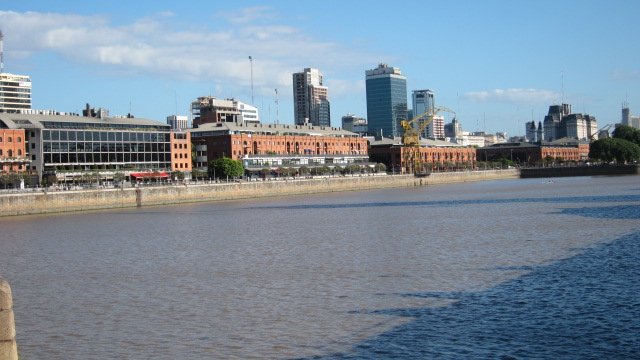
A View across the Water ©2011

As I headed East into Puerto Madero toward the River de la Plata, the scene changed to new high-rises with beautiful avenues and parks. The construction is ongoing as this area is booming for young middle class professionals and retirees.
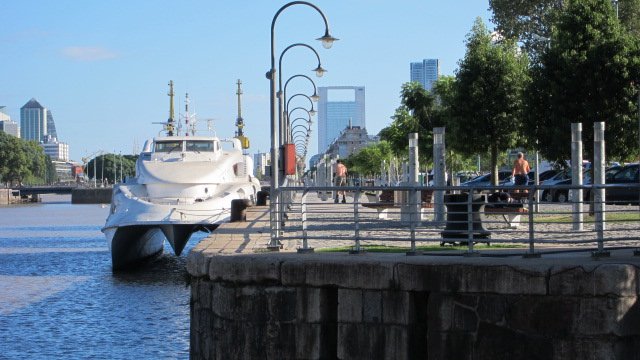
A View along the Water ©2011

Long story made short, this port was designed in the late 19th century but was not deep enough to handle larger cargo ships so a new port was developed soon after, which left Puerto Madero to become a blighted area of the city. Various plans were developed to renovate the area, but it was not until the late 20th century that this plan was adopted to revitalize the area.

As I headed farther east, I came across these stairs to a park...
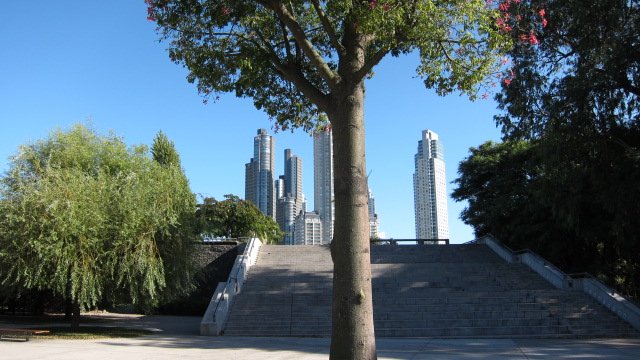
Stairway to a Park ©2011

The stairs led to a manicured walkway just above the main north-south street and causeway that parallels the ecological reserve where city ends and wildlife begins. There were many famous urban architects responsible for the design of Puerto Madero, and one interesting detail is that all the streets are named after women of significance in Argentina.

Here along the easternmost street, there are sunbathers, bikers, runners and sightseers along with a collection of local foods.
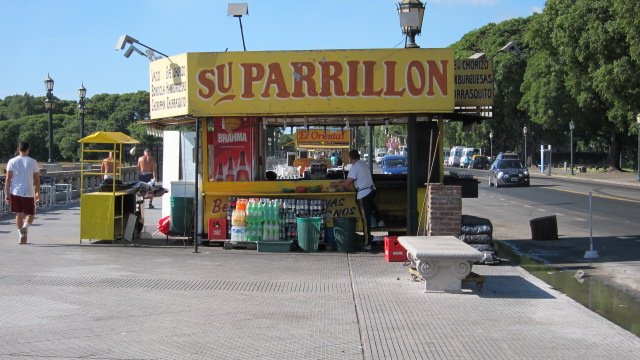
Su Parrillon ©2011

By now it was getting time to circle back to meet Betsy. To give you an idea of the planning and design of Puerto Madero, just past the sidewalk grill was this open area. Off to the right is the beginning of the ecological reserve.
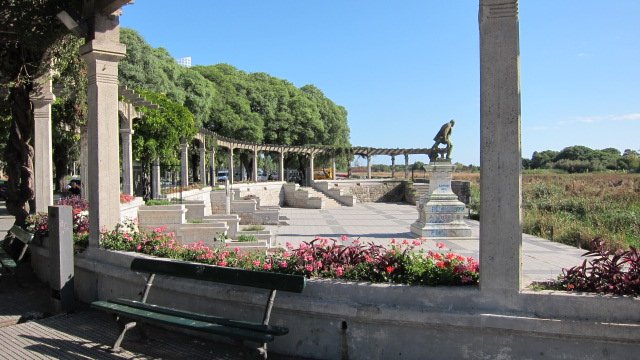
Roman Style Sitting Area ©2011

Heading back west down a wide boulevard I encountered something pretty typical, the local dog walking experts.
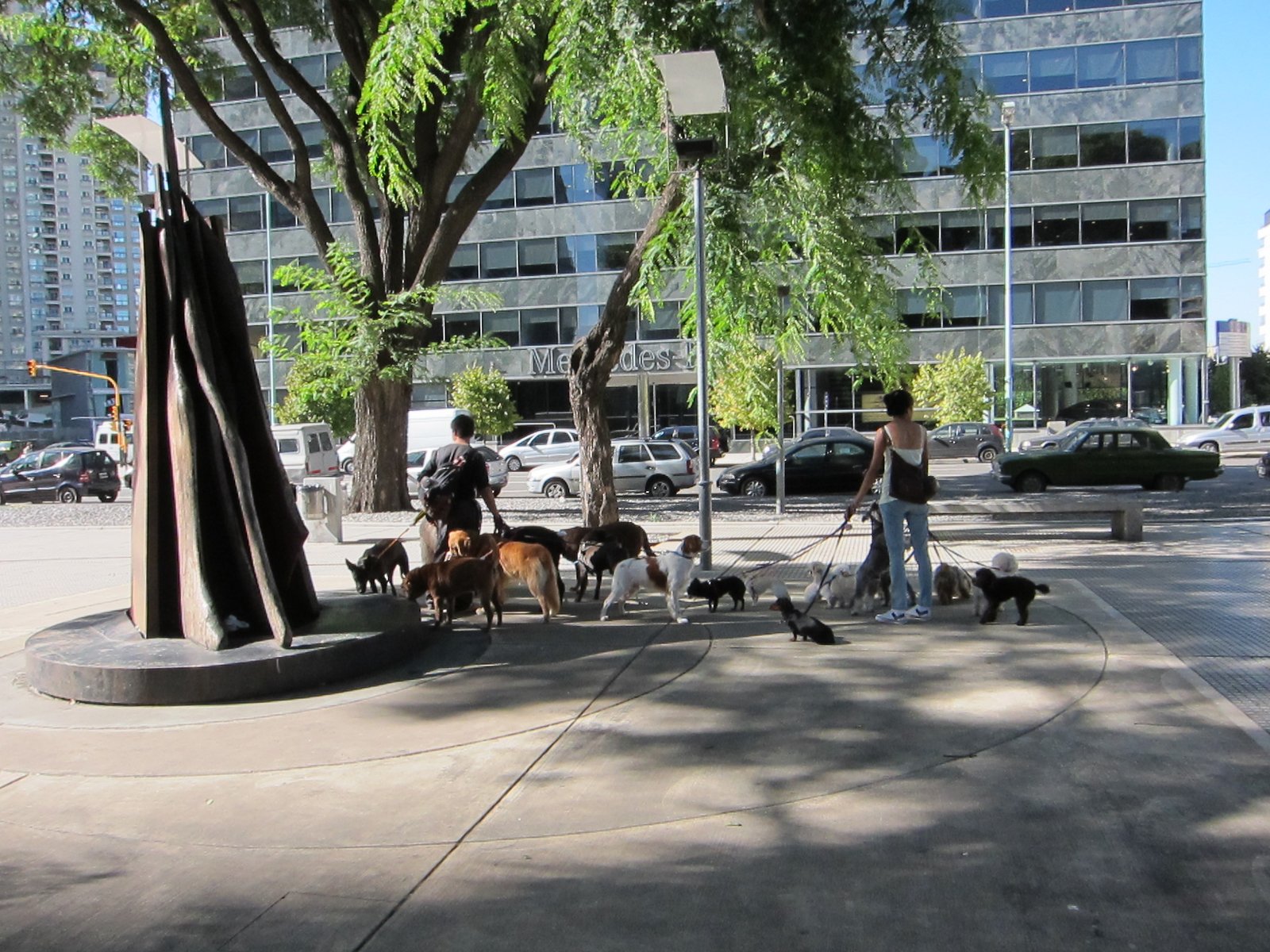
Dog Walking Party ©2011

At this point I was thinking I might be late (read get lost) to meet Betsy, so my pace quickened and I just starting snapping pictures at random. Enjoy...
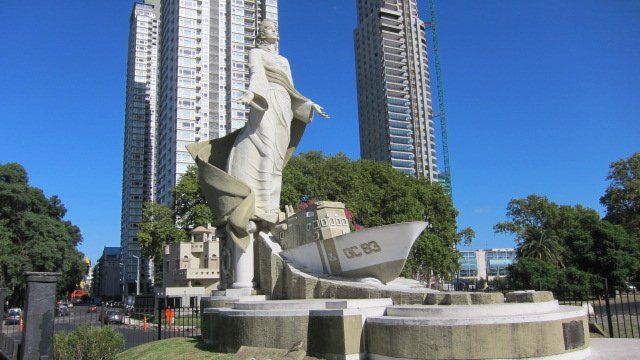
Couldn't Resist the Contrast ©2011
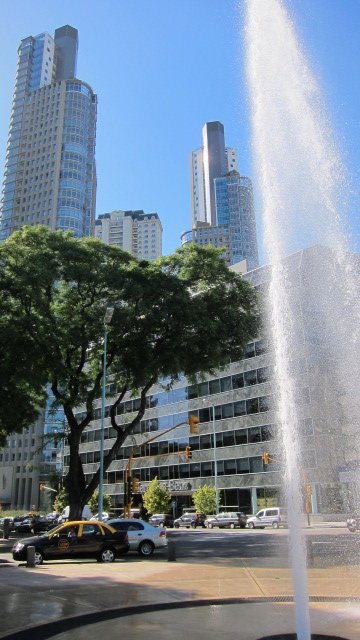
Arty City Picture ©2011
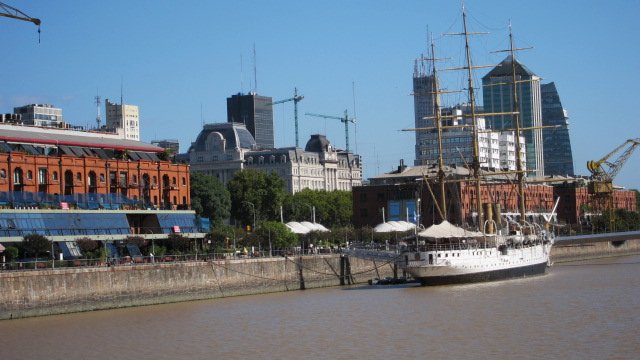
Warehouses Turned Lofts, Shops, and Businesses ©2011
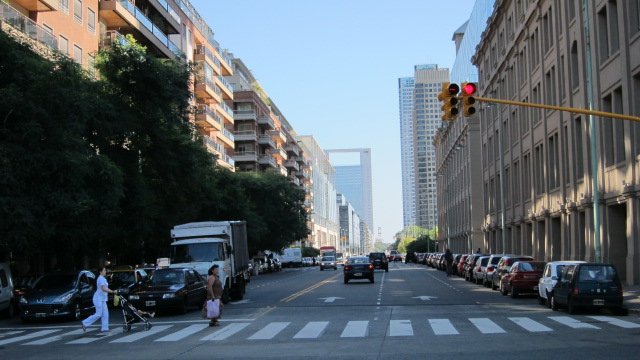
By now I was breathing hard and sweating, it was hot in the city, but mastering a big-city gait I pulled up long enough to take this picture mid-crossing.

A picture of the mix of old and new...
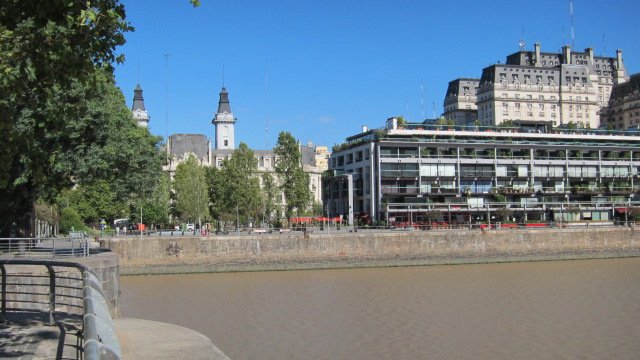
Mix of Old and New ©2011

I made it back to Paseo Colon, hung a left on Estados Unidos and found my way to a coffee shop just around the corner from Betsy's workplace (I know, some of you are wondering how I navigated this on my own) with 15 minutes to spare.

She found me right after 11 and we struck out across Estados Unidos to take the Green Line subway back north to our neighborhood.
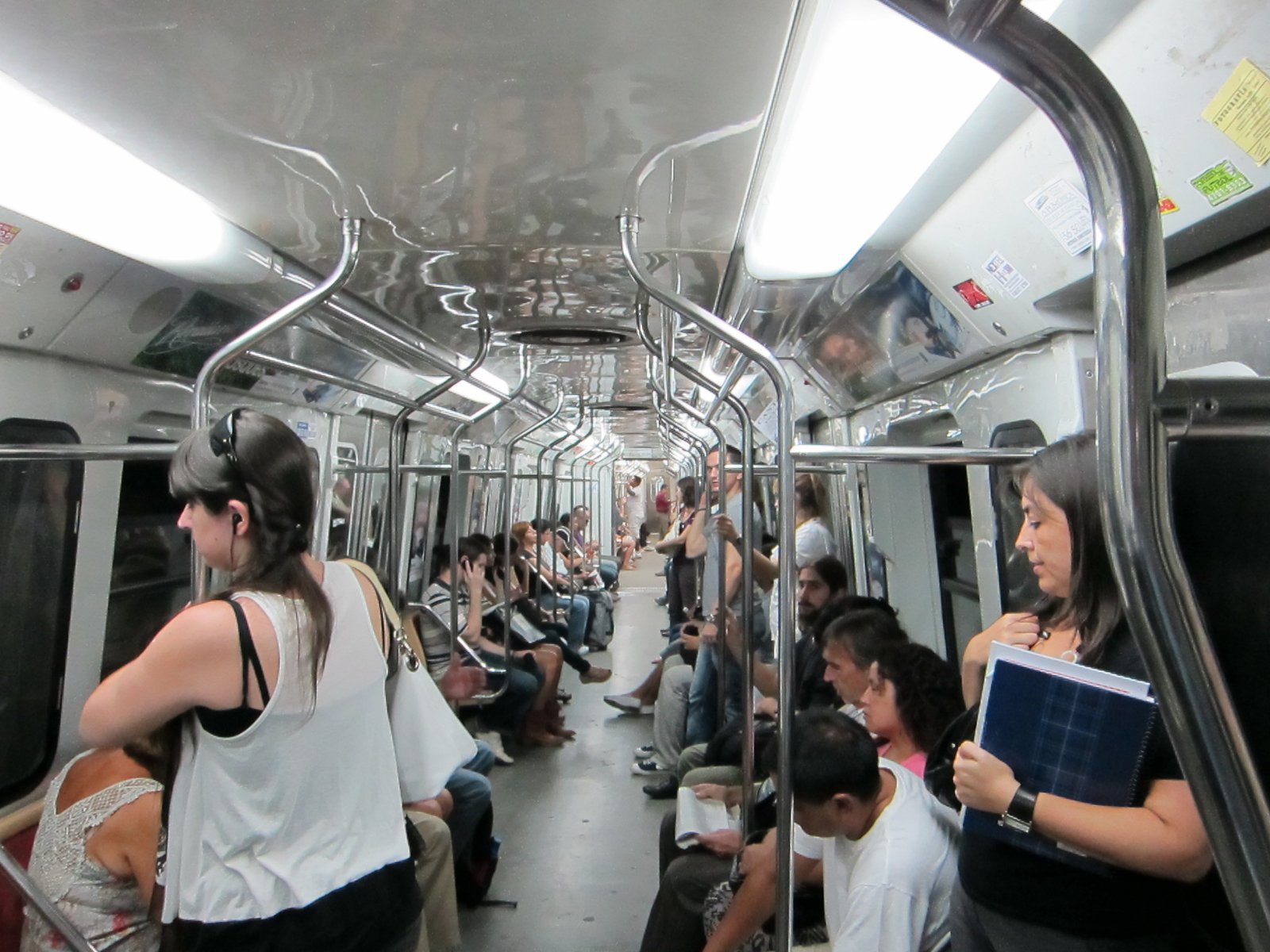
Warm Subway Ride to Palermo

We had a quick lunch at home and then took a short six-block walk to Santa Fe Avenue to meet Nico (the first apartment caretaker) to return the keys.

On the way back we stopped in a bakery and did some window shopping along Godoy Street, establishing plans to return to a couple of restaurants and cafes. Then a much-needed siesta.

At 4, our Spanish teacher arrived. We are in the process of taking several hour-long classes from different tutors to see which one(s) work best for us. Again, since this one, like the first, didn't seem to like to speak English, I kept hoping she would talk to Betsy more. By the time she left, both our heads were swimming.

It is about 8 pm, this post is over. We are headed out to see if we can buy a Spanish lesson book that was recommended.

ciao!
Drinking Liberally

Drinking Liberally

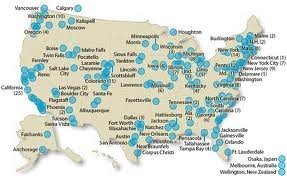
Last night we met with a local group of interesting expats for drinks. Some of you may know there is a U.S.-based group called Drinking Liberally. As the name suggests, the group began as a place for liberals to meet, drink and socialize. Below is the U.S. map of organized chapters. Come to find out, a local group of expats started their chapter in BA about three years ago.

Drinking Liberally Chapter Map

To get there, we jumped on the 111 bus about four blocks from our apartment at around 8:30 and headed to the restaurant 20 blocks or so away. These buses travel at warp speed in a driving style similar to mine with a heavy mix of steroids.

So for us, hanging on while looking for the street signs to know where to get off results in at best a 50/50 chance of coming within a three to four block radius. At nighttime it really is just intuition. Knowing when to hit the stop buzzer is everything. We just made the odds last night with a three-block walk. Remember we are still relatively new at this.
The group was varied, shop owners, business types, travelers, bloggers, young and old, men and women, about 20 in all. Most of the expats have been in BA several years. I sat next to a 40-something Apple application writer visiting from London for two weeks . Everyone welcomed the newcomers and was generous with inside information about the city. We even talked politics. Mike is the organizer: http://www.yanquimike.blogspot.com/ and we sat near Frank, who was very interesting and knowledgeable with a thriving business selling sweets to companies large and small: http://www.sugarandspice.com.ar/.

Around midnight we made our way back to the stop for the 168  bus ride back to the apartment—a sobering experience in itself. We found our way to bed around 1 am, which is pretty early BA time.


Drinking Liberally Chapters


Last night we met with a local group of interesting Expats for drinks. There is a U.S.-based group called Drinking Liberally. As the name suggests, the group began as a place for liberals to meet, drink and socialize. Below is the U.S. map of organized chapters. Come to find out, a local group of expats started their chapter in BA about three years ago.
Busy Thursday in Buenos Aires

Our 1st Apartment in Buenos Aires

The plot thickens as we enter our third week in Buenos Aires. Up bright and early, by 7:30 am we were out of the house making our way to the bus stop for the #130 bus to take us to Puerto Madero, the newest part of the city very near San Telmo where we rented our first apartment.

Today Betsy started a new job teaching English for a Brazilian technology company called Politec with offices in the U.S., Japan, Chile, and here. She had two classes, the first starting at 8:30 am with two advanced students and the second quickly following at 9:30 with an intermediate student. While the pay isn't great, the opportunity to mingle with residents of the city while applying her notable English skills is pretty cool. Betsy could become famous here once word of her English skills spreads. Plus as we stood at the bus stop on this bright, sunny Thursday morning, it was a pinch-me moment. Are we really doing this?

Since I have a responsibility not to pollute the English language here in Buenos Aires, it fell upon me to take a hike, so off I went to explore. It was a beautiful morning in Puerto Madero.

A View across the Water ©2011

As I headed East into Puerto Madero toward the River de la Plata, the scene changed to new high-rises with beautiful avenues and parks. The construction is ongoing as this area is booming for young middle class professionals and retirees.

A View along the Water ©2011

Long story made short, this port was designed in the late 19th century but was not deep enough to handle larger cargo ships so a new port was developed soon after, which left Puerto Madero to become a blighted area of the city. Various plans were developed to renovate the area, but it was not until the late 20th century that this plan was adopted to revitalize the area.

As I headed farther east, I came across these stairs to a park...

Stairway to a Park ©2011

The stairs led to a manicured walkway just above the main north-south street and causeway that parallels the ecological reserve where city ends and wildlife begins. There were many famous urban architects responsible for the design of Puerto Madero, and one interesting detail is that all the streets are named after women of significance in Argentina.

Here along the easternmost street, there are sunbathers, bikers, runners and sightseers along with a collection of local foods.

Su Parrillon ©2011

By now it was getting time to circle back to meet Betsy. To give you an idea of the planning and design of Puerto Madero, just past the sidewalk grill was this open area. Off to the right is the beginning of the ecological reserve.

Roman Style Sitting Area ©2011

Heading back west down a wide boulevard I encountered something pretty typical, the local dog walking experts.

Dog Walking Party ©2011

At this point I was thinking I might be late (read get lost) to meet Betsy, so my pace quickened and I just starting snapping pictures at random. Enjoy...

Couldn't Resist the Contrast ©2011

Arty City Picture ©2011

Warehouses Turned Lofts, Shops, and Businesses ©2011

By now I was breathing hard and sweating, it was hot in the city, but mastering a big-city gait I pulled up long enough to take this picture mid-crossing.

A picture of the mix of old and new...

Mix of Old and New ©2011

I made it back to Paseo Colon, hung a left on Estados Unidos and found my way to a coffee shop just around the corner from Betsy's workplace (I know, some of you are wondering how I navigated this on my own) with 15 minutes to spare.

She found me right after 11 and we struck out across Estados Unidos to take the Green Line subway back north to our neighborhood.

Warm Subway Ride to Palermo

We had a quick lunch at home and then took a short six-block walk to Santa Fe Avenue to meet Nico (the first apartment caretaker) to return the keys.

On the way back we stopped in a bakery and did some window shopping along Godoy Street, establishing plans to return to a couple of restaurants and cafes. Then a much-needed siesta.

At 4, our Spanish teacher arrived. We are in the process of taking several hour-long classes from different tutors to see which one(s) work best for us. Again, since this one, like the first, didn't seem to like to speak English, I kept hoping she would talk to Betsy more. By the time she left, both our heads were swimming.

It is about 8 pm, this post is over. We are headed out to see if we can buy a Spanish lesson book that was recommended.

ciao!
Arriving in Buenos Aires!

Arriving in Buenos Aires!

A picture from Paseo del Rosedal

Buenos Aires is the 11th largest city in the world, home to about 15 million.

It was a huge relief to get off the plane after an 11-hour red-eye. Note to self: never fly United Airlines again (except on the way back since we are already ticketed); our seats were unbelievably cramped and to make it obvious to everyone in economy, they parade you past the 1st class sofa/entertainment and business class seating. It was really inhumane how little space we had for so long.

Customs was easy and we moved through effortlessly... we had read about an entry fee that varies depending on your country of residence and it is true, for U.S. citizens it is $140. Their position is that the U.S. started the fee to come to our country so they are reciprocating.

In advance of our arrival we rented an apartment in the historic San Telmo barrio (neighborhood). The plan was to call the local apartment caretaker from the airport so he could meet us at the apartment after a 30-minute or so cab ride ($38 US). We found an airport phone, called the caretaker but discovered he was delayed so he could not meet us until 4-5 pm. We had already booked the cab at the airport kiosk and the driver was waiting impatiently during the call, so we hurriedly formulated the plan to go to the apartment and wait, maybe get something to eat. We debated going to the hostel we had chosen for a backup.

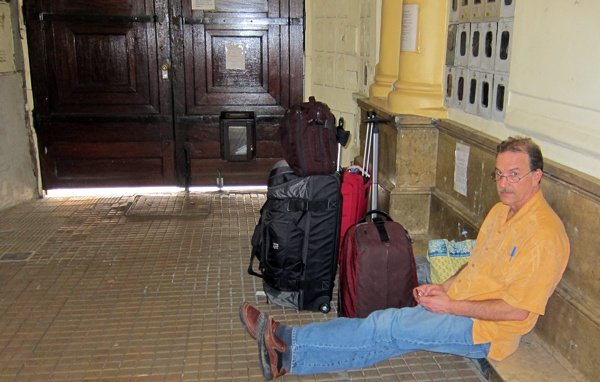
Shortly after we were dropped off at the apartment door, it started to rain. Luckily someone who lives in the building opened the over-sized door so we schlepped our bags inside the hallway. Unfortunately, the massive doors lock from the inside as well... this is me, a little wet and very tired, searching for Wi-Fi (which is everywhere here) and pretty peeved at the caretaker who actually is a very nice guy and speaks more English than anyone else we have met.

Waiting patiently

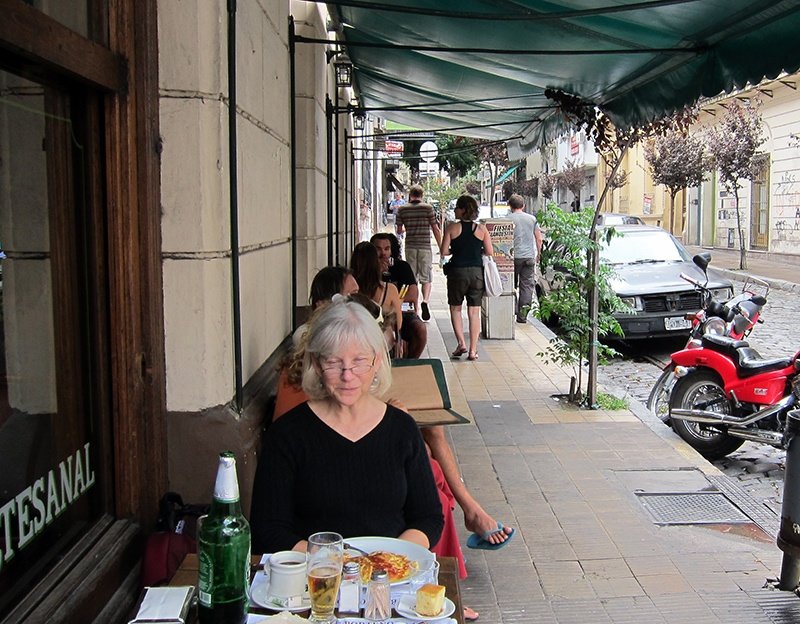
About 45 minutes later the rain stopped and a future neighbor opened the door so we wheeled our bags two blocks to La Poesia a notable San Telmo literary café, plopped our bags down and had lunch. The lack of sleep, lunch and the large beer created just the right mindset to appreciate our arrival in Buenos Aires and how close we had gotten to a nap!

Looking up!

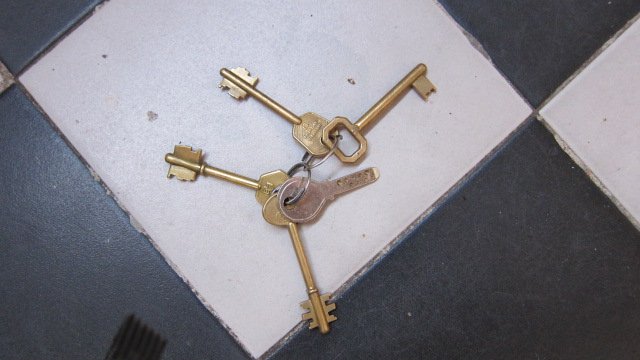
The caretaker arrived around 3:45, apologies spewing left and right and took us to the apartment on the 2nd "floor" with a total of four doors between us and our new accommodations. Each door opens with a unique key, which several days later can still be a challenge.

mind boggling

Two-sided (4 x 2 possibly combinations)

After months of planning, we had established ourselves in Buenos Aires.

Not in America

Not in America

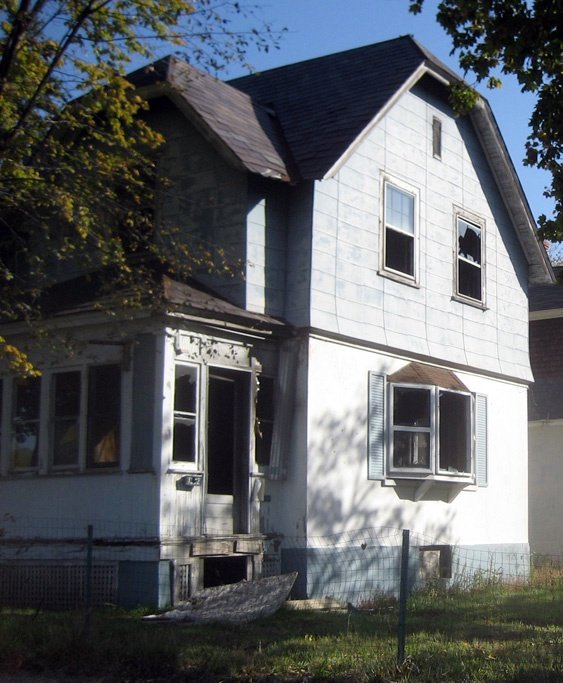
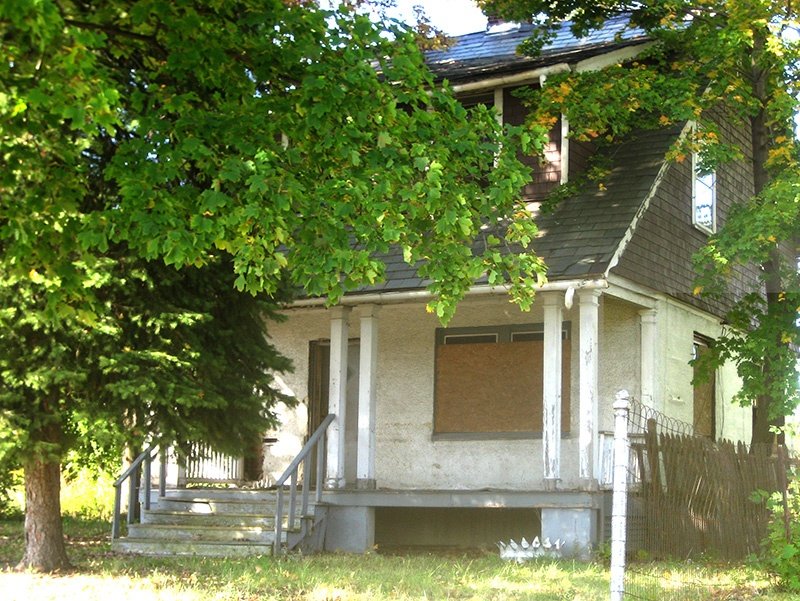
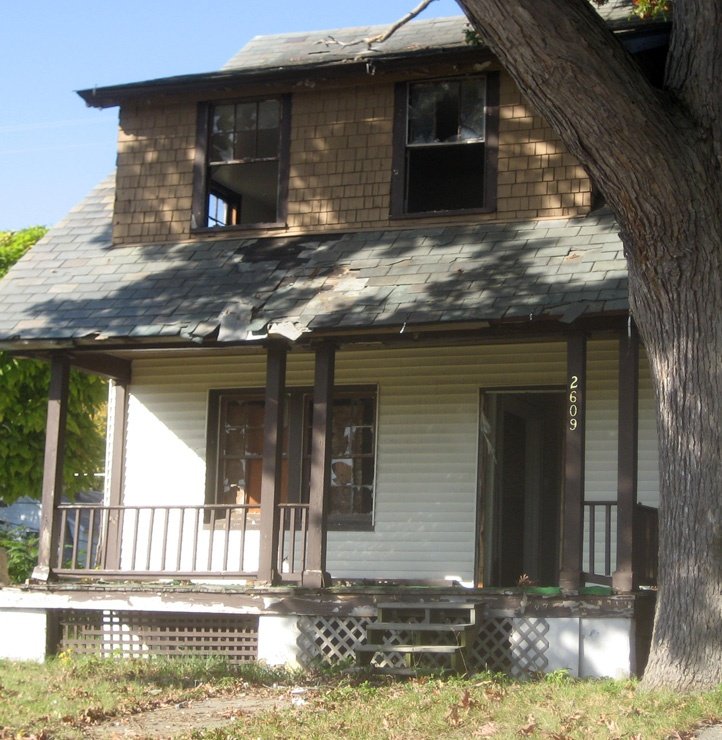
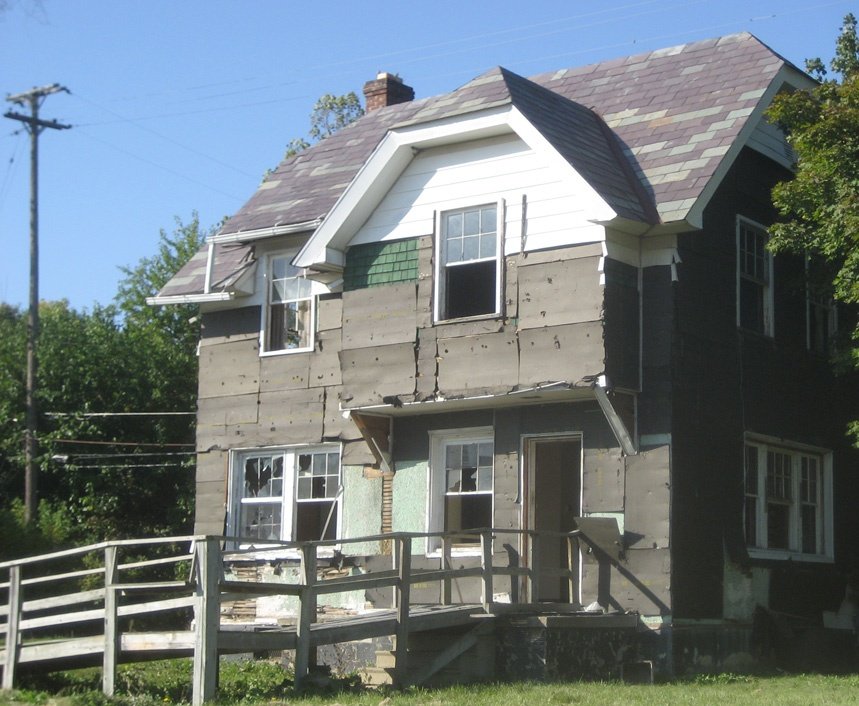
Never in America should a city like Flint, Michigan, be left to the kind of ruin we have witnessed. Even if one were to view it only from the narrow perspective of the economy, the country cannot afford it. But our view has to be greater.

Downtown Flint about the cobblestone street

This city is rich with a broad history, including being the birthplace of the UAW. A factory town like many others that fueled a generation of men and women to unrivaled economic prosperity. From that wealth the whole country benefited.

Our parents were either born in Flint or made it home after the war, eventually realizing a standard of living that propelled the next generation to college and beyond. That was the American Dream. At one point the median income of Flint was among the top five cities in the country. Today it is a shell of its former self.

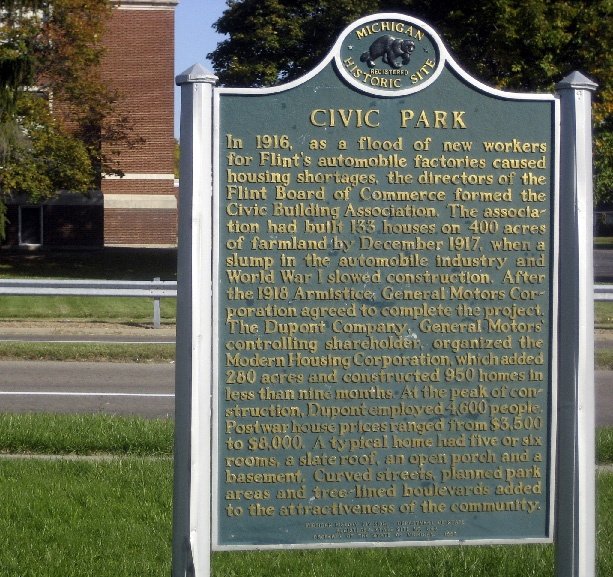
We recently returned to this city marred by economic collapse, and the devastation shocks our eyes and sensibilities. We both were born and raised here, lived in vibrant neighborhoods, attended Civic Park School and later Northern High School. We left in the early 1980s after the local economy had already suffered for nearly a decade.

Flint today is a political, economic, ethical, and moral failure of unprecedented scale. I blame our national politicians for their lack of leadership — but also all Americans, since we elect those who have contributed mightily to this nightmare.

The human toll is catastrophic and can be found in any statistic you choose. The economic despair shows most obviously in blighted buildings, bulldozed homes, and devastated neighborhoods. Whole factories that hired tens of thousands have been wiped off the landscape. The city received funds for environmental cleanup so that someday these areas might be developed again. But will they?

The neighborhood we grew up in is now all but unrecognizable. Do most Americans know that this kind of poverty and neglect exists? Like the 9th Ward in New Orleans, will this one day come as a shock?

The lack of doors and windows is not unique

These are not isolated examples

It is hard to grasp the extent of the problem

It is like an indiscriminate violent economic storm passed

There are bright spots — the University of Michigan campus established downtown, a significant medical infrastructure, signs of new development that hold hope. But capitalism has been allowed to run wildly out of control here, seeking lower wages elsewhere in the country and the world. By blindly moving facilities overseas, the CEOs created a smaller pool of potential buyers. If you are making $10-20 versus $30-40 dollars an hour, you are driving a used car — not spending $20,000 or more on a new one.

The entire economy appears to be run for a smaller and smaller elite with a large and growing influence in Congress — securing the laws and tax breaks needed to operate with impunity, focusing laser-like on short-term profits and the bonuses those generate, ignoring social responsibility and any long-term vision.

We still have extended family and friends in the city. It is obvious what thirty to forty years of lost leadership and failed responsibility has cost. Flint is not alone. Our industrial base is teetering on extinction. This story is but one version while another is repeated in countless cities across the Midwest. But we are here now, and anyone can see that this is unacceptable.

This piece was written in October 2010. Four years later, in 2014, the state of Michigan appointed an emergency manager to cut costs in Flint — a mechanism that overrode democratic local governance. That manager switched the city's water supply to the Flint River without proper treatment, poisoning the water with lead. Thousands of children were exposed. Everything described above had already happened to Flint. Then the state did it again.