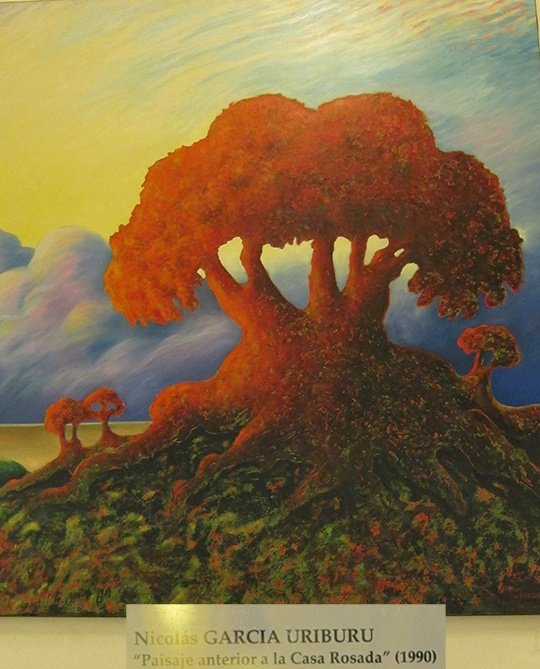
"Paisaje anterior a la Casa Rosada" by Nicolás García Uriburu, located in Casa Rosada
Sunday morning we were out of the apartment around 11 headed for the Green Subte Line on Santa Fe about eight blocks away for a long postponed visit to Casa Rosada, the official seat of the executive branch of the government of Argentina located in Plaza de Mayo.
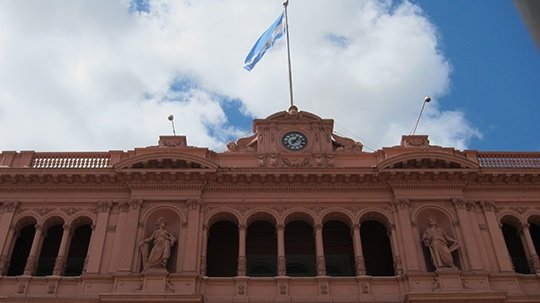
Even though we spent the first two weeks in BA living in an apartment a few blocks away and had passed through Plaza de Mayo (pronounced Masho) several times, we had not toured the Presidential Palace. In a recent Huffington Post article Casa Rosada was among the top 13 palaces of the world. One night passing through the plaza we caught this stunning image which explains why it is called the Pink House.
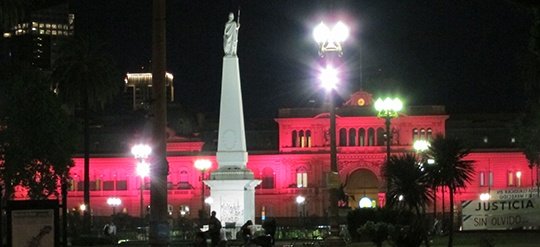
Casa Rosado
The rain on Saturday had finally broken the heat wave that had gripped Buenos Aires for several days that had even porteños (local word for BA residents) complaining, given that summer is coming to a close here in the southern hemisphere.
We actually wore jeans and long sleeve shirts as the sun shone and temps hovered around 70 degrees. The subway line was pleasantly unpopulated as we journeyed several stops to the southern portion of the city at the end of the Green Line.
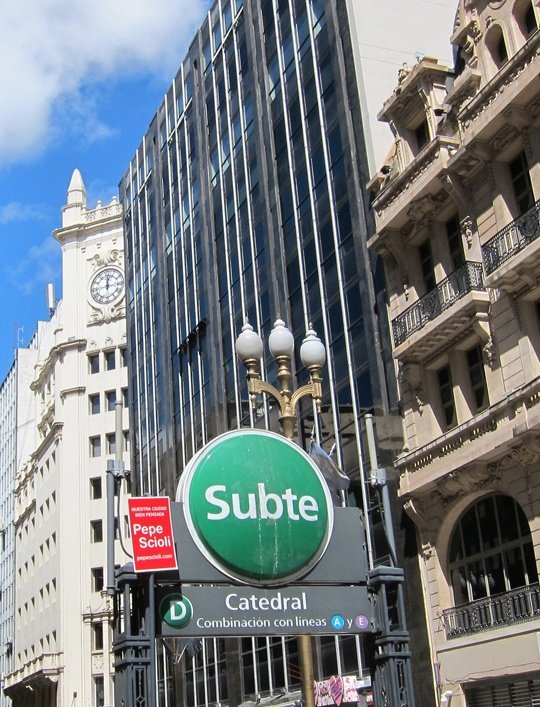
Catedral
Emerging from the subway near Plaza de Mayo we were struck again by the architectural beauty of this part of the city. The next thing we noticed was a long line around the Buenos Aires House of Culture.
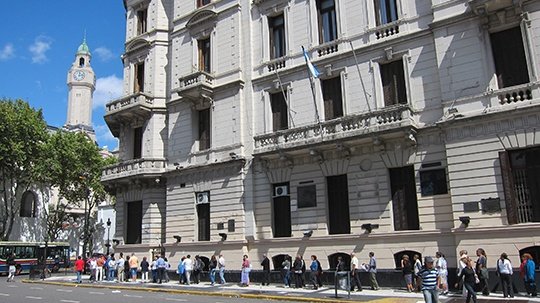
Curiously long line
Obviously we had not been reading the same sources for activities in the city because as we made our way to the front of this tremendous line we discovered local television media interviewing people.
Come to find out Placido Domingo (now 70) is giving a free concert here March 23 and the line was for tickets to get one of the 22,000 chairs that will be provided for this free outdoor concert. The rest of us will need to bring chairs or stand. This is a good article describing the event. Look for us there.
Here is a nice photo of the Buenos Aires House of Culture...
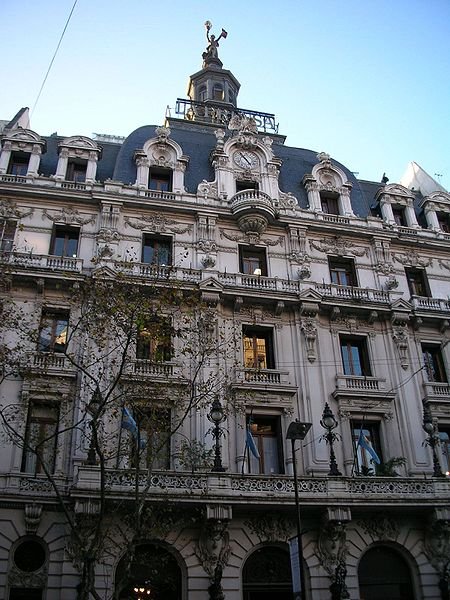
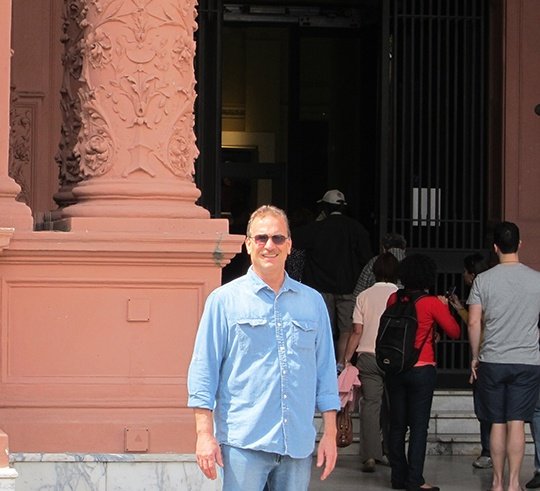
Mark Photo Op at the Entrance
We made our way across the Plaza and into the Palace. The entry was stunning with a series of paintings and busts depicting national heroes. The free tour began as we made our way to the 2nd floor. One interesting fact is that this building houses the current executive offices for the government of Argentina (it is a working palace) so these tours are only offered on weekends. It is closed to the public M-F.
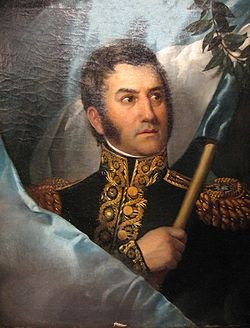
José de San Martín (1778-1850)
I won't go into history here but suffice it to say, José de San Martín (c. 1778 – 17 August 1850) is a national hero given credit for liberating Argentina from Spain.
Evita Perón images were widely displayed as well. While I like to read about politics in all of the Americas, including South America, I am no expert and can only give my impressions. It seems that Evita has a similar national reverence as FDR has in the U.S. and for similar reasons. She was a champion of the poor and those in need. Perhaps Obama might take note of what it takes to become a leader who earns a place in history. This photo displayed inside was especially compelling.
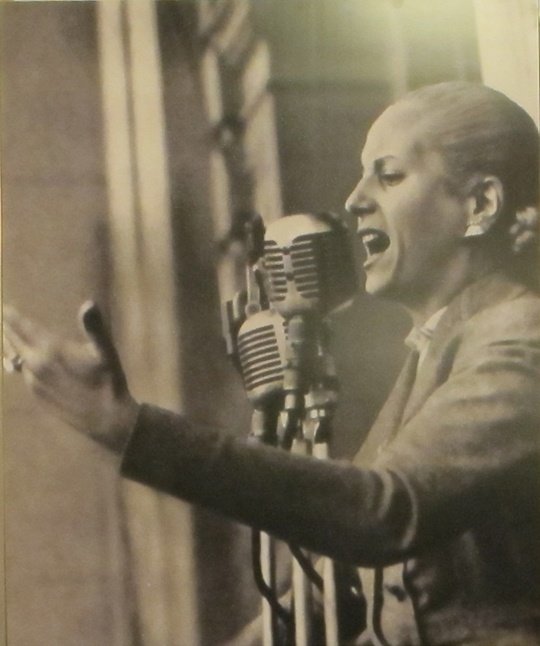
Evita Photo from Palace
On October 15, 1945, at 11 pm, Evita stepped on to the balcony before an estimated 250,000-350,000 people gathered in the plaza below to demand the release from prison of her soon-to-be husband, Juan Perón. The scene must have been electrifying. Two days later he was released, and on October 18, they were married.
This husband and wife team (below) have dominated Argentine politics for the last decade. Néstor Carlos Kirchner served from 2003-2007, died from a heart attack and then was succeeded by his wife, Cristina Kirchner in the 2007 election.
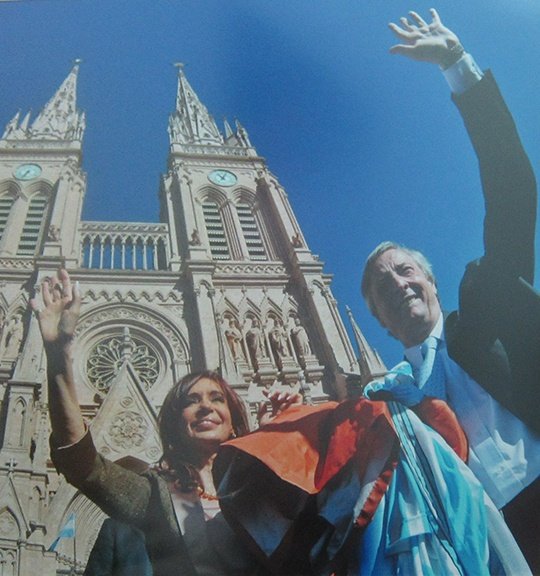 From what I read, Cristina Kirchner is popular and does well in polling for the next presidential election. She has been referred to as the "Hillary Clinton" of South America. She heads the Peronist Party here that leans to the left politically.
Okay, enough politics. From this point I will let the pictures speak for themselves.
The Casa Rosada is obviously striking.
Here is the view looking out, which fills the mind with images of what the crowded scene must have looked like as Evita spoke from the balcony.
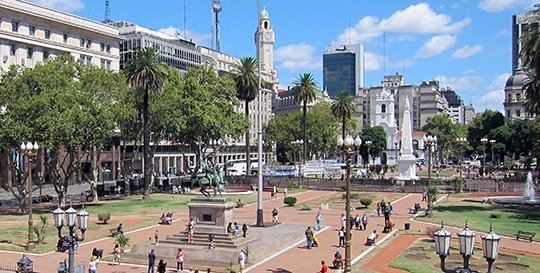
View from the Balcony
Okay, another photo op...
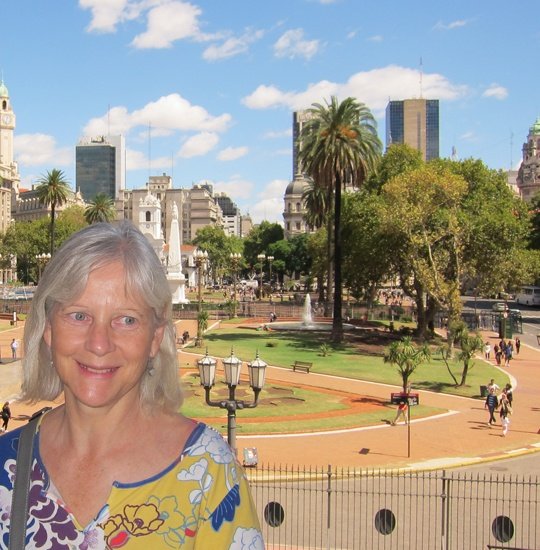
Beautiful
And one of me from the balcony...
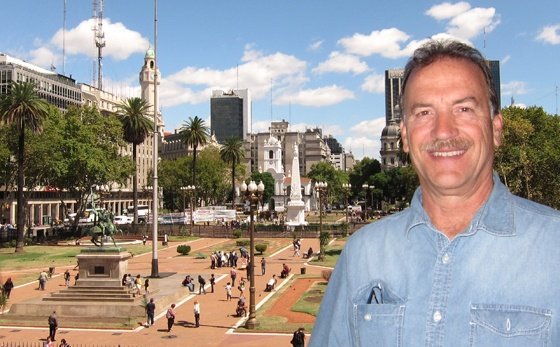
We continued the tour with stops in the executive offices.
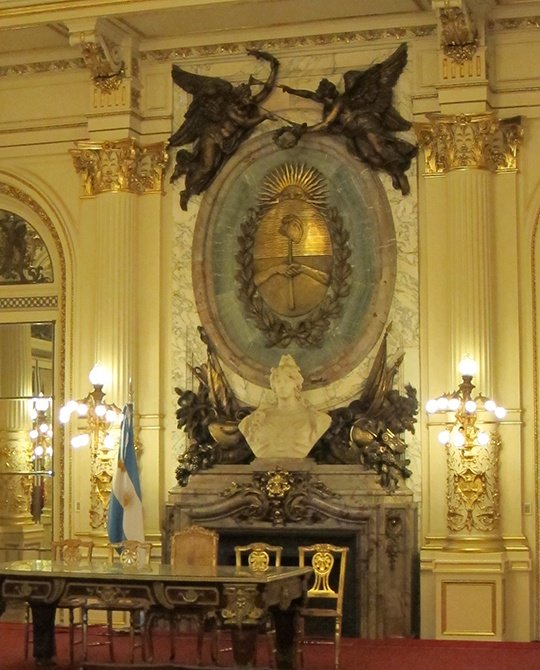
National Seal
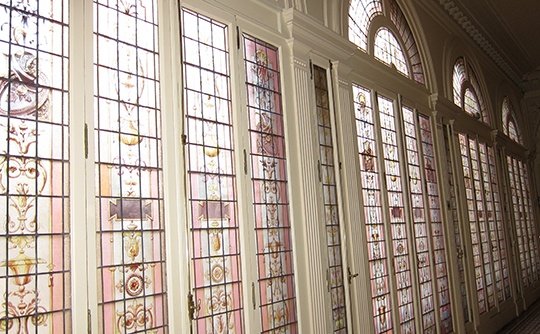
This stained glass wall caught our attention...
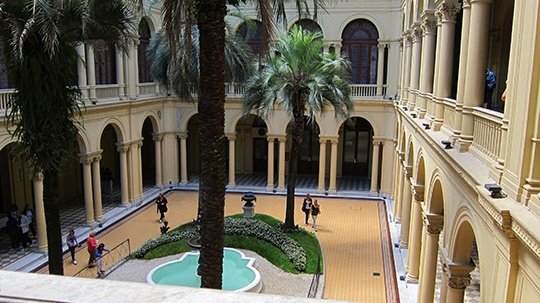
The second floor was a nice vantage point for the courtyard.
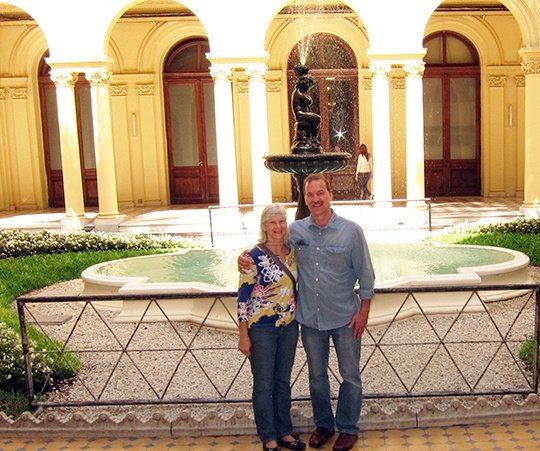
Wait, another photo op. Here is one of Betsy and I taken by our guide who spoke Spanish, Portugese and English.
Okay, my turn. Here is an arty shot looking up.
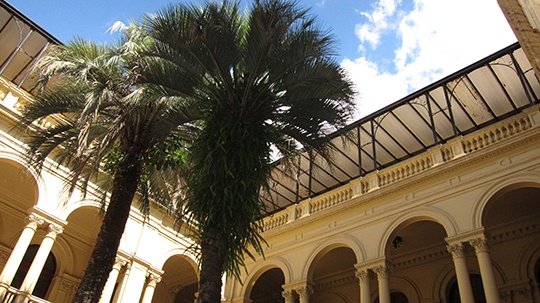
As the tour ended, we were escorted out the back door with these nice views of the city.
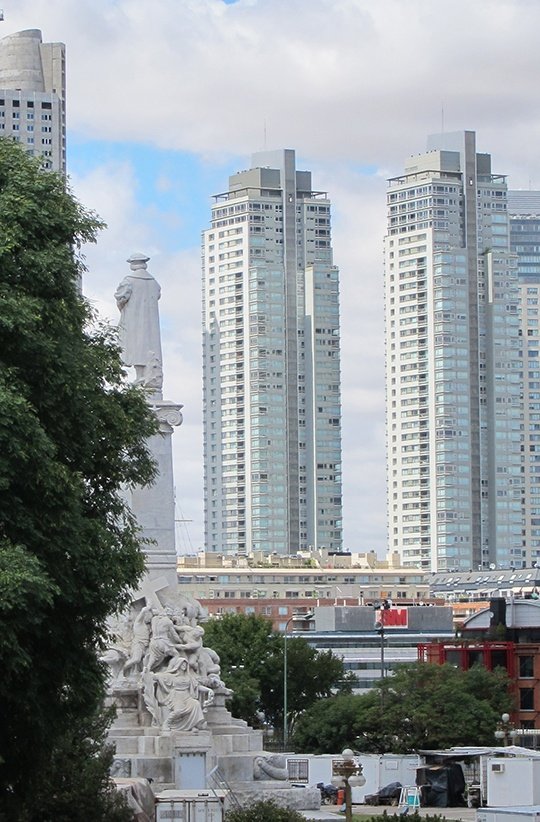
From the Back Porch
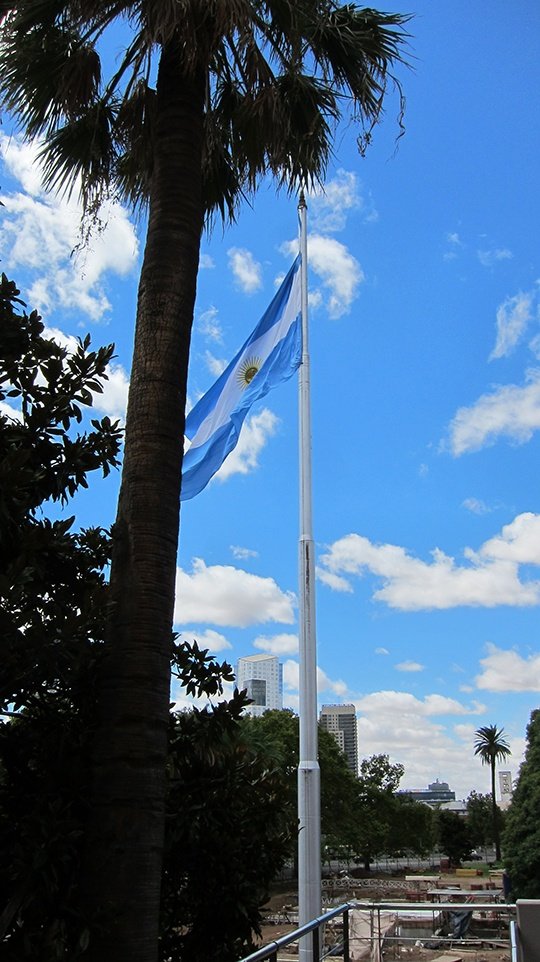
Argentina Flag